Silver Rises Over 120% YTD


How Does On-Demand Delivery Work for Vaulted Gold?
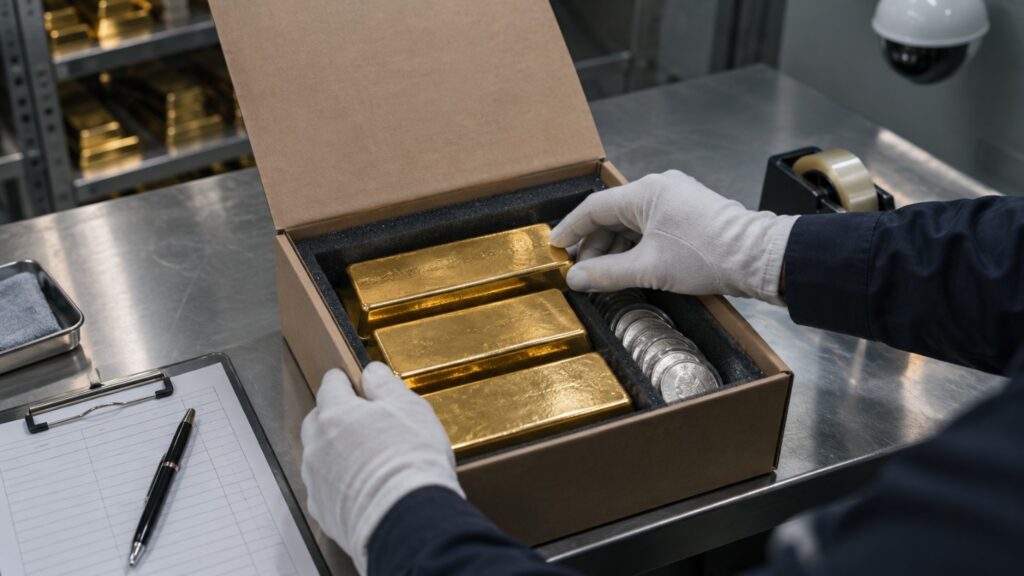
Owning vaulted bullion means little if you can’t get it back. Here is what actually happens, step by step, when you ask a depository to hand your metal over.
Does Silver Tarnish? Yes: Here’s What It Means for Your Bullion

Tarnish looks alarming, but on standard bullion it is only skin deep. Here is why silver darkens, when it actually affects value or grading, and the simple storage habits that keep coins and bars looking their best for years.
What Is Gold Hypothecation?
Originally published: November 11, 2024 | Updated: May 2026 Hypothecation is the pledging of an asset as collateral for a loan while retaining ownership of it. Rehypothecation is when a financial institution takes that pledged asset and re-pledges it as collateral for its own borrowing — typically without the original owner’s knowledge. For gold investors, this means the metal you believe you own outright may have been lent to someone else, sometimes more than once at the same time. Key facts: Rehypothecation of client gold is legal in most jurisdictions if disclosed in the account agreement — and is routinely […]
Allocated vs Segregated vs Pooled Storage
Published: November 11, 2024 | Updated: May 2026. Updated to reflect the latest facts on bank safe deposit box availability, branch closures, and storage best practices as of May 2026. Three storage types. One right answer for most investors. Allocated storage gives you legal ownership, full insurance, and third-party custody — at a fraction of the cost of segregated. Pooled (unallocated) storage sounds like ownership but isn’t: it converts your metal into a creditor claim. Segregated storage is the most rigorous option, but most investors don’t need it. Here’s what each means, what can go wrong, and how to choose. […]
Caring for Gold & Silver Coins
To care for gold and silver coins: always handle by the edge with clean hands or cotton gloves, never clean them, store at 65–70°F with 35–50% relative humidity in PVC-free archival holders, keep gold and silver in separate containers, and use anti-tarnish strips for silver. Gold’s primary threat is physical damage; silver’s is chemical tarnish from sulfur in the air. Published: November 11, 2024 | Updated: May 29, 2026 Gold and silver coins share one critical vulnerability: both are damaged far more easily than most people expect. They fail in different ways, however. Gold is soft — pure .9999 fine […]
How to Store Silver at Home
Silver is affordable, tangible, and one of the few financial assets that exist completely outside the banking system. It also comes with a storage problem most new investors don’t see coming. Gold is easy to hide. You can tuck meaningful value into a sock drawer or a safe no bigger than a shoebox. Silver doesn’t work that way — the same dollar amount takes up dramatically more space, and the gap is bigger than most people expect. This guide covers everything you need to know about how to store silver at home: the space it takes, how to assess your […]
How to Store Gold at Home
Last updated: May 2026 Physical gold and silver have no replacement policy. If your bullion is stolen, lost in a flood, or buried and forgotten — it’s gone. There is no claim check, no reimbursement, and no recovery process. That’s the reality that makes planning how to store gold at home non-negotiable. Done right, keeping some bullion at home gives you an immediate financial backstop. It stays accessible when banks are closed, digital payments fail, or an emergency demands private, liquid wealth. Done carelessly, however, it turns your home into a target. This guide covers the one rule that prevents […]