 Silver Rises Over 120% YTD




June CPI Rises 2.7% as Businesses Pass Tariff Costs to Consumers
June’s consumer‐price report showed a clear “tariff inflation” effect: overall prices rose 0.3% from May and 2.7% from a year ago. Key contributors included a 1% jump in gasoline, 0.3% in groceries, and continued increases for big‐ticket imports—furniture, appliances, toys, and clothing. AllianceBernstein’s Eric Winograd noted durable‐goods prices rose year-over-year for the first time in three years, reflecting duties on Chinese and other foreign goods. Core inflation hit 2.9% annually, driven by these import costs, even as housing inflation eased. The White House downplayed the impact—pointing to cheaper car prices despite auto and steel levies—and Trump again demanded rate cuts […]
June Home Sales Slip 2.7% as Affordability Bites

In June, U.S. existing-home sales dipped more than analysts anticipated, declining 2.7% from May to a seasonally adjusted annual rate of 3.93 million homes sold. Economists had forecast only a slight pullback to 4 million. High mortgage rates—hovering in the high 6% range—and record home prices continue to dampen what is normally the market’s peak season. The National Association of Realtors’ chief economist, Lawrence Yun, attributed the sales slump to “affordability challenges,” noting that even robust job growth hasn’t spurred buying.
Goldman Sees Tariffs Cooling Growth to 1.1% Through 2025
In a recent client note, Goldman Sachs’ chief economist Jan Hatzius argues that President Trump’s escalating tariffs are set to weigh heavily on the U.S. economy. After a 0.5% annualized GDP contraction in Q1—despite a modest 0.5% rise in consumer spending—Goldman sees growth slowing to just 1.1% through 2025. They blame tariff-related price increases for sapping real incomes, pointing out that consumer spending has effectively stalled over the past six months, a pattern typically seen only in recessions. Under their base-case scenario, reciprocal tariffs will push the average effective rate up by 14 percentage points this year and another 3 […]
Silver Rises to $39 as Dollar Weakness Fuels Rally

Silver stayed above $39 an ounce on Wednesday, near its highest level since 2011, as a weaker U.S. dollar and falling Treasury yields made precious metals more attractive. Investors were also digesting President Trump’s new 15% tariff deal with Japan and the likely extension of the U.S.–China tariff truce ahead of talks in Stockholm. Meanwhile, Trump’s renewed barbs at Fed Chair Jerome Powell—blaming him for keeping rates too high and predicting his departure in eight months—added to uncertainty over U.S. monetary policy.
Bank of America Sees No Fed Rate Relief Until 2026

Bank of America strategists now believe the Federal Reserve won’t cut interest rates in 2025. Citing slower-than-expected job growth and a gradually rising unemployment rate—forecast to reach 4.4% by year-end—the team argues there’s little “compelling case” for rate reductions. With tariffs possibly lifting consumer prices and core inflation poised to hit 3% this summer, the Fed is likely to keep its policy rate at 4.25–4.50% until at least next year.
U.S.–Japan Framework Eases Tariff Threats but Leaves Key Details Unanswered

President Trump has struck a new trade framework with Japan, cutting the threatened 25% tariff on imports down to 15%. Under the agreement, Japan will invest $550 billion in the U.S. and open its market to American autos and rice, while the reduced levies aim to defuse market fears and shore up Trump’s “deal-maker” image. Key details—such as whether Japanese-built cars will still face higher duties—remain unclear as the administration presses ahead with similar pacts on the Philippines (19% tariff) and Indonesia (19% reaffirmed).
Sliding Dollar Puts Trump’s Trade and Fed Goals on a Tightrope
Over the first half of the year, the U.S. dollar has weakened by nearly 10%, surprising many who expected tariffs to bolster it. While a softer dollar can make American exports more competitive and “soften” the impact of tariffs, it also risks higher import costs and inflationary pressure—potentially complicating President Trump’s goals for low consumer prices and steady interest rates. Trump publicly insists on a strong dollar, creating mixed signals within his administration as they weigh the trade-offs of a sliding currency.
Bullion Pulls Back as U.S. and Japan Reach Surprise Trade Truce
Gold slipped about 0.4% to roughly $3,420 an ounce after President Trump’s trade agreement with Japan alleviated some fears of a widening U.S.–Japan tariff war. Despite the pullback, gold remains up about 30% year-to-date, supported by global trade tensions, geopolitical conflicts, and expectations that the Fed may keep monetary policy loose. Silver also climbed—up 36% this year to $39.41—boosted by strong industrial demand (especially for solar panels) and tightness in the London market following U.S. tariff anxieties.
Gold Takes a Step Back as New U.S.-Japan Trade Deal Boosts Confidence
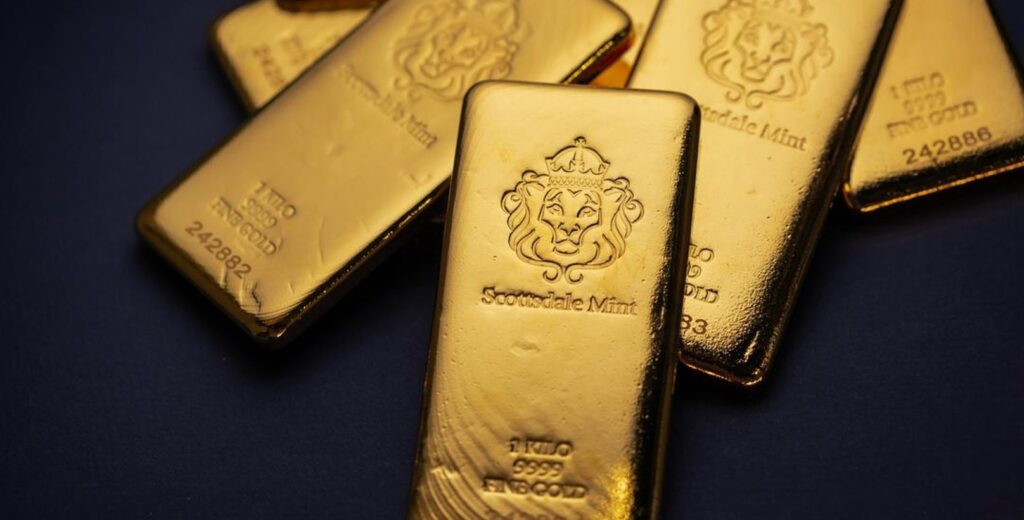
Gold prices slightly decreased as investor confidence improved following the recent U.S.-Japan trade deal, which lowered tariffs and reduced economic uncertainty. The deal, combined with a stronger dollar and rising Treasury yields, put pressure on gold, which is typically seen as a safe-haven asset. Meanwhile, silver prices rose to their highest level since 2011, boosted by strong supply-demand fundamentals, raising investor expectations that it may soon surpass the psychologically significant $40 per ounce mark.
Gold Rises to Five-Week High Amid Trade Uncertainty and Dollar Weakness
Gold hit its highest level in five weeks, gaining around 1.3% as concerns grow over upcoming U.S. trade deadlines and potential tariff increases. The dollar’s decline and lower U.S. bond yields helped boost gold’s appeal as a safe haven. Traders are also anticipating a possible Federal Reserve rate cut in September, increasing market uncertainty. Despite this, China’s gold imports dipped to the lowest since January. Other precious metals like silver, platinum, and palladium also posted gains.


