Gold Price Chart
Stay informed with real-time gold spot prices, in troy ounces (oz), kilos, and grams in multiple currencies.
Home / Price Charts / Gold Price Charts
Gold Live Price
Silver Price
Gold/Silver Ratio
Explore our Gold Products
Explore our Latest Insights
Calculated Return on Gold Investment
Select Your Metal
Investment Amount
Time
Invested Amount
$ 0
Gain/Loss
$ 0
$ 0
$ 0
$ 0
Total Return
$ 0
$ 0 $
$ 0 $
$ 0 $
Frequently Asked Questions
What is the gold spot price?
The gold spot price represents the current market price at which gold can be bought or sold for immediate delivery. It is typically quoted per troy ounce and fluctuates constantly during trading hours based on supply and demand in the global gold markets. The spot price is usually derived from the front-month futures contract traded on exchanges like COMEX.
How do I read a gold price chart?
To read a gold price chart, check the timeframe (daily to yearly) and price scale. Look for overall trends and key price levels where gold typically reverses direction. Volume indicators show trading activity strength, while technical indicators like moving averages can help identify trends and potential reversals.
What factors influence the price of gold?
Several key factors can impact gold prices:
- Economic conditions and inflation rates
- Geopolitical events and uncertainty
- Currency fluctuations, especially the US dollar
- Central bank policies and interest rates
- Supply and demand dynamics in the gold market
- Performance of other asset classes like stocks and bonds
- Jewelry and industrial demand
Understanding these factors can help provide context for gold price movements shown in the charts.
What Is the Gold Price Right Now?
You can see the gold price and watch its daily movements at the top of this page. You can even view historical prices with our interactive chart, along with how it’s performing in relation to other assets.
What Is the Gold Price In My Currency?
Since gold is priced in US dollars around the world, the spot price is the same everywhere at any given moment. However, investors in non-US countries can convert the US price to their local currency to reflect its value in that unit of currency. Even though the underlying spot price is the same, at any given time in local markets (such as on a trading website or at a local coin shop) the premium above spot may vary, sometimes significantly.
There have been times where, due to changes in a currency’s value, the gold price in another currency may rise or fall more than the US dollar price—or even move in the opposite direction. In 2014, for example, the gold price rose in all major currencies, except the US dollar.
Why Do I Care About the Gold Spot Price?
Any buying and selling you want to do will be based upon the spot price of gold. Purchases are based on the “ask” price, and sales are based on the “bid” price.
If you’re a buyer, you naturally want a lower price. And when you someday sell, you’ll want the highest spot price you can get.
Any transaction you make in the gold market will be based upon the spot price.
Can I Buy Gold at the Spot Price?
No. The spot price is for “unfabricated” metal. There are costs involved to form gold into a coin or bar or necklace, so a premium is charged by the refiner who manufactured the product and by the dealer who procures and sells the product.
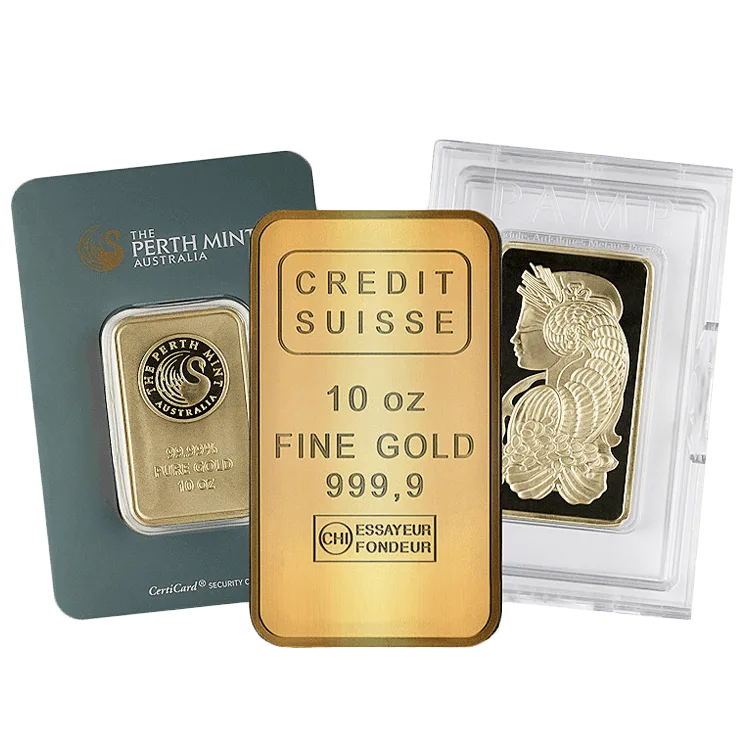
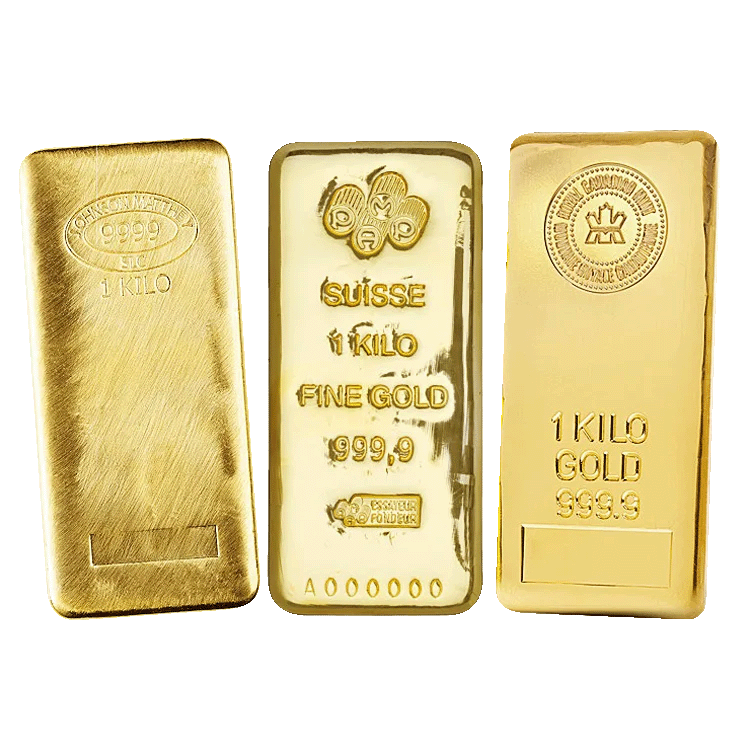
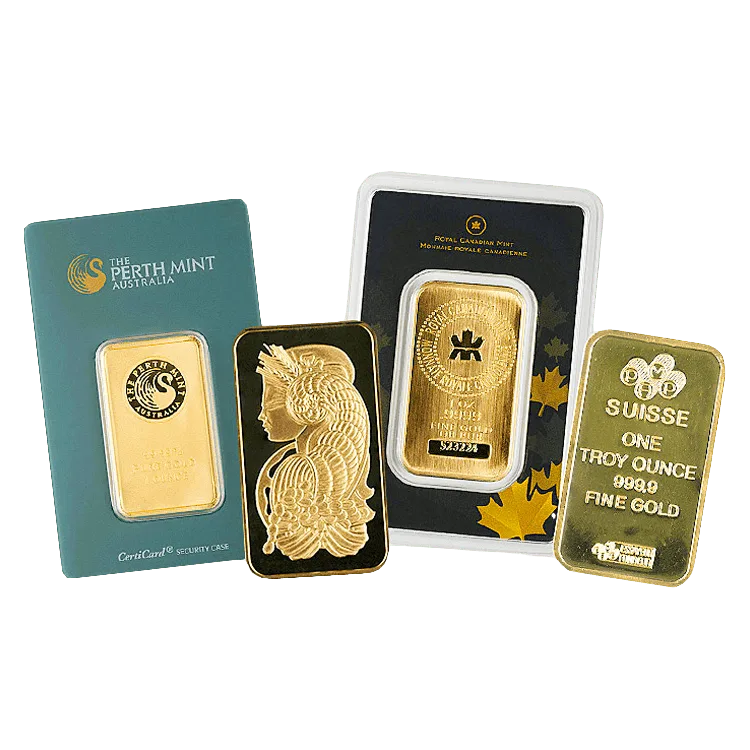
Your cost will depend on the form of gold you buy. The lowest premium items are gold bars. Gold coins have a slightly higher premium, since they have more intricate designs. Gold jewelry is more expensive given the craftsmanship involved (though you can buy “bullion jewelry” that is comprised solely of gold and avoids the high mark-up of most costume jewelry today).
All dealers charge a premium over the spot price. Here’s how to find a reputable bullion dealer with competitive premiums, along with advice on what to buy.
Why Is the Gold Price So High?
To those new to the market, the gold price might seem high for just one troy ounce. But this shows how much investors around the world value this precious metal. Gold has some use as a commodity—in medicine and as jewelry, for example—but its primary use is as money, as a store of value. This has been its primary use for thousands of years.

News and Updates on Gold Market

Does Physical Gold Have Counterparty Risk? The Facts
When you deposit money at a bank, you are not storing it. You are lending it. Physical gold counterparty risk is zero because allocated metal is not a claim on any institution — it cannot be frozen, diluted, or devalued by policy. This explainer covers the mechanism and how to structure both approaches correctly.

Gold Near $4,330 as Rate-Hike Bets Hit 70% and China Acts
Five forces are moving gold and silver right now. Strong U.S. jobs data has pushed Fed rate-hike odds above 70%. China’s biggest banks raised gold trading margins to 120% — pushing leverage below 1x. The People’s Bank of China extended its buying streak to 19 straight months. Iran announced an end to its military operation against Israel, steadying metals after last week’s 5% pullback. And elevated oil is keeping inflation expectations alive. Here is what each one means for long-term precious metals holders.

Gold Is Down 22% — The Same Drop as 2022. The Floor Is Not the Same.
Gold has fallen 22% from its January 2026 all-time high of $5,589 — the same magnitude as the entire 2022 Fed hiking cycle. But in 2022, the Fed delivered 525 actual basis points of rate increases. Today, markets are pricing roughly a 43–50% probability of a single speculative hike that hasn’t happened yet. Same number. Very different floor. Here’s what the gap between those two corrections is telling long-term holders of physical gold.