Silver Rises Over 120% YTD


Jim Rickards Read the Exchange Rule Books. One Rule Decides Whether You Get the Gold.

Jim Rickards spent decades as a derivatives lawyer before turning to markets, and it shows. He explains why exchange rulebooks can restrict delivery, and why unallocated gold and ETF shares are legal claims, not ownership of a specific bar.
Class 3 Vault: The Two-Hour Attack Standard That Protects Your Gold

A Class 3 vault must withstand more than two continuous hours of sustained attack by professional burglars using power tools and cutting torches. It is the highest commercial vault rating under UL Standard 608 — and a mandatory condition of NYMEX/COMEX licensure, not a marketing claim. Here is exactly what that standard requires, and what it means for the gold you store.
How to Store Gold at Home: Safes, Security and Insurance

Most people buy a safe and think the problem is solved. The real vulnerabilities — wrong location, no insurance coverage, no one who knows it exists — are the ones that cost them. Here’s what actually protects physical gold at home.
Gold vs Silver Storage and Liquidity: What Investors Need to Know
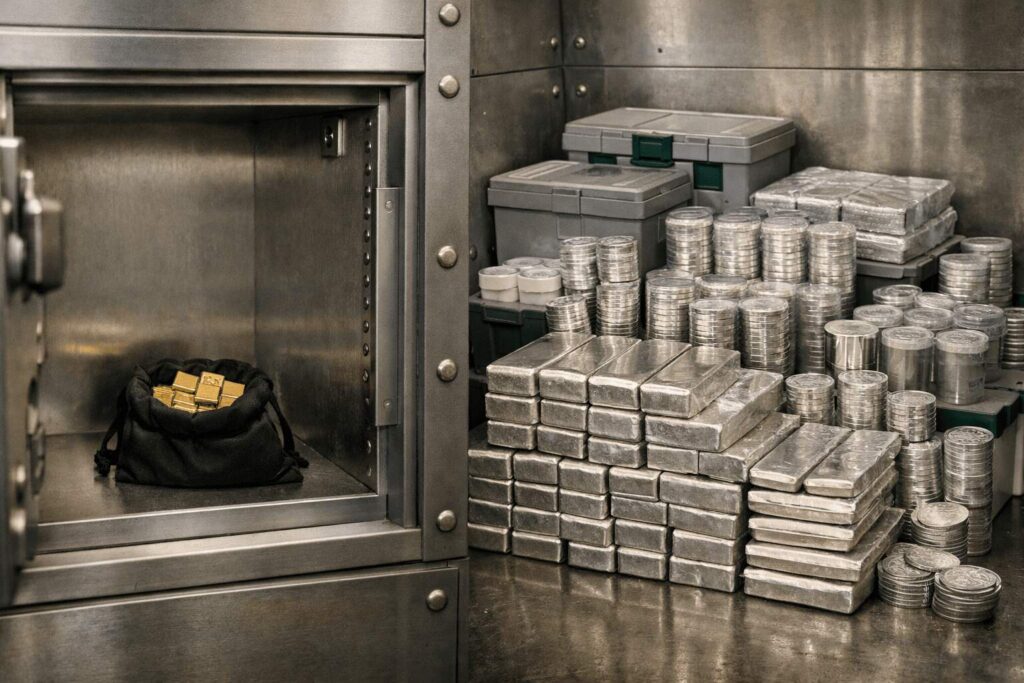
Most investors compare gold and silver by watching price charts—but that’s a mistake. The real differences don’t show up on a screen; they show up after you own them. Gold concentrates massive value into a small, portable form. Silver spreads that same value across weight, volume, and bulk. Understanding gold vs silver storage and liquidity matters far more than guessing where prices go next—because price is temporary, but ownership is permanent.
Where Should You Store Silver? Home vs. Bank vs. Vault

Home safes, bank boxes, and professional vaults all protect silver differently. This guide compares the real costs, insurance limits, and legal risks of each, including the allocated-versus-pooled storage distinction most guides skip.