 Silver Rises Over 120% YTD




Gold vs. Fiat Currency: A 50-Year Reckoning
When governments abandoned gold-backed money in the 1970s, they didn’t just change monetary policy — they rewired human behavior. Understanding that shift is key to understanding where precious metals are headed.
Central Banks Are Buying Gold: Here’s What They See Coming
Central banks are accelerating gold purchases as confidence in fiat currencies declines. Driven by inflation, geopolitical risk, and de-dollarization, this structural shift signals long-term demand for gold.
Why Fiat Currencies Fail — And Why Gold Still Wins
Every fiat currency ever created has eventually failed — no exceptions. Mike Maloney explains the pattern, why 1971 changed everything, and what it means for investors who want to protect their wealth with gold and silver.
Dollar vs Gold Relationship: Why They Often Move in Opposite Directions
When the U.S. dollar weakens, gold prices typically rise — and vice versa. This inverse relationship between gold and the dollar is one of the most consistent patterns in global markets, driven by gold’s dollar-denominated pricing, competing safe-haven demand, and Federal Reserve interest rate policy. But the relationship isn’t absolute. Central bank gold buying, geopolitical risk, and shifting real yields can all disrupt the traditional correlation. Here’s what every investor needs to understand about the dollar vs gold relationship and what it means for your portfolio.
Gold vs Inflation: What 100 Years of Data Shows
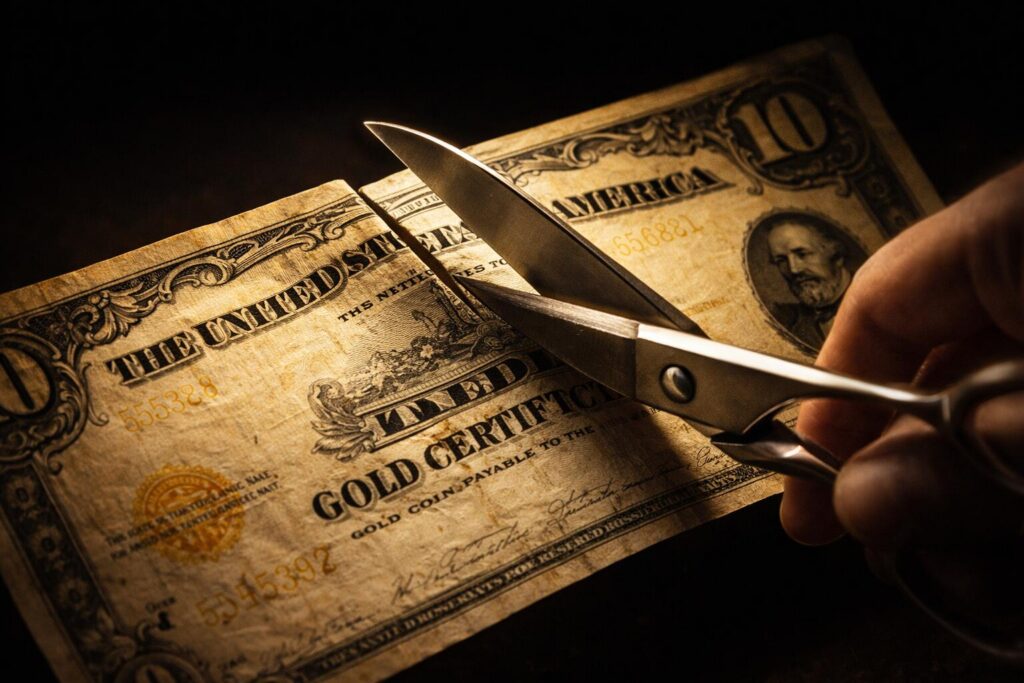
Gold has outlasted every currency it has ever been compared to. But does 100 years of data actually prove it’s a reliable inflation hedge? We break down the key periods — from the Nixon Shock to the 2024 all-time highs — to show exactly when gold shines, when it struggles, and what that means for your portfolio today.
What’s the Difference Between Money vs Currency?
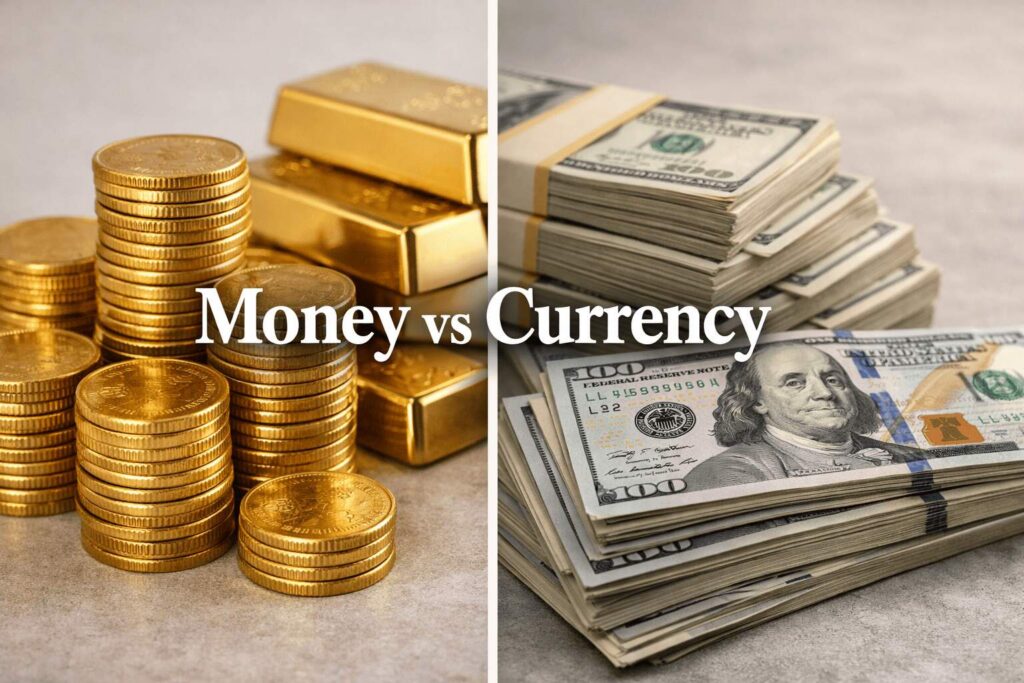
Most people use the terms money and currency interchangeably—but they are not the same. This article explores the difference between money vs currency, why fiat currencies lose purchasing power over time, and why many investors consider gold as a long-term store of value.
Gold’s Purchasing Power: What One Ounce Buys Over Time
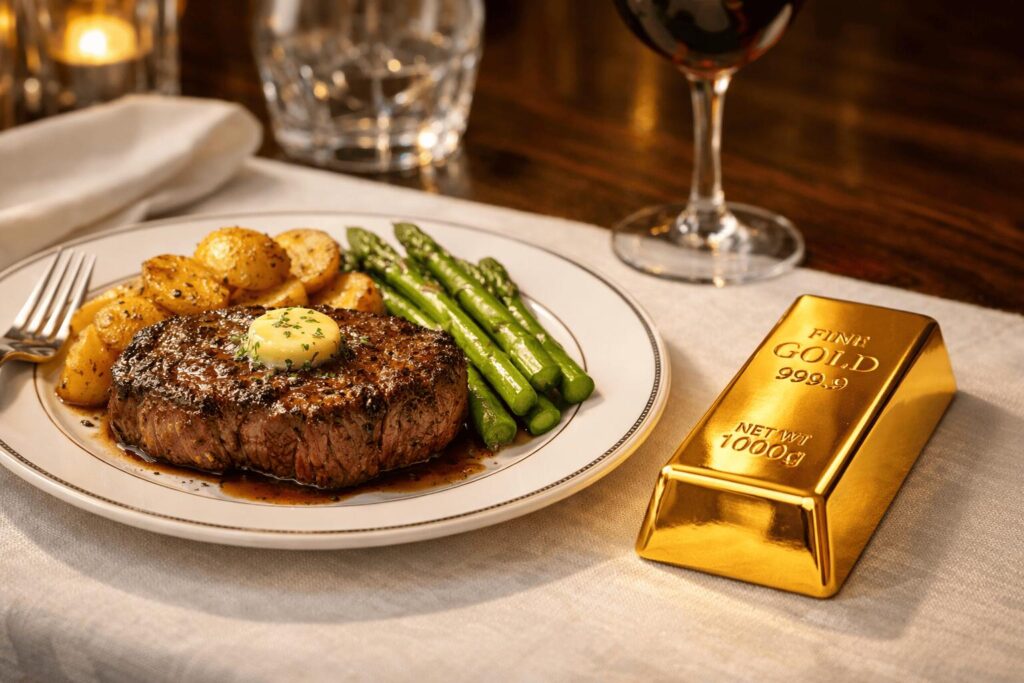
What can one ounce of gold actually buy? The answer reveals gold’s true value better than any price chart. In 1971, one ounce bought dinner for three at London’s Savoy Grill. Today, it buys dinner for fourteen. A quality suit cost one ounce in the 1920s—and still does today. Meanwhile, fiat currencies have lost 95%+ of their purchasing power. Discover the “Savoy Gold Ratio” and why gold’s consistent buying power across generations makes it essential portfolio insurance in an era of currency debasement.


