 Silver Rises Over 120% YTD




What Is Sound Money? Why the Dollar Lost 87% of Its Value Since 1971

Sound money is money whose supply cannot be expanded by decree, so it holds its purchasing power over time. The principle shaped the 19th-century gold standard. Since that constraint ended in 1971, the dollar has lost roughly 87% of its purchasing power.
Your Bank Balance Is Lying to You. The Number Is Real. The Wealth Isn’t.
Your bank balance shows a number. That number is not your wealth — it’s a measuring stick. And measuring sticks can shrink. Megan King Diaz explains why, and what actually holds its value.
What Does an Inverted Yield Curve Mean for Gold Prices — and How Do You Use It?

The bond market’s most reliable recession warning has a direct connection to gold prices. Here is the mechanism — and what it means for your portfolio.
Zero Tankers Crossed Hormuz on Sunday. Oil Hit $89. Gold Barely Moved.

The 60-day US-Iran MOU expired this weekend with no replacement deal. Shipping through the Strait of Hormuz collapsed to zero. Oil climbed. Gold held. Here is why the non-reaction is actually the most important signal in this story.
Gold Rebounds to $4,392 as Sentiment Crashes to 51 and Inflation Expectations Rise

The University of Michigan’s August Consumer Sentiment Index fell to 51 — missing the 54.5 consensus and ending two months of improvement — while inflation expectations rose to 4.3%. The simultaneous drop in growth confidence and rise in price expectations creates a stagflation signal that limits the Federal Reserve’s options and extends gold’s tailwind heading into September.
Two Inflation Numbers Come Out Every Month. The Fed Only Cares About One.
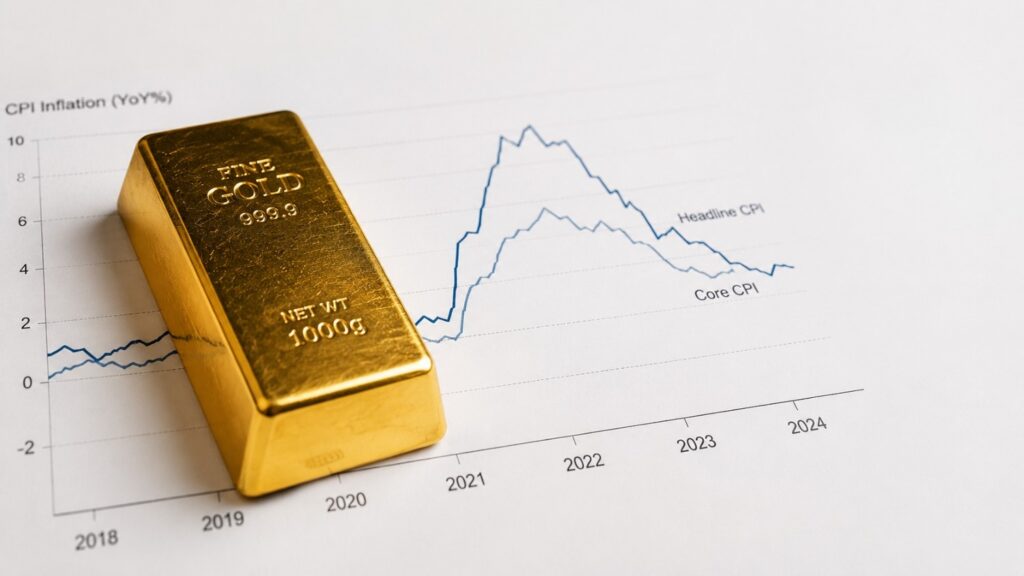
The Fed releases two inflation numbers every month — headline CPI and core CPI. They tell very different stories, and the Fed only acts on one of them. Here is what each measure captures, why the Fed leans on core PCE to set interest rates, and why that gap between what you pay and what the Fed watches matters for gold investors.
Gold Climbs 1% Ahead of July CPI. Here Is Why the Print Matters More Than the Number.

Gold climbed above $4,427 on Wednesday as markets positioned ahead of the July CPI release and cut September Fed hike odds to 50-50. Here is the real-yield mechanism driving the move — and why the structural case is unchanged regardless of the print.
The Fed Printed $7 Trillion. Velocity Kept It Quiet. That’s Changing.

The Fed printed trillions. Inflation didn’t follow — not immediately. Here’s the monetary mechanism that kept it quiet, why it’s now reversing, and what the velocity of money chart is signaling for gold investors right now.
Why the Krugerrand Has No Face Value — and Why That’s the Point
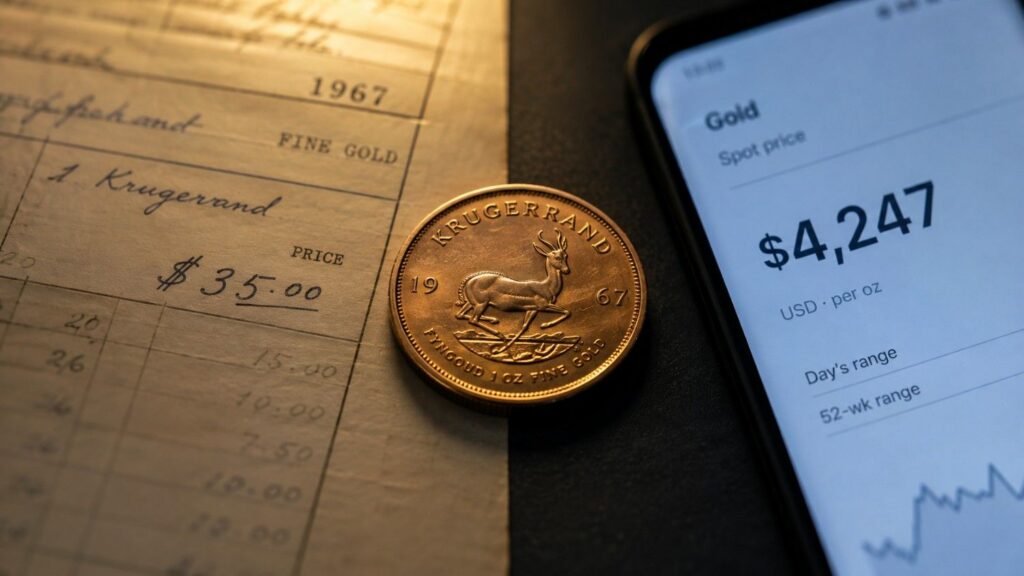
The South African Krugerrand is the world’s first gold bullion coin — and one of its most deliberately designed. Launched in 1967 with no face value by intention, it cannot be debased by monetary policy. Here is how it works, why it was banned, and why nearly six decades later it remains the most liquid gold coin on the planet.
What Is a Monetary Reset — and Is One Already Happening?
Everyone pictures the same scene: one Monday morning, the dollar cracks and cash is worthless by lunchtime. That version makes for a great movie. The real monetary reset looks nothing like it — and it may already be underway. Here is what four structural shifts are quietly telling us.


