 Silver Rises Over 120% YTD




One Freeze Taught Every Government a Lesson. China Is Still Acting on It.

Rick Rule argues Beijing didn’t run a spreadsheet and conclude gold would outperform. It watched what happened to someone else’s reserves. The freeze of roughly $300 billion in Russian assets repriced a risk every reserve manager had treated as zero, and China has cut its Treasury holdings 52% since 2013.
What Is a Monetary Reset — and Is One Already Happening?
Everyone pictures the same scene: one Monday morning, the dollar cracks and cash is worthless by lunchtime. That version makes for a great movie. The real monetary reset looks nothing like it — and it may already be underway. Here is what four structural shifts are quietly telling us.
The Petrodollar System Explained: What It Is, How It Worked, and What’s Replacing It
The petrodollar system gave the US dollar its dominance for 50 years — every country needed dollars to buy oil, and oil exporters recycled those dollars back into US Treasuries. That arrangement is now shifting. Here is how the system worked, why it is under stress, and why central banks are choosing gold as the alternative reserve asset.
Central Banks Picked Gold Over Treasuries. Should You?
The ECB just confirmed gold leads global reserves for the first time since 1996 — ahead of US Treasuries. Central banks that could have rebalanced didn’t. Here’s the mechanism behind that choice, and what it means for individual savers.
What Happens to Gold and Silver When the Dollar Loses Its Reserve Status?
The dollar’s reserve currency status has never been permanent — and history shows that when monetary systems shift, gold and silver are where capital moves. Here’s what a reserve currency transition could mean for precious metals investors.
What Is De-Dollarization? Why Countries Are Moving Away from the US Dollar
The dollar’s share of global reserves has hit its lowest level since 1994. Central banks are buying gold at historic rates. And the petrodollar system faces its most serious challenge in 50 years. Here’s what de-dollarization actually means — and why it matters now.
Is the Dollar Losing Its Reserve Currency Status?
Central banks are dumping dollars and buying gold at record levels. Countries are settling trade in local currencies. The dollar’s dominance is eroding in real time — and once reserve status is gone, it doesn’t come back. Here’s what’s driving the shift.
87% Dollar Devaluation Since 1971: Why Central Banks Keep Buying Gold
Since the Nixon Shock in 1971, the U.S. dollar has lost roughly 87% of its purchasing power, according to Bureau of Labor Statistics CPI data. Meanwhile, central banks have been net buyers of gold for 16 consecutive years. Here’s what the data shows — and what individual investors can learn from it.
The U.S. Government’s Own Numbers Show It’s Insolvent
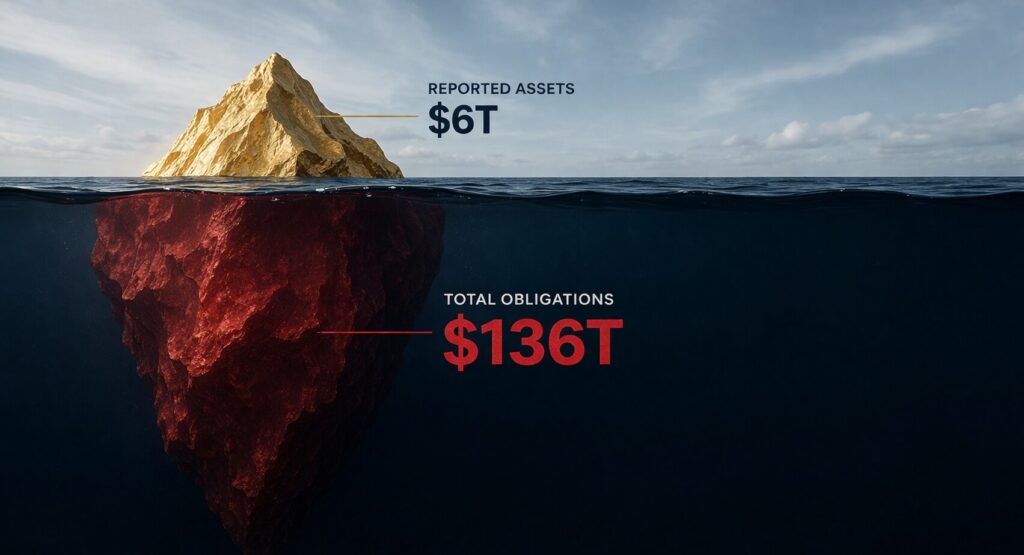
The U.S. government’s own financial statements show $6.06 trillion in assets against $47.78 trillion in liabilities. The media missed it. Here’s what it means.
The Dollar Milkshake Theory: What It Means for Gold, Silver, and Your Portfolio
You’ve probably heard Mike Maloney mention the dollar milkshake theory recently — and for good reason. This vivid metaphor captures one of the most important dynamics in global finance today. Picture the U.S. dollar as a giant straw, sucking up capital and liquidity from around the world like a milkshake. As the world’s reserve currency, the dollar pulls money into the U.S. financial system during times of stress — often leaving other economies gasping for air. What Is the Dollar Milkshake Theory? Popularized by Brent Johnson of Santiago Capital, the theory explains a dangerous paradox. When global uncertainty rises, investors […]


