 Silver Rises Over 120% YTD




What Switzerland’s Gold Freeze Means for Investors

Switzerland’s SNB is holding firm on its 1,040-tonne gold position — and generating billions doing it. Here’s why that “freeze” is one of the strongest signals in today’s gold market.
Should You Sell Gold During a Bull Market Pullback?

Gold has pulled back 16% from its January 2026 all-time high — but history shows that selling during a bull market pullback has repeatedly cost investors the next major leg higher. Here’s how to decide.
Gold Fell During a War. So Is It Really a Safe Haven?
Switzerland’s 30% gold export surge shows institutional demand is rising — yet gold fell when war broke out. Here’s what that contradiction reveals about gold’s true role as a safe haven asset.
Is Gold at Fair Value? What Three Models Say — and Where They Disagree
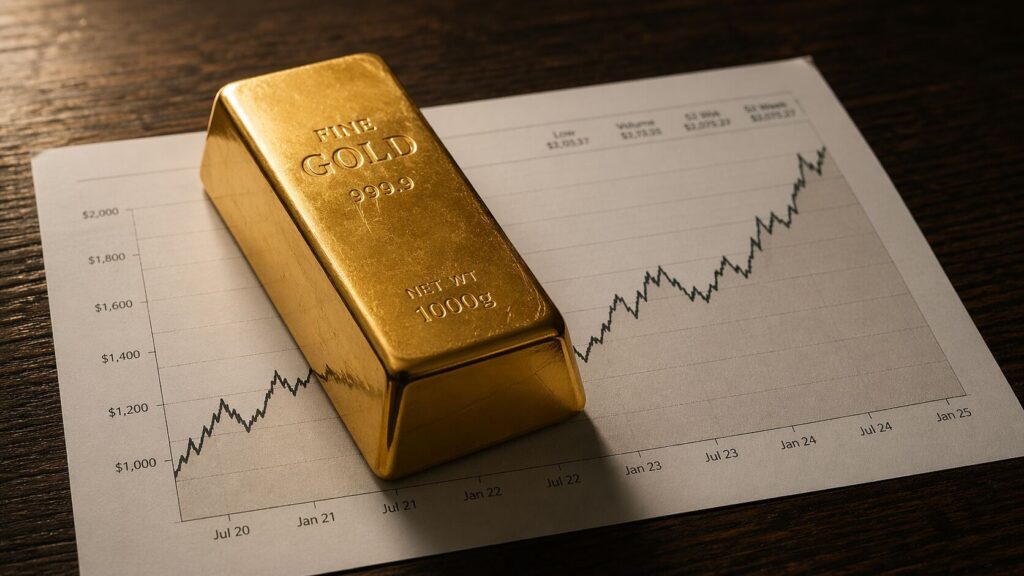
Gold is up 43% in a year and recently hit an all-time high. So is the price justified — or has the rally overshot? Three analytical models give three different answers, and understanding where they agree and where they diverge is the key to judging gold’s true worth.
Dow to Gold Ratio: 100 Years of History Decoded
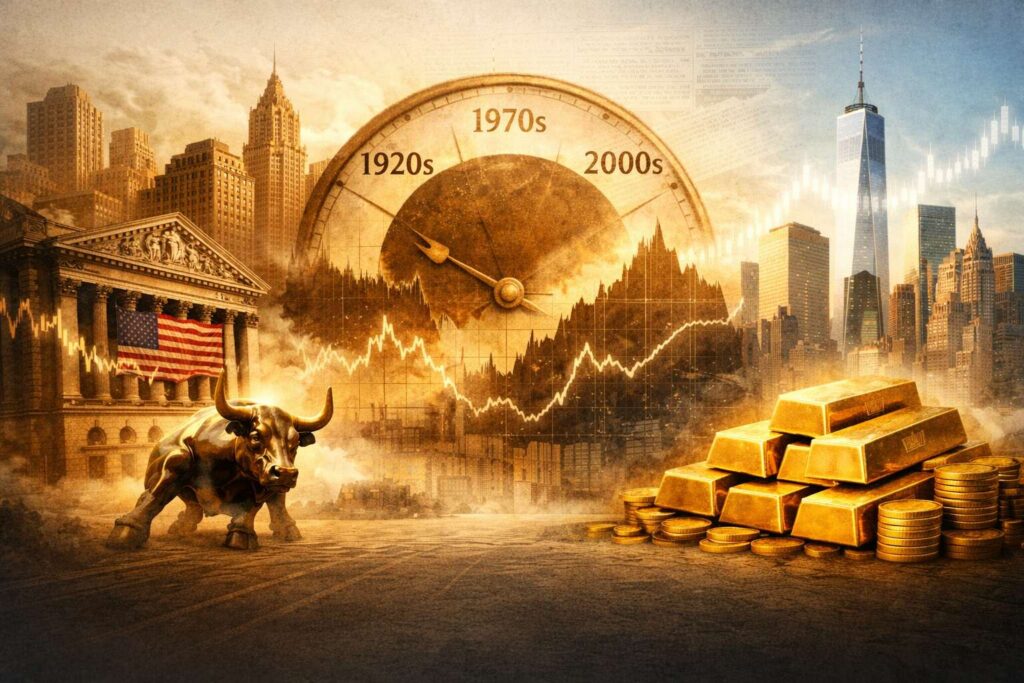
Gold has gained roughly 15.6% since January 1, 2026, while the Dow is up just 2.7% over the same stretch. That gap doesn’t register in most financial headlines — but the Dow to gold ratio captures it with precision. Right now, the ratio reads approximately 10: it takes around 10 ounces of gold to match one unit of the Dow index. At the dot-com peak in 1999, it took 43. What does that shift tell us, and where does it go from here?
Gold vs Inflation: What 100 Years of Data Shows

Gold has outlasted every currency it has ever been compared to. But does 100 years of data actually prove it’s a reliable inflation hedge? We break down the key periods — from the Nixon Shock to the 2024 all-time highs — to show exactly when gold shines, when it struggles, and what that means for your portfolio today.
Gold vs. Silver: Roles, Risks, and Portfolio Strategy
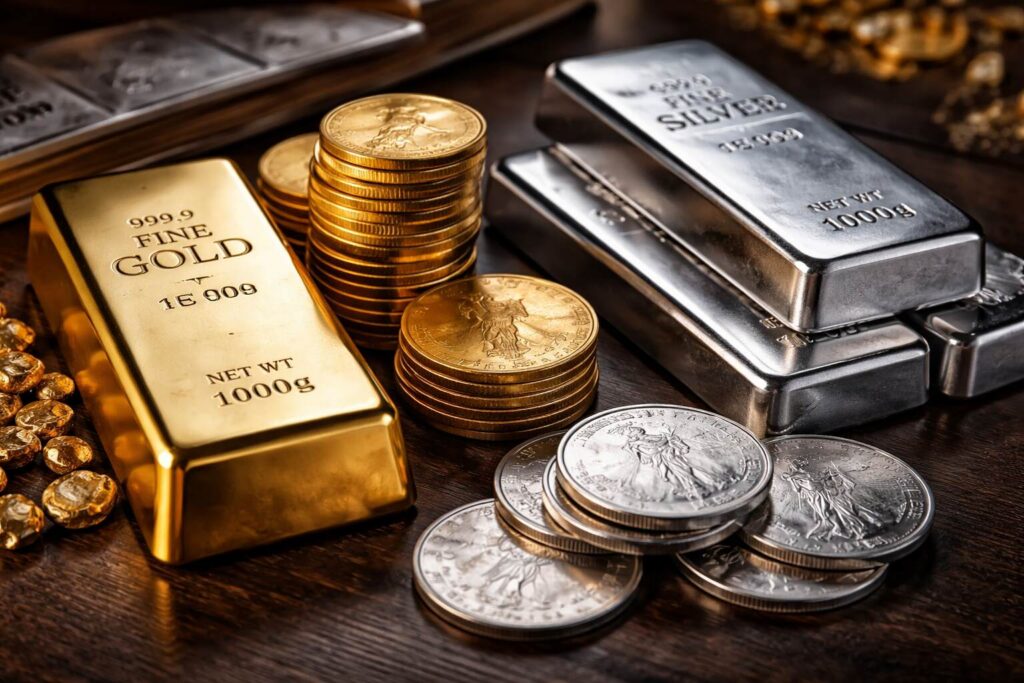
Gold and silver portfolio allocation isn’t about predicting which metal will outperform. It’s about understanding their roles. Gold offers stability, liquidity, and long-term purchasing power protection. Silver brings industrial demand exposure and greater upside potential — along with more volatility. The right balance depends on your goals, risk tolerance, and how precious metals fit within your broader investment strategy.
Gold Silver Prices: Short-Term Noise, Long-Term Signal
Gold and silver prices are full of short-term noise—daily swings driven by Fed commentary, currency moves, and speculative trading. But underneath the volatility lies a consistent long-term signal. Learn how to tell the difference, what structural forces actually drive precious metals prices over time, and how to build a strategy that stays focused on what matters most.
Gold Could Hit $5,000 by 2026 — Here’s What Institutions See Coming

Institutions are turning increasingly bullish on gold, with many forecasting prices above $5,000 by 2026. Driven by record central bank buying, rising geopolitical tensions, and persistent inflation, the 2026 gold price prediction reflects powerful structural forces reshaping the market. Is your portfolio positioned for what comes next?
Gold Cycles: What History’s Bull Markets Teach Investors

Gold and silver have never moved in straight lines. Their history is written in gold cycles — long stretches of dormancy, interrupted by explosive bull markets where both metals have delivered life-changing gains. For investors looking to add gold or silver to their portfolio, understanding these gold cycles is essential. It shows how gold and silver respond to inflation, crises, and monetary shifts — and why they remain indispensable wealth protectors today. The 1970s: Inflation Ignites Gold’s First Modern Super-Cycle When the U.S. abandoned the gold standard in 1971, gold was set free to trade. The timing could not have […]


