Silver Rises Over 120% YTD




How Does the Federal Reserve Actually Create Money?
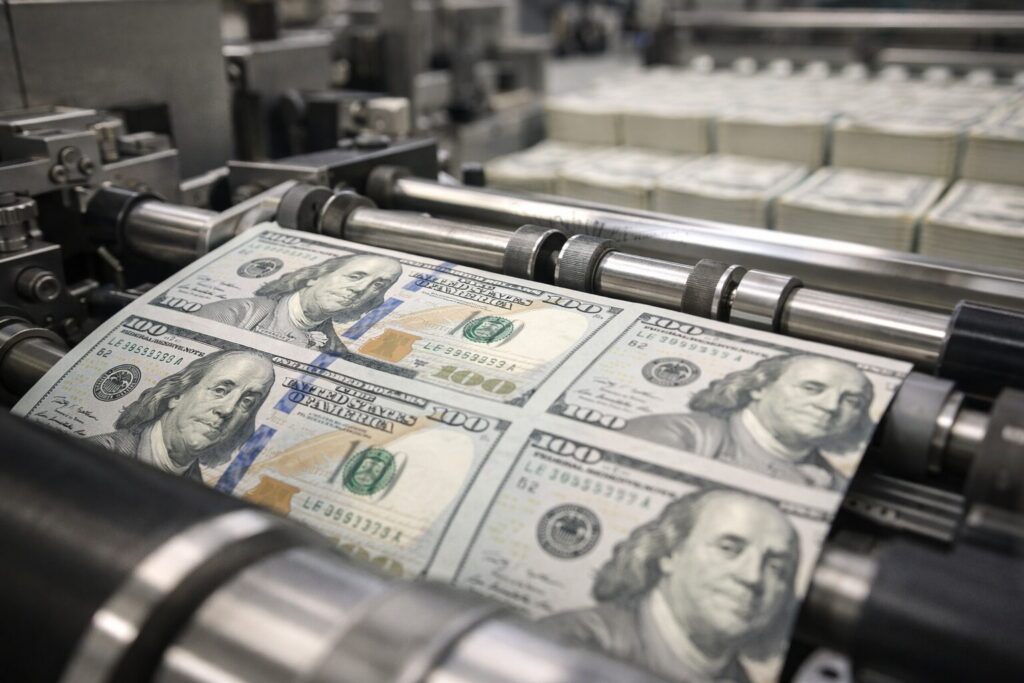
Most people assume money is printed at a mint and backed by something real. The truth is stranger. The U.S. dollar is created through debt, multiplied through bank lending, and sustained by collective agreement. Here’s how the system actually works.
What Is Velocity of Currency — and Why It Matters
The Fed has created trillions in new currency. So why doesn’t inflation always follow immediately? The answer is velocity — and understanding it changes everything about how you read today’s economic headlines.
The U.S. Government’s Own Numbers Show It’s Insolvent
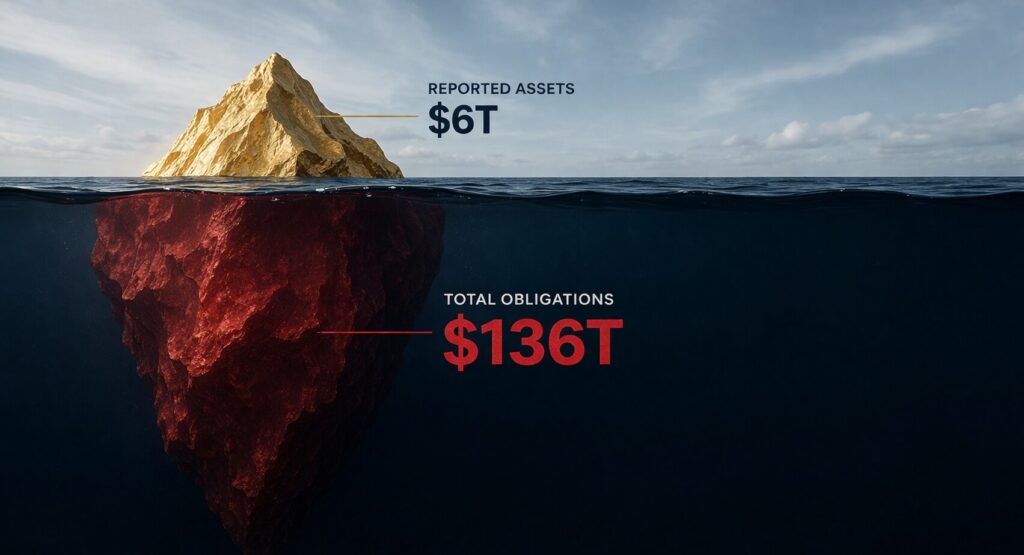
The U.S. government’s own financial statements show $6.06 trillion in assets against $47.78 trillion in liabilities. The media missed it. Here’s what it means.
Why Is Gold Falling While a War Is Raging?
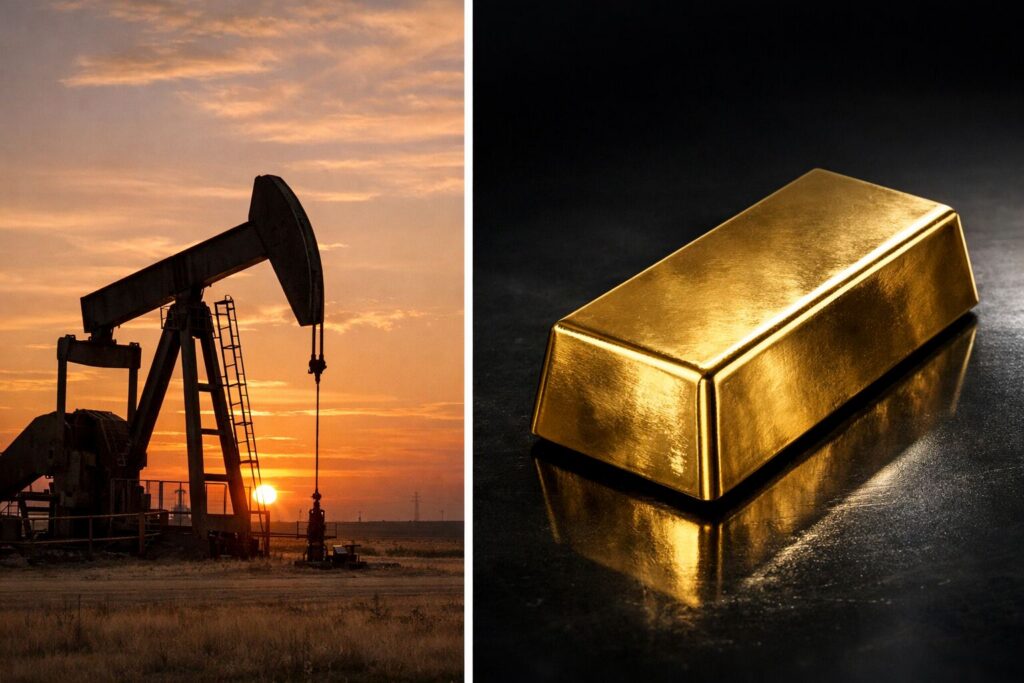
Why is gold falling while a war rages in the Middle East? Today’s digest breaks down the Iran energy shock driving oil to $115, Powell’s Fed decision, a $39 trillion debt milestone, and the surprising split between retail and institutional gold buyers.
Could the US Revalue Its Gold Reserves to Pay Down Debt?

The US still values its gold at $42.22 an ounce — a price frozen since the 1970s. Here’s what revaluing those reserves would actually mean, and why the math doesn’t add up the way politicians hope.
How Government Debt Affects Gold and Silver
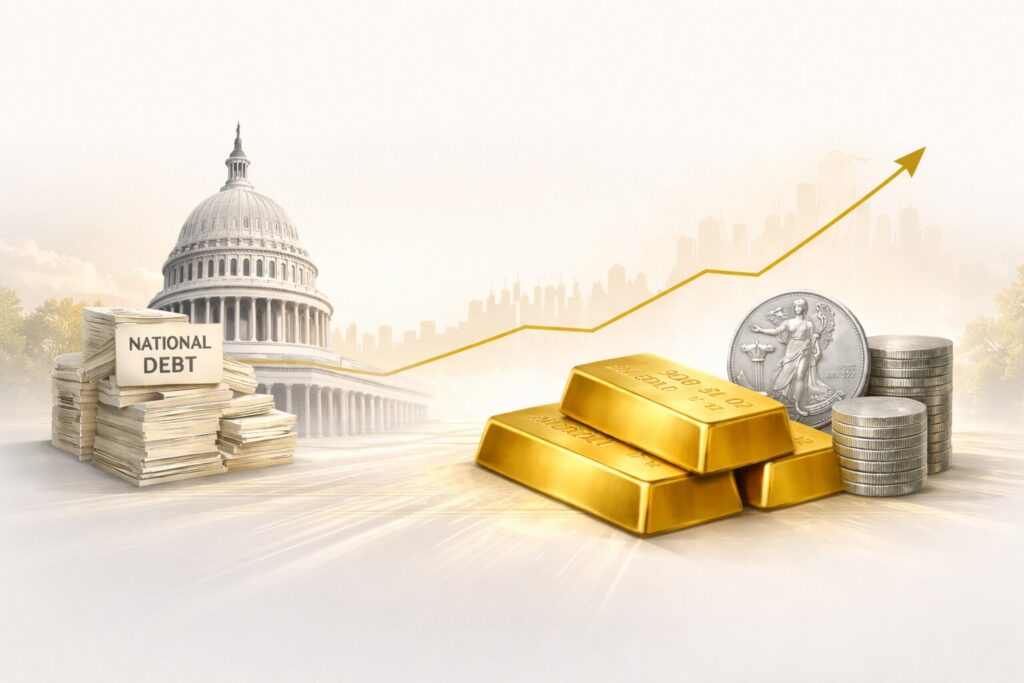
As government debt reaches record levels, gold and silver are emerging as critical hedges against inflation, currency devaluation, and declining confidence in sovereign financial systems. This article breaks down the key mechanisms linking national debt to precious metals prices, explores a decade of historical performance data, and provides actionable portfolio allocation strategies for investors looking to protect their wealth in an era of fiscal excess.
As National Debt Tops $37 Trillion, There’s Still One Asset Washington Can’t Print
While the national debt soars $4.7 billion daily, this inflation hedge has zero counterparty risk…