Silver Rises Over 120% YTD




Published: 02-12-2026, 04:25 pm | Updated: 02-13-2026, 03:01 pm
When margin requirements suddenly change, markets don’t just adjust — they react. Fast.
That’s exactly what happened after CME Group announced on February 6, 2026, that it was raising margin requirements on COMEX 5,000-ounce silver futures from 15% to 18%, along with adjustments to gold futures contracts. The move came after an extraordinary surge in silver prices — a rally that pushed silver above $120 per ounce before crashing back toward $70 in a violent correction.
If you’ve ever wondered why precious metals can spike… and then plunge… in what feels like a heartbeat, margin requirements are a big part of the story.
Let’s break it down.
What Are Margin Requirements?
In futures markets, investors don’t have to pay the full value of a contract upfront. Instead, they post a percentage of the total contract value as collateral. That percentage is called the margin requirement.
For example:
- If silver is trading at $100 per ounce
- A 5,000-ounce futures contract is worth $500,000
- At a 15% margin requirement, a trader needs $75,000 to control that contract
That’s leverage — and leverage amplifies everything. When prices rise, gains are magnified. But when prices fall, losses accelerate just as quickly.
And when volatility spikes, exchanges often raise margin requirements to reduce systemic risk.

The Financial System Isn’t Safer — And You Know It As risks mount, see why gold and silver are projected to keep shining in 2026 and beyond.
Why CME Raised Margin Requirements on Silver and Gold
The recent silver rally was historic. After beginning 2025 near $30 per ounce, silver surged relentlessly, ultimately peaking above $120 in late January 2026.
With prices rising almost daily for weeks, speculative momentum intensified. Retail enthusiasm surged. Geopolitical tensions and inflation fears added fuel to the fire.
As silver kept climbing, the market became heavily leveraged. Traders piled into futures contracts using borrowed capital, magnifying both potential gains and risks.
That’s when CME stepped in.
By increasing margin requirements from 15% to 18%, the exchange effectively told traders, “You need more capital to maintain these positions.”
Exchanges raise margin requirements when volatility surges because highly leveraged markets can spiral quickly. If too many traders can’t meet margin calls, forced liquidations cascade — and markets can break.
But ironically, raising margin requirements often triggers the very selloff it’s designed to prevent.
The February 6 increase marked the third margin hike in less than two weeks. CME lifted COMEX 100 gold futures margins to 9% from 8% and raised silver margins to 18% from 15%, effective after the market close.
More importantly, this tightening followed a major procedural shift on January 13, when CME began setting margins as a percentage of contract value instead of fixed dollar amounts. In a rapidly rising market, percentage-based margins automatically scale higher as prices climb — accelerating the pressure on leveraged traders.
That structural change amplified the impact of each subsequent hike.
How Margin Hikes Trigger Market Selloffs
Here’s how it works:
- Silver surges.
- Traders use leverage to amplify exposure.
- CME raises margin requirements.
- Traders must post more capital immediately.
- Some can’t — so they sell.
- Selling accelerates.
- Prices drop sharply.
That’s exactly what happened on January 29th, 2026. After silver topped $120, margin hikes forced weaker hands out of the market. Liquidations cascaded. Silver fell hard, eventually reaching the $70s.
Silver’s Run to $120 and the Margin-Induced Reset
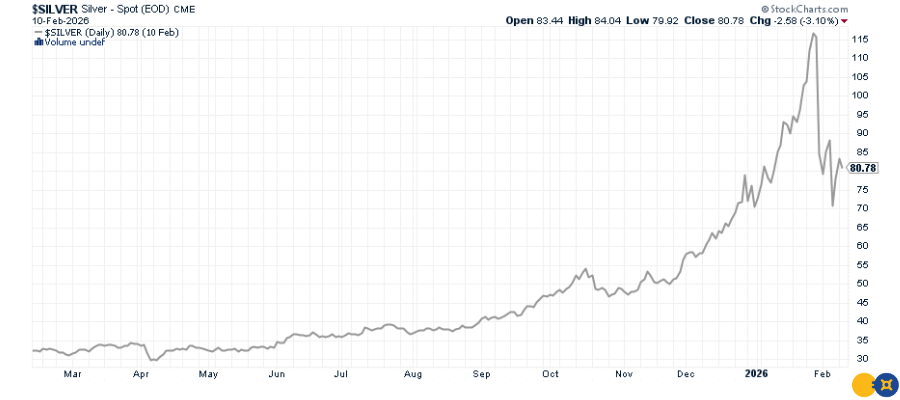
The move wasn’t purely about fundamentals. It was structural. As discussed in our breakdown of why silver prices are so volatile, leverage and liquidity conditions often drive short-term extremes.
When leverage builds to extremes, margin requirements become the pressure valve.
Why This Matters for Precious Metals Investors
If you’re buying physical gold or silver for long-term wealth protection, margin requirements don’t directly impact your holdings.
But they can absolutely influence short-term price action. Here’s the bigger picture:
- Futures markets set global benchmark prices.
- Leverage drives volatility.
- Margin hikes reduce leverage.
- Reduced leverage can trigger short-term corrections.
This is one reason precious metals can experience dramatic swings — even when long-term fundamentals remain intact.
And it’s also why physical metal ownership operates differently from paper speculation.
The Real Lesson: Volatility Is a Feature, Not a Flaw
The run to $120 silver, and the swift collapse back to $70, offers a textbook lesson in how leverage distorts markets.
In periods of uncertainty, capital rushes toward hard assets. Speculators amplify that move with borrowed money. Leverage builds quietly in the background. When volatility spikes, margin requirements rise. Weakly capitalized traders are forced out. The market resets.
But zoom out.
These episodes rarely occur in isolation. They tend to surface during larger structural shifts — rising inflation expectations, geopolitical instability, monetary uncertainty, or growing cracks in confidence around the financial system.
Over decades, gold and silver have endured countless cycles of leverage expansion and contraction. Short-term volatility reflects positioning and leverage. Long-term value is driven by monetary debasement, real interest rates, and global confidence in fiat currencies.
Stay On Top of Gold & Silver Prices
Get important market alerts sent straight to your inbox.
People Also Ask
What are margin requirements in futures trading?
Margin requirements are the minimum amount of capital a trader must deposit to control a futures contract. Instead of paying the full contract value upfront, traders post a percentage as collateral. This creates leverage — magnifying both gains and losses. When volatility rises, exchanges often increase margin requirements to reduce systemic risk.
Why did CME raise margin requirements on silver in 2026?
CME raised margin requirements in February 2026 after silver surged above $120 per ounce and volatility spiked. The increase — from 15% to 18% — required traders to post more capital to maintain leveraged positions. The move was designed to reduce risk in an overheated futures market.
How do margin requirements cause silver prices to fall?
When margin requirements increase, traders must deposit additional capital immediately. If they cannot meet the new requirements, they are forced to sell their positions. This forced liquidation accelerates selling pressure, which can cause sharp price declines — even if long-term fundamentals remain unchanged.
Do margin requirements affect physical gold and silver investors?
Margin requirements directly affect futures traders, not physical metal holders. However, futures markets set global benchmark prices. As a result, forced liquidations in leveraged markets can create short-term volatility in gold and silver prices, even for long-term physical investors.
What happened to silver prices after the January 2026 margin hike?
After silver topped $120 in late January 2026, margin hikes triggered forced liquidations in the futures market. Selling cascaded, and prices fell sharply into the $70s within days. The decline was largely driven by leverage unwinding rather than a sudden change in long-term fundamentals.
You May Also Like
- Gold vs Silver: The Liquidity Difference That Matters
- Silver Price Components: Premium, Spot, and Dealer Markup Explained
- Silver Price Forecasts Revisited: Why Wall Street Got It Wrong
- Gold’s Purchasing Power: What One Ounce Buys Over Time
- Why Metals Dominated Every Asset Class in 2025 [and What It Means for 2026]
- Best Investment Of 2026: Silver’s Setup Is Hard To Ignore