 Silver Rises Over 120% YTD




UBS Forecasts Gold Above $6,000 — Should You Buy Now?

UBS forecasts gold to rise 20% by end-2026, targeting $5,900–$6,200 per ounce. Learn what’s driving the rally, whether now is the right time to buy, and how to position your precious metals portfolio for maximum impact.
Gold and Silver Mining Stocks: What Most Investors Miss
Gold and silver mining stocks can amplify gains when precious metals rise. But they carry risks bullion doesn’t — from rising production costs to geopolitical exposure. This guide breaks down what mining stocks actually are, where they can work in a portfolio, and what the fine print usually leaves out.
Is Gold in a Bubble? What Kiyosaki’s $35K Forecast Tells Us
Gold has surged past $5,000 an ounce — but is it a bubble or a bull market? We break down what’s driving prices, evaluate Robert Kiyosaki’s dramatic $35,000 forecast, and explain what investors should actually do with their precious metals allocation right now.
How Government Debt Affects Gold and Silver
As government debt reaches record levels, gold and silver are emerging as critical hedges against inflation, currency devaluation, and declining confidence in sovereign financial systems. This article breaks down the key mechanisms linking national debt to precious metals prices, explores a decade of historical performance data, and provides actionable portfolio allocation strategies for investors looking to protect their wealth in an era of fiscal excess.
Gold vs Silver: The Liquidity Difference That Matters
Liquidity isn’t just about whether you can sell—it’s about how fast, how cleanly, and at what cost. Gold and silver both trade globally, but they don’t behave the same way when markets are stressed or timing matters. Gold maintains tight spreads and deep buyer networks even under pressure, while silver’s liquidity becomes complicated as dollar values increase. Understanding these practical differences helps investors allocate intelligently and avoid costly surprises when they need to act.
Gold vs Silver Storage and Liquidity: What Investors Need to Know
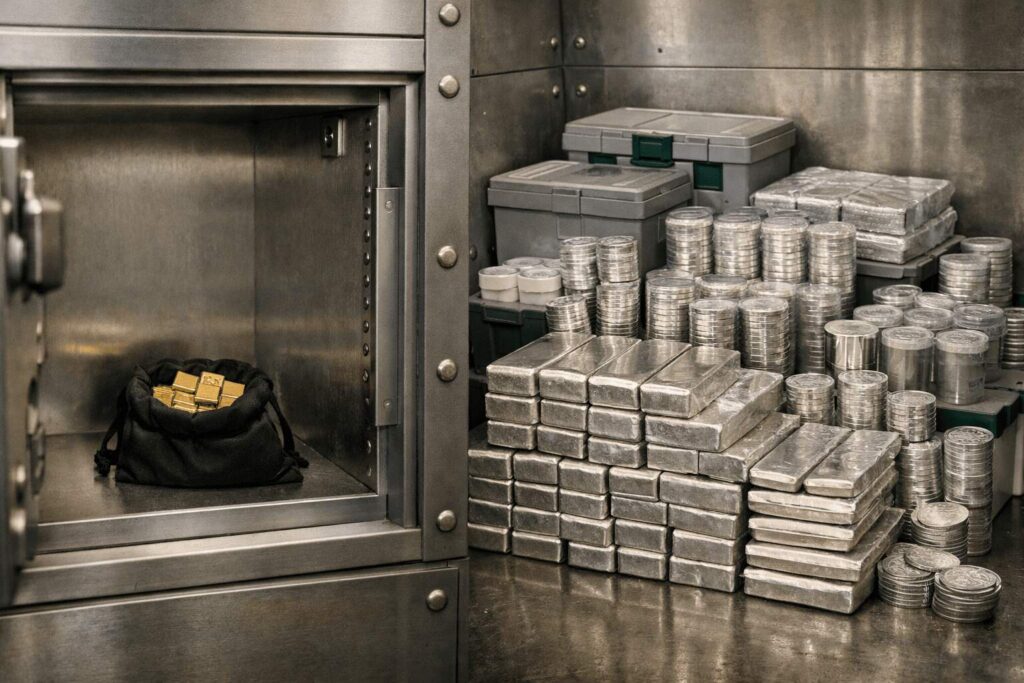
Most investors compare gold and silver by watching price charts—but that’s a mistake. The real differences don’t show up on a screen; they show up after you own them. Gold concentrates massive value into a small, portable form. Silver spreads that same value across weight, volume, and bulk. Understanding gold vs silver storage and liquidity matters far more than guessing where prices go next—because price is temporary, but ownership is permanent.
What the Falling Gold-to-Silver Ratio Means for Investors
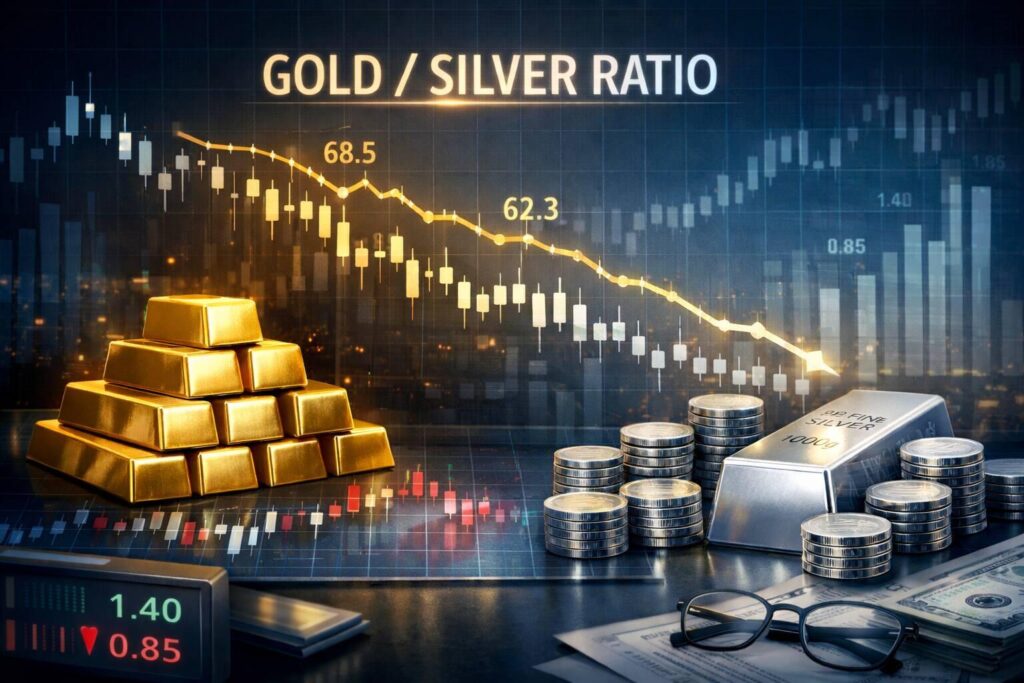
The gold-to-silver ratio is experiencing significant shifts that present strategic opportunities for precious metals investors. Understanding why this key metric is falling—from surging industrial demand to economic recovery signals—can help you optimize your portfolio allocation between gold and silver. Learn how to use this powerful valuation tool to time your investments and discover specific strategies tailored to your risk tolerance.
7 Reasons Gold and Silver Will Surge From Current Levels
Precious metals investors are watching market conditions closely as gold and silver hover at pivotal price points. While both metals have already posted impressive gains, multiple converging factors suggest we may be witnessing the early stages of a significant price surge rather than a market peak. From record central bank demand and compressed real yields to industrial supply squeezes and geopolitical tensions, seven powerful catalysts are aligning to drive gold and silver prices higher. Understanding these factors can help you position your portfolio to benefit from the potential upside while managing risk appropriately.
5 Reasons Silver Surged Past $60 — Is $75 Next?
Silver has shattered its psychological barrier, breaking past $60 per ounce for the first time in history. This milestone in the precious metals bull market signals fundamental shifts in industrial demand and monetary dynamics that could sustain higher prices for years. Discover the five key drivers behind this unprecedented surge and why $75 may be the next target.
Buy Precious Metals in 2026: Why Allocation is Rising
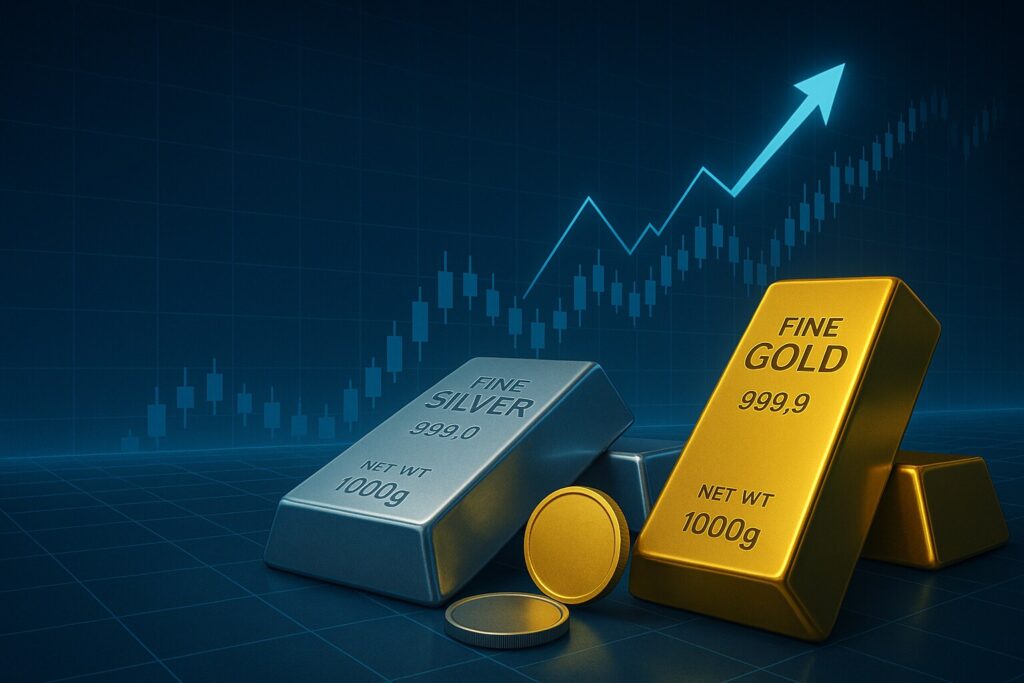
In 2026, more investors are choosing to buy precious metals as gold and silver gain traction in modern portfolios. With rising inflation, shifting institutional strategies, and growing demand from central banks, precious metals are becoming a core asset for diversification and long-term stability.


