 Silver Rises Over 120% YTD




The Gold-Silver Ratio Is Expanding — and Being Misread

The gold-silver ratio has expanded to 62.05:1 — silver is down ~7% since April 22 versus gold’s ~4%. Most investors are reading that as a bearish signal. Here’s why the ratio expansion is a short-term positioning story, and why the structural case for silver — six consecutive supply deficits, record China demand, Basel III tailwinds — has not changed.
Why Gold Stabilizes — and Silver Amplifies

Gold and silver share the same label—but they don’t play the same role. Gold stabilizes your portfolio through market uncertainty, while silver amplifies both gains and losses. Learn the structural differences between the two metals, and how understanding each one’s unique behavior can help you build a more resilient, strategically balanced investment portfolio.
Gold, Silver, and Stagflation: 5 Signals That Matter Now

Five verified market briefs for May 4, 2026: stagflation confirmed in ISM data, Warsh’s trimmed mean PCE as the key gold signal, AI’s $725B capex driving silver’s sixth straight deficit year, Friday’s binary jobs report, and what $1.3T in credit card debt reveals about monetary debasement.
COMEX Silver Coverage Ratio: Is Your Paper Silver Real?
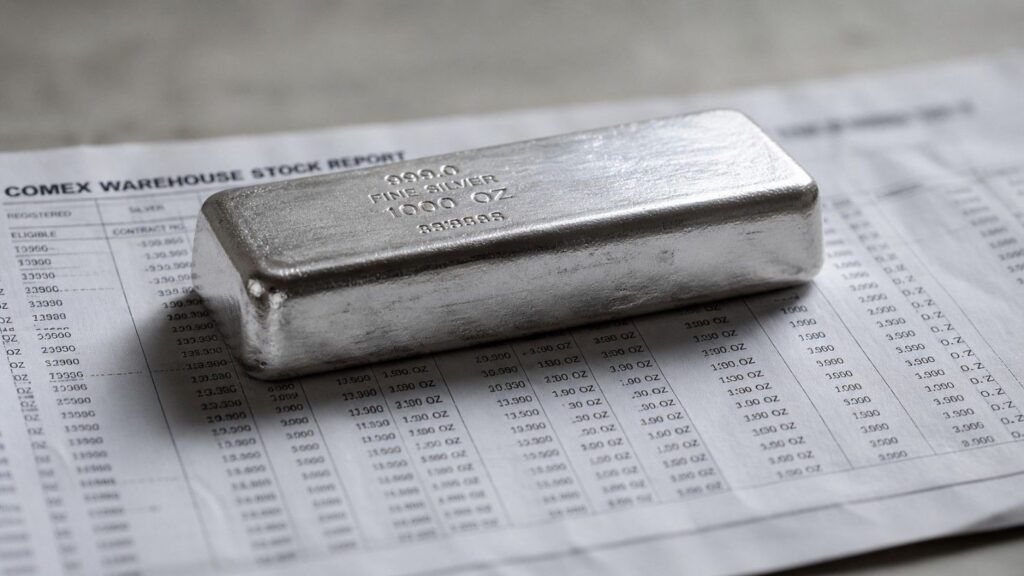
Less than one ounce of deliverable silver backs every seven ounces of paper claims on COMEX. The coverage ratio has held below its stress threshold for six straight months — here’s what that means for silver investors.
Gold vs. Fiat Currency: A 50-Year Reckoning

When governments abandoned gold-backed money in the 1970s, they didn’t just change monetary policy — they rewired human behavior. Understanding that shift is key to understanding where precious metals are headed.
Why Gold Fell on the Hormuz Tanker Strike

The gold price dropped on May 4, 2026, as a tanker was struck in the Strait of Hormuz and ISM Prices Paid hit 84.6 — the worst cost-inflation reading since April 2022. Gold barely moved. Here’s what that non-reaction tells investors about where the structural floor really is.


