Silver Rises Over 120% YTD




Published: 07-17-2026, 01:24 pm
This morning, the University of Michigan released its July inflation survey. One-year inflation expectations fell to 4.2%, down from 4.6% last month (University of Michigan Surveys of Consumers, July 2026 preliminary). That is better news than analysts expected. However, gold is down roughly 3% for the week. The reason lies in data the survey did not capture.
Sentiment rose to 54.4 in the preliminary reading. That was the highest since February. It beat the forecast of 51.0.
In normal conditions, falling inflation expectations support gold. Lower odds of Federal Reserve rate hikes reduce the cost of holding gold. Gold should have responded positively.
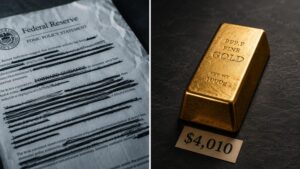
Still, gold is at $4,019.87 per ounce (goldsilver.com/price-charts/). It is down roughly 3% for the week. That puts it near its lowest level since November 2025.
The survey, it turns out, is looking backward.
What Did the Michigan Inflation Survey Miss?
More than 70% of the July survey responses were collected before July 7 (University of Michigan, July 2026 preliminary). That was the day US airstrikes on Iran resumed, ending a brief ceasefire.
Survey director Joanne Hsu attributed the improvement to lower gas prices. She described the gains as driven by “easing price pressures at the pump in recent weeks” (Joanne Hsu, University of Michigan, July 17, 2026). Those weeks are behind us.
Since July 7, oil has risen roughly 13% (U.S. Energy Information Administration). On July 17, the US Treasury reinstated oil sanctions on Iran (U.S. Treasury, July 17, 2026). That reversed a temporary waiver. The waiver had allowed Iranian oil exports through August 21. As a result, an estimated one to two million barrels of daily Iranian supply are now removed from global markets.
The survey captured the calm. It missed the storm.
Why Is Gold Falling Despite Better Inflation Data?
Gold does not read last month’s survey. Instead, it prices the forward trajectory of real yields. Real yields measure what investors actually earn on Treasury bonds after accounting for inflation. Here is the full chain.
Hormuz shipping remains substantially below pre-conflict levels. Higher oil pushes energy inflation higher. As a result, the probability of a Federal Reserve rate hike in September stays elevated. That holds true despite softer core CPI and PPI readings earlier this week. Higher rate expectations push up Treasury yields. In turn, a stronger dollar makes gold more expensive for overseas buyers. And gold — which yields nothing — becomes harder to hold against a Treasury yielding 3.79% (U.S. Treasury, July 16, 2026).
Therefore, gold is falling on a day the official inflation survey looked encouraging. The gold market is pricing next month’s Michigan reading, not this one.
Does a Lower Gold Price Change the Long-Term Case?
The University of Michigan’s own release contains a detail worth noting. Consumer inflation expectations stand at 4.2%. However, that reading still “substantially exceeds the 3.4% seen in February before the Iran conflict began” (Joanne Hsu, University of Michigan, July 17, 2026). In other words, expectations have improved — but have not returned to pre-conflict levels.
That context matters. The Federal Reserve’s 2% inflation target is not in sight. Furthermore, oil supply through the Strait of Hormuz will not normalize quickly. The rate path the market is pricing runs into a structural ceiling. US net interest payments exceeded one trillion dollars for the first time in fiscal year 2025 (U.S. Treasury, Fiscal Data API, FY2025). That limits how far the Fed can raise rates. Tightening too aggressively strains its own government’s borrowing costs.
The World Gold Council published its July 2026 Gold Valuation Framework on July 1, 2026. Its base case assumes one rate hike before October 2026. Under that scenario, the fair-value midpoint for gold is approximately $4,100 per ounce (World Gold Council, Gold Mid-Year Outlook 2026, July 1, 2026). Gold is currently trading below that estimate.
When energy-driven inflation persists, purchasing power in dollar terms erodes. The rate cure that would conventionally address this problem is structurally limited. That is not a prediction. That is the mechanism that has made gold a reliable store of value for centuries.
The Michigan survey will almost certainly show higher inflation expectations next month. Gold is pricing that already.
Key Takeaways
- Consumer inflation expectations fell to 4.2% in July — however, more than 70% of responses were collected before July 7, when gas prices were still easing at the pump
- Since July 7, oil has risen roughly 13% as US airstrikes on Iran resumed and the Treasury reinstated Iranian oil sanctions
- The gold market is pricing forward, oil-driven inflation — not the backward-looking consumer survey
- The mechanism: oil spike → re-accelerating inflation expectations → elevated Fed rate hike odds → higher real yields → lower gold
- Gold’s fair-value midpoint is near $4,100 (World Gold Council, July 2026) — the current price of $4,019.87 trades below that estimate
Stay On Top of Gold & Silver Prices
Get important market alerts sent straight to your inbox.
Disclaimer: This article is for informational purposes only and does not constitute financial or investment advice. Always consult a qualified financial adviser before making investment decisions.
SOURCES
1. University of Michigan — Surveys of Consumers, July 2026 Preliminary Results
2. CNN Business — Consumer Sentiment Surges Due to Lower Gas Prices
3. TradingView News — US Consumer Sentiment Improves for Second Straight Month
4. Finimize — US Consumer Sentiment Hit a Five-Month High in July
5. Al Jazeera — Oil Surges as US Strikes Iran, Treasury Rescinds Iranian Oil Waiver
6. Yahoo Finance — Oil Up Nearly 13% Over the Last Five Days as Airstrikes Continue
7. StreetStats — U.S. Treasury Yield Curve, July 16, 2026 Close
8. GoldSilver — Gold Price Outlook July 2026 (World Gold Council Valuation Framework)
You May Also Like:
- Gold Fell 3.4% This Week. The Long-Term Case Didn’t.
- Manufacturing Just Had Its Best Month of 2026. Gold Just Had One of Its Worst Days.
- Warsh Told Wall Street to Stop Watching the Fed. Gold Already Knew.
- Gold Falls as Retail Sales Confirm the Fed Has No Reason to Cut
- Silver Dropped 1.4% Today. Gold Didn’t. The Ratio Just Hit 70:1.
- Gold Holds as CPI and PPI Both Miss. Here’s Why.