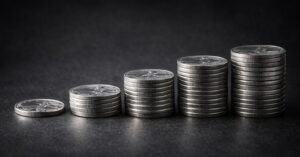
Silver Rises Over 120% YTD




Central banks rarely make headlines. But when the Federal Reserve launches a new round of quantitative easing, markets everywhere take notice.
QE shapes the dollar, moves interest rates, and strengthens the long-term case for precious metals. It’s one of the most consequential forces in modern finance — and most people couldn’t explain how it works if asked.
Gold has risen from roughly $255 an ounce in 2001 to nearly $4,750 today. That move didn’t happen in a vacuum. To understand it, you need to understand QE.
What Is Quantitative Easing in Simple Terms?
Quantitative easing is an unconventional monetary policy tool. Central banks turn to it when their primary lever — cutting short-term interest rates — has been pushed as far as it can go.
Here’s how it works. The Federal Reserve creates new bank reserves electronically. It uses those reserves to buy financial assets — mostly U.S. Treasury bonds and mortgage-backed securities — from banks and other institutions [Federal Reserve Bank of St. Louis].
This does two things at once. It floods the banking system with liquidity, giving banks more reserves and more capacity to lend. And by buying up bonds, the Fed pushes bond prices higher and yields lower. That pulls down long-term interest rates on everything from mortgages to corporate debt.
The stated goal: cheaper borrowing and stronger growth.
The side effect: a dramatically expanded money supply and a Fed balance sheet that balloons by trillions of dollars.
How Did Quantitative Easing Start?
The Bank of Japan pioneered QE in the early 2000s to combat deflation. But the policy went global during the 2008 financial crisis. That’s when the U.S. Federal Reserve adopted it at a scale no modern central bank had ever attempted.
The U.S. Timeline:
The Rise of Quantitative Easing
How the Fed’s balance sheet ballooned from $800 billion to $8.9 trillion — and never fully came back down.
The Fed’s first large-scale asset purchase program — mortgage-backed securities, agency debt, and Treasuries at a scale no modern central bank had attempted.
Source: Federal Reserve Bank of San FranciscoThe economy remained sluggish. The Fed added another round of longer-term Treasury purchases to push rates lower and stimulate growth.
Source: Federal Reserve Bank of New YorkThe open-ended round. No set expiration. Started at $40B/month in MBS, later expanded to $85B/month with Treasuries — for as long as it took.
Source: Federal Reserve Bank of St. LouisThe most aggressive round yet. Unlimited asset purchases. Holdings peaked at $8.93 trillion in June 2022 — more than 10× the pre-crisis balance sheet.
Source: Federal ReserveThe Ratchet Effect
Before 2008, the Fed’s balance sheet was about $800 billion — ~6% of GDP. At its COVID-era peak, it exceeded $8.9 trillion. Even after three years of reductions, it sits at approximately $6.7 trillion — ~21% of GDP.
Each crisis pushes the balance sheet higher. Each recovery only partially brings it back down.
Even during the tightening cycle that followed, the Fed couldn’t stay out of the market for long. When Silicon Valley Bank and Signature Bank failed in March 2023, the Fed launched the Bank Term Funding Program (BTFP) — an emergency facility that let banks borrow against underwater bonds at face value. It wasn’t called QE. But at its peak, it injected over $160 billion in liquidity and temporarily reversed the balance sheet shrinkage [Federal Reserve]. The pattern was already reasserting itself before QT officially ended.
That’s the ratchet effect. Each crisis pushes the balance sheet higher. Each recovery only partially brings it back down.
What Happened in 1971? The guide that explains the moment our financial system changed.
What Has Gold Done During Past QE Programs?
The track record is hard to ignore — but it’s not a straight line. Context has mattered as much as the policy itself.
QE1 (2008–2010): Gold rose from roughly $750 to $1,100 per ounce. A gain of nearly 50% during severe economic stress.
Through QE2 (2010–2011): The rally kept running. Gold peaked near $1,900 in September 2011 — more than doubling from pre-crisis levels on the back of zero rates, expanding money supply, and persistent uncertainty.
QE3 (2012–2014): The counterexample. Gold fell. By late 2012, confidence had returned and inflation expectations were muted. Markets read the open-ended program as a sign the recovery was on track. Safe-haven demand faded. Gold dropped from above $1,700 to below $1,200.
COVID-era QE (2020–2022): Gold climbed from roughly $1,550 to above $2,000 — new all-time highs as trillions in fresh liquidity hit the system.
The current cycle (2022–present): Gold dipped during the Fed’s aggressive rate hikes, then resumed climbing on sticky inflation, record central bank buying, and geopolitical risk. As of early April 2026, it trades near $4,750 per ounce, up roughly 47% year over year [Trading Economics, April 2026].
The QE3 episode is the one worth studying. It shows that QE doesn’t guarantee short-term gold gains. What matters is whether investors perceive real fragility or returning confidence. But zoom out and the pattern holds: every major balance sheet expansion has corresponded with a secular move higher in gold.
How Does Silver Respond to Quantitative Easing?
Silver rides the same macro tailwinds as gold during QE — a weakening dollar, falling real rates, rising inflation expectations. But it amplifies them.
That’s because silver lives a double life. It’s a monetary metal and an industrial one. Industrial fabrication hit a record 680.5 million ounces in 2024 — about 59% of total global demand — led by solar panels, electronics, EVs, and AI infrastructure [The Silver Institute, World Silver Survey 2025]. That industrial exposure makes silver more volatile. It falls harder in downturns and rallies harder in recoveries.
The post-2008 QE cycle produced one of silver’s most dramatic moves in modern markets. The metal surged from below $9 in late 2008 to nearly $50 by April 2011.
This cycle has been even sharper. Silver is up over 140% in the past year as of early April 2026, outpacing gold by a wide margin. A persistent supply deficit — now in its fifth consecutive year — plus surging green-energy demand have combined with monetary expansion to fuel the move [The Silver Institute, November 2025].
One metric to watch: the gold-to-silver ratio. When it’s historically elevated, it often signals silver is undervalued relative to gold. Aggressive monetary easing has a track record of compressing that ratio as silver catches up.
Why Does the Fed Keep Returning to QE?
This is the structural question — and it matters more than any single QE program. The Fed’s balance sheet has grown from roughly $800 billion in 2005 to about $6.7 trillion today. That’s a jump from 6% of GDP to 21% [Federal Reserve Board of Governors, January 2026]. And every time the Fed has tried to shrink it, something has broken.
QT after the 2008 crisis ended in 2019 when funding markets seized up. QT after the COVID-era expansion ended in December 2025 — for strikingly similar reasons. Each reversal starts from a higher floor.
The forces behind this aren’t temporary. Federal interest payments now run roughly $88 billion per month — over $1 trillion per year. The national debt keeps growing. And the Fed has locked itself into an “ample reserves” framework that demands a far larger balance sheet than anything that existed before 2008 [U.S. Treasury Department].
Mike Maloney has described this as the core flaw in a fiat currency system: ever-expanding money creation to service ever-expanding debt. It’s a cycle with no built-in off switch — and one that has historically rewarded those holding hard assets.
Is the Fed Doing QE Right Now?
Depends who you ask. The Fed’s “Reserve Management Purchases” program, launched in December 2025, buys $40 billion per month in Treasury bills. Officially, it’s a maintenance operation to keep bank reserves adequate. Not a policy shift. Not a signal about rates.
But the numbers tell their own story. Between early December 2025 and late February 2026, the Fed added roughly $89.6 billion in securities to its portfolio [Seeking Alpha, February 2026]. Total assets are climbing [American Action Forum, April 2026].
Call it what you want. The balance sheet is expanding. Liquidity is rising. And if that pattern sounds familiar, it should.
Your Gold Buying Guide Most investors overpay when they buy gold. Then overpay again when they sell. This guide shows you exactly what to own — and why.
What Should Precious Metals Investors Take Away?
QE isn’t a one-off event. It’s a structural feature of modern central banking — and the Fed reaches for it more often, not less. The exit ramp keeps getting shorter. Every reversal starts from a higher floor. The dollar’s purchasing power erodes a little more each cycle.
Gold and silver sit on the other side of that equation. They can’t be conjured into existence by a central bank committee vote. Their supply grows at roughly 1–2% a year, physically, from the ground. That contrast is the entire thesis.
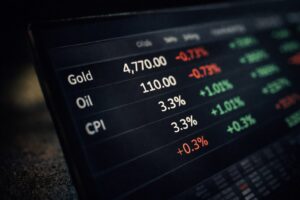
Right now, the conditions are stacking. The Fed is expanding its balance sheet again. Oil is above $100. Inflation is still running above target. These are the same ingredients that preceded every major precious metals rally of the last two decades.
None of this tells you what gold does tomorrow. But it might explain why gold at $4,750 looks less like a peak and more like a stop along the way.
Investing in Physical Metals Made Easy

People Also Ask
What is quantitative easing in simple terms?
QE is when a central bank creates new money to buy government bonds and other assets. The goal is to push long-term interest rates down and inject liquidity into the financial system — typically when rate cuts alone aren’t enough.
How does quantitative easing affect gold prices?
QE weakens the dollar, pushes real interest rates lower, and signals economic fragility — all of which support gold. During the first two rounds of U.S. QE from 2008 to 2011, gold more than doubled from roughly $750 to $1,900 per ounce.
Is the Federal Reserve doing quantitative easing in 2026?
The Fed launched “Reserve Management Purchases” in December 2025 — $40 billion per month in Treasury bills. Officially, it’s a technical operation, not QE. But the balance sheet is growing, liquidity is increasing, and the practical effects look a lot like prior QE programs.
Why does gold go up when the Fed prints money?
Gold’s supply is finite. Mining adds about 3,600 tonnes per year to a total above-ground stock of roughly 216,000 tonnes — growth of just 1.7% [World Gold Council]. When the Fed creates trillions in new dollars, each one is worth a little less. Gold doesn’t dilute. That’s the core of the argument.
SOURCES
1. Federal Reserve Board of Governors — The Central Bank Balance-Sheet Trilemma
2. Federal Reserve Bank of San Francisco — Fed Asset Buying and Private Borrowing Rates
3. Federal Reserve Bank of St. Louis — Quantitative Easing: How Well Does This Tool Work?
4. Federal Reserve Bank of New York — Ten Years Later: Did QE Work?
5. Federal Reserve Board — Bank Term Funding Program
6. U.S. Department of the Treasury — Report from the Treasury Borrowing Advisory Committee
7. American Action Forum — Tracker: The Federal Reserve’s Balance Sheet Assets
8. International Banker — Why the Fed Began a New Phase of Balance-Sheet Expansion in December
9. World Gold Council — Gold Price Performance and Supply Data
10. The Silver Institute — Silver Industrial Demand Reached a Record 680.5 Moz in 2024
11. The Silver Institute — The Silver Market Is on Course for Fifth Successive Structural Deficit
12. Trading Economics — Gold Price Data
13. Seeking Alpha — Federal Reserve Watch: Quantitative Easing Continues
14. Brookings Institution — What Did the Fed Do After Silicon Valley Bank and Signature Bank Failed?
This article is for informational purposes only and does not constitute financial or investment advice. Always consult a qualified financial advisor before making investment decisions.