Silver Rises Over 120% YTD




Published: 09-17-2026, 03:45 pm
Last verified: September 2026
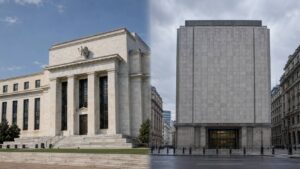
On Wednesday the Federal Reserve raised its benchmark interest rate for the first time since 2023. On Thursday the Bank of England refused to move at all. By the time both decisions were on the tape, the two central banks had landed on the exact same number.
Gold is trading near $4,363 an ounce today, up 2.34% on the session. Silver is near $65.63, up 4.23%. Both are extending this week’s rebound as two G7 central banks pull in opposite directions.
Key takeaways:
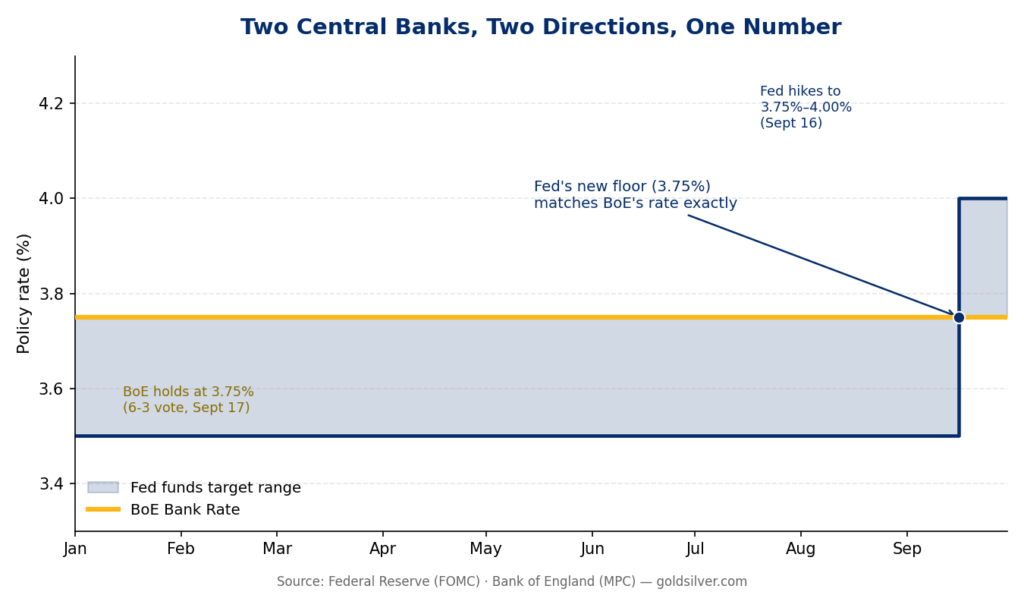
- The Fed hiked 25 basis points to a 3.75%–4.00% range on Sept. 16, unanimous at 12-0. Its first increase since 2023. The Bank of England held at 3.75% on Sept. 17, voting 6-3, its sixth straight hold this year. The floor of the Fed’s new range now matches the BoE’s rate exactly.
- Both banks blame the same thing for the inflation they’re fighting: an energy shock from the Middle East conflict that no interest-rate decision can touch.
- Gold trades off real yields, not headline rates. A 25-basis-point move in real yields has historically moved gold $40 to $60 an ounce.
Two Decisions, One Day Apart
The Fed’s Federal Open Market Committee voted 12-0 Wednesday to lift its target range a quarter point, to 3.75%–4.00%, the first hike since 2023 and a reversal of the cuts that had pushed the rate down to 3.50%–3.75% by the end of 2025. Chair Kevin Warsh called inflation “too high,” citing price increases running above 3% in too many categories. Updated projections raised the median year-end dot to 4.1%, from 3.8% in June, the clearest signal yet that officials expect at least one more hike this year.
A day later, the Bank of England’s Monetary Policy Committee voted 6-3 to leave Bank Rate exactly where it was. Governor Andrew Bailey’s committee has now held six meetings running, even as UK inflation climbed to 3.1% in August and is likely to rise further. Three of the nine MPC members, Megan Greene, Catherine Mann, and chief economist Huw Pill, voted for an immediate hike to 4.00%, the same three who dissented in July.
The Edge Every Investor Needs Smarter precious metals investing starts here. The Nuggets Newsletter brings you essential market insights, Fed updates, global trends, educational videos, and much more.
Why are both central banks blaming the same thing?
Here’s what doesn’t fit the obvious story. Both banks are responding to the same shock, not domestic overheating: a Middle East conflict keeping energy prices elevated on both sides of the Atlantic. The Fed tightened because US inflation was already hot before the shock hit. The BoE waited, betting a loosening labor market would cool inflation without a hike.
Its own staff estimate that quantitative tightening, the runoff of its £488 billion gilt portfolio, already added 20 to 30 basis points to market rates over the past year. The same meeting eased that channel going forward, though: the Bank cut its future gilt-sale pace to roughly £46 billion a year, from £70 billion, and paused active sales for six months. The hold cuts both ways, tighter than the headline rate suggests looking back, looser looking ahead. Its minutes are just as direct about the source of the pressure, blaming “protracted conflict in the Middle East” rather than domestic demand. A rare case of naming, in an official document, a cause its tools cannot touch.
For gold, the mechanism runs through real yields: the nominal rate minus expected inflation. A 25-basis-point move in real yields has historically moved gold $40 to $60 an ounce. A hike raises nominal yields, a headwind on paper. But it’s landing alongside inflation expectations climbing on the same shock. When both rise together, real yields can stay flat or fall. In practice, that’s what both metals priced in this week: neither sold off on hike day.
What does this mean for savers?
That’s financial repression close to its purest form: two banks holding rates below what an energy shock would otherwise call for, because tightening enough to kill it would cost growth neither can afford. Savers holding cash in either currency are earning a return that doesn’t outrun the inflation both expect to persist. Even so, gold and silver sit outside that calculation entirely, since their supply isn’t set by a committee vote.
What’s the real story here?
The real story isn’t that the Fed hiked and the BoE held; central banks disagreeing on timing isn’t news. It’s that they disagree on the tool and agree completely on the diagnosis. Both effectively admitted their policy rate can’t touch what’s driving inflation. One decided tightening bought cover anyway. The other decided it couldn’t afford the growth hit. In the end, neither claimed the hike, or the hold, fixes the problem.
Looking ahead, two dates test this. The Fed’s projections pencil in one more quarter-point move, likely in December. The BoE’s next decision lands Nov. 5, with a fresh Monetary Policy Report, the real test of whether UK inflation past 3% moves one of the six holders toward the three who wanted to hike. Watch current gold and silver prices for how the math gets priced between now and then.
Stay On Top of Gold & Silver Prices
Get important market alerts sent straight to your inbox.
People Also Asked
Why did the Fed raise rates while the Bank of England held?
Both are responding to the same shock: an energy-price spike tied to the Middle East conflict. But they reached different conclusions about handling it. The Fed judged US underlying inflation was already running hot before the shock hit, so it raised its target range 25 basis points to 3.75%–4.00% on Sept. 16, unanimously. The Bank of England’s Monetary Policy Committee voted 6-3 on Sept. 17 to hold at 3.75%, betting a loosening UK labor market would cool inflation without an immediate hike.
What is the Fed’s interest rate after the September 2026 decision?
The Federal Open Market Committee raised the federal funds target range 25 basis points to 3.75%–4.00% on Sept. 16, 2026, the Fed’s first increase since 2023. The vote was unanimous, 12-0. The Fed’s updated projections show officials now expect the rate to reach 4.1% by year-end, implying one more quarter-point hike before December.
What is the Bank of England’s rate after the September 2026 decision?
The Bank of England’s Monetary Policy Committee voted 6-3 on Sept. 17, 2026, to hold Bank Rate at 3.75%, its sixth consecutive hold this year. Three members, Megan Greene, Catherine Mann, and Huw Pill, voted for an immediate 25-basis-point rise to 4.00%. UK CPI stood at 3.1% in August, and the Bank expects it to climb further. The same meeting also set a new multi-year plan to slow gilt sales to roughly £46 billion a year, from £70 billion, pausing active sales for six months.
Why are gold and silver prices rising this week?
Both are extending a rebound that began after a sharp selloff earlier in the week, adding gains on the day the Fed hiked and the day after the BoE held. As of this writing, gold trades near $4,363 an ounce, up 2.34%, and silver near $65.63, up 4.23%. The metals holding up through a Fed hike, historically a headwind, suggests markets are pricing rising inflation expectations alongside rising nominal rates, which can leave real yields close to flat.
What is a “real yield,” and why does it matter for gold?
A real yield is a bond’s nominal rate minus the inflation rate investors expect over the same period. Gold pays no yield of its own, so it competes directly with real yields: when they fall, holding gold instead of cash or bonds costs less by comparison, and gold tends to rise. A 25-basis-point move in real yields has historically moved gold’s price roughly $40 to $60 an ounce.
What should investors watch next?
Two dates. The Fed’s own projections point to one more quarter-point hike before year-end, likely in December. The Bank of England’s next decision lands Nov. 5, alongside a new Monetary Policy Report, the first real test of whether persistent UK inflation, at 3.1% and climbing, moves one of the six policymakers who held this week toward the three who voted to hike.
SOURCES
1. Federal Reserve – Federal Reserve Issues FOMC Statement (Sept. 16, 2026)
2. Bank of England – Monetary Policy Summary and Minutes, September 2026 (Sept. 17, 2026)
3. Bank of England – Asset Purchase Facility: Gilt Sales, Market Notice (Sept. 17, 2026)
4. CNBC – Fed Rate Decision September 2026: Rates Rise to 3.75%-4% (Sept. 16, 2026)
5. CNBC – Bank of England Defies Fed’s Rate-Hike Lead, Leaving Rates Unchanged (Sept. 17, 2026)
6. Euronews – Bank of England Holds Rates at 3.75% in 6-3 Split Vote as Inflation Hits Five-Month High (Sept. 17, 2026)
7. Bloomberg – BOE Scraps Long-End Gilt Sales, Helping Ease Pressure on Yields (Sept. 17, 2026)
Disclaimer: This article is for informational purposes only and does not constitute investment advice. Past performance is not indicative of future results. Always consult a qualified financial advisor before making investment decisions.
You May Also Like:
- Jobless Claims Just Beat Estimates. Gold Rallied Anyway. Here Are 4 More Signals Behind It.
- Gold and Silver Rip Higher as the Fed-Hike Selloff Reverses
- The Fed Just Hiked. 16 of 18 Officials Say It’s Not Done.
- $603 Million Left the World’s Biggest Gold ETF. It Didn’t Leave Gold.
- Texas Just Made Gold Legal Money. Four More Non-Fed Stories Followed.
- Silver Is Outperforming Gold by a Third This Morning. The Fed Hasn’t Even Voted Yet.