Silver Rises Over 120% YTD




Daily News Nuggets | Today’s top stories for gold and silver investors
March 4th, 2026 | Brandon Sauerwein, Editor
How the Iran Conflict Is Moving Gold and Silver Prices
Oil prices climbed as investors increasingly worry the conflict with Iran could drag on, threatening global energy supply. Fighting in the region has already rattled markets, with traders pricing in the possibility of prolonged disruptions to shipping and energy infrastructure.
At the center of it all: the Strait of Hormuz, a narrow waterway that handles roughly 20% of the world’s oil shipments. Any disruption there could quickly tighten supply and push prices higher.
Higher fuel costs, renewed inflation pressure, fresh uncertainty in financial markets. The longer the conflict lasts, the more those risks compound.

U.S. Moves to Protect Oil Flow Through Hormuz
After Iran threatened to block the Strait of Hormuz, the White House moved quickly. President Trump said the U.S. Navy could escort tankers through the strait — and directed agencies to offer political-risk insurance for commercial vessels in the region.
The stakes are hard to overstate. The Strait carries roughly one-fifth of the world’s oil shipments. It’s not just an energy route — it’s a linchpin of global trade.
Oil prices have already surged as traders price in the risk of a wider conflict. Geopolitical crises have a way of moving fast. What starts as a regional standoff can quickly translate into higher fuel costs, renewed inflation pressure, and rattled financial markets.
The market’s response has been swift.
Investing in Physical Metals Made Easy

Gold and Silver Rebound as Buyers Step In
Precious metal prices rebounded after slipping earlier in the week, when escalating tensions with Iran rattled global markets. The conflict has pushed crude higher amid fears of supply disruptions near the Strait of Hormuz — a key artery for global energy shipments.
After the initial volatility, investors stepped back into precious metals. Gold climbed to $5,143 (+1.05%) while silver outpaced it at $83.44 (+1.65%), reflecting renewed appetite for defensive assets.
Analysts say the rebound highlights how resilient the metals remain despite short-term swings. Rising energy prices and geopolitical risk tend to amplify inflation fears — a backdrop that historically benefits gold and silver.
The latest bounce suggests sentiment toward precious metals is still constructive. Even brief pullbacks are drawing buyers back into the market, reinforcing the broader demand story for safe-haven assets.
The Silver Story Most Headlines Are Missing
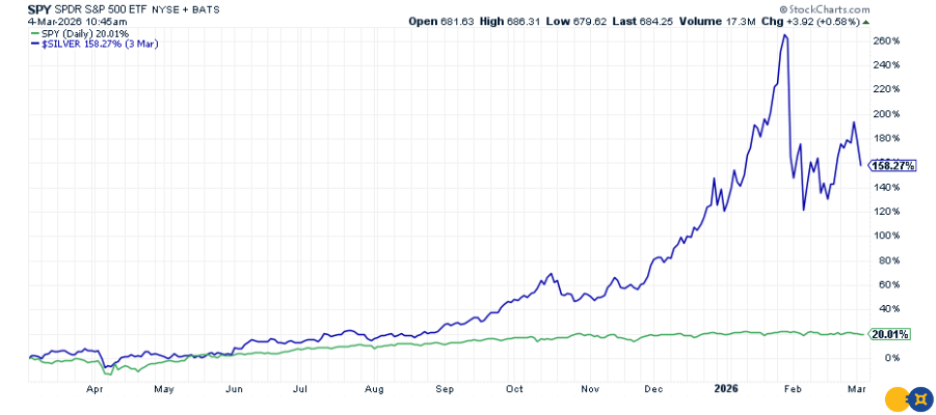
Silver has surged roughly 160% year-over-year — even after pulling back from January highs. Yet the story driving that move gets surprisingly little coverage.
Silver Prices vs SPY 12 Months
The global silver market is on track for its sixth consecutive supply deficit in 2026. The Silver Institute estimates the shortfall could hit 67 million ounces, a sign of deepening structural tightness.
What’s fueling demand? Silver’s dual role as both a monetary and industrial metal. Solar panels, EVs, and electronics all depend on it — and that industrial appetite isn’t slowing down.
Investor interest is holding too. Global ETP holdings sit at roughly 1.31 billion ounces, suggesting steady accumulation rather than a speculative spike.
Closer to home, a quieter trend is worth watching.
Smaller Tax Refunds Could Cool Consumer Spending
Tax season is underway, but many Americans are discovering their refunds aren’t quite as large as they hoped. Early IRS figures show refund checks coming in smaller than some households expected, partly due to changes in withholding and tax credits.
While that might seem like a minor detail, tax refunds play an important role in the U.S. economy. Each year they inject billions of dollars into household budgets, often fueling a wave of spending on travel, electronics, home improvements, and debt repayment.
If refunds are smaller this year, the spring spending bump could be weaker than usual. For investors, that’s worth watching closely because consumer spending makes up roughly two-thirds of U.S. economic activity.
A softer tax-refund season doesn’t necessarily signal trouble ahead — but it does suggest that households may be feeling a bit more financially stretched than expected.