Silver Rises Over 120% YTD




🌅 Morning News Nuggets | Today’s top stories for gold and silver investors
March 23rd, 2026 | Brandon Sauerwein, Editor
Gold dropped nearly 4% today, and silver is hovering around $68 — down roughly 17% in five days. The connection between stagflation and gold is getting a live stress test right now — and the Fed just made it more complicated.
Is the U.S. Heading Into a Stagflation Trap?
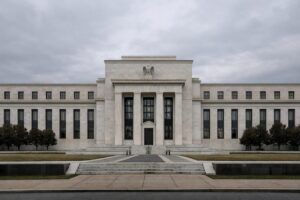
The Federal Reserve didn’t move rates this week. But something important shifted. The Fed held at 3.5%–3.75%, trimmed its 2026 rate-cut forecast from two reductions to one, and raised its core PCE inflation projection to 2.7%. One policymaker is now penciling in a rate hike for 2027 — a detail that deserved more attention than it got.
Bond markets didn’t miss it. The 10-year Treasury yield jumped to 4.2% and the dollar climbed toward 99.9 — both direct headwinds for gold and non-yielding assets.
The Iran war has created a classic stagflation cocktail: an oil-driven supply shock that pushes inflation higher while draining consumer spending power. Oxford Economics has already cut its U.S. growth forecast from 2.5% to 1.9% for 2026.
That’s the Fed’s dilemma in plain terms. Inflation is too hot to cut. But the economy may be too fragile to hold. Historically, when that tension breaks, it breaks toward easing — and that’s been one of gold’s most reliable bull catalysts.
That inflation pressure is already showing up somewhere every American can see it — the gas pump.

Stay Ahead with Gold & Silver News The most important market insights, Fed updates, and global trends — everything investors need to make smarter, safer decisions.
Americans Are Paying $370 Million More a Day on Gas
If it feels like something is quietly draining your wallet, it probably is. Gas prices have surged more than a dollar since the Iran war began, hitting $3.94 per gallon nationally.
Economists have a name for it. Wilmington Trust chief economist Luke Tilley calls it “like a tax, very similar to a tariff” — one consumers simply can’t avoid.
The timing couldn’t be worse. Trump’s tax cuts were supposed to drive a record refund season. But Oxford Economics estimates that sustained gas prices around $3.60 per gallon would add $60 billion in consumer energy spending, wiping out that boost entirely.
The damage runs deeper than the pump. Diesel is at a four-year high. Roughly 70% of U.S. goods move by truck. Input costs are rising across the board. And the pain isn’t equally distributed — the bottom 10% of earners spend nearly 4% of their income on gas, versus just 1.5% for the top 10%.
High inflation plus slowing growth is the stagflation equation. The Fed is watching it closely — and so far, it doesn’t have a clean answer.
Those same forces — a stronger dollar, rising yields, and fading rate-cut hopes — are hitting precious metals hard too.
Is Gold’s Worst Week Since 1983 a Warning — or a Buying Opportunity?
Gold is having a brutal month. Spot gold tumbled to around $4,288 per ounce Monday, capping a decline of more than 10% last week — its worst weekly performance since 1983. A modest bounce this morning has pushed prices back toward $4,400, but the damage from last week is hard to ignore.
But the culprit isn’t a loss of faith in gold. It’s a classic “sell everything” moment. When markets panic, even safe-haven assets get liquidated. Investors sell what they can, not just what they want to.
The mechanics are straightforward. Surging oil prices raised inflation expectations. That dimmed hopes for Fed rate cuts. A stronger dollar and rising Treasury yields piled on — all headwinds for a non-yielding metal.
JPMorgan isn’t flinching. Analysts there argue the long-term case for gold will “quickly flip materially” if the Middle East energy disruption persists. A forced selloff and a broken bull market are two very different things. The history of stagflation and gold suggests this story is far from over.
If Silver Is a Safe Haven, Why Is It Crashing During a War?
Silver’s recent slide is catching investors off guard — and for good reason. The metal plunged to a low of $61 last week before recovering to around $68 this morning. That’s a 17% drop in five days. Gold has fallen more than 10% over the same stretch.
It feels counterintuitive. Geopolitical conflict is supposed to drive investors toward precious metals. After Russia invaded Ukraine in 2022, gold surged to a one-year high within days.
So what’s different this time? Oil.
The Iran war has sent crude surging — and that’s changed the dynamic entirely. Rising oil prices fuel inflation fears, which strengthen the dollar, which pressures silver and gold. Right now, oil is absorbing the safe-haven bid that would normally flow into metals.
The result is an unusual negative correlation: as oil rises, silver falls. Most analysts view this as a temporary repricing driven by leverage and liquidity — not a verdict on silver’s long-term value. But until oil stabilizes or the dollar turns, the headwind is real.
While markets adjust to the new reality, Washington is quietly moving to address a structural vulnerability the volatility has put back in the spotlight.
Did You Know All U.S. Precious Metals Vaults Are Clustered Near New York City?
Most investors never think about where their gold and silver are physically stored. Congress apparently has. On March 19, two Republican lawmakers introduced the SILVER Act — the System Integrity through Licensed Vault Expansion and Resilience Act. The name is a mouthful. The problem it’s solving is straightforward.
Every exchange-approved precious metals vault in the U.S. sits within roughly 150 miles of New York City. One major disruption — a natural disaster, a cyberattack, a security threat — and the ripple effects could reach global markets.
The bill’s fix is geographic diversification. It would require at least two approved depositories in each U.S. time zone. That’s especially relevant for the Western U.S., where most of the nation’s mining and refining actually happens.
Industry support is strong. Stefan Gleason, CEO of Money Metals Depository, put it plainly: the bill is about “aligning market infrastructure with real-world supply chains.”
The timing speaks for itself. This legislation lands during some of the most volatile precious metals trading in years — a moment that’s made the case for structural reform hard to ignore.
Investing in Physical Metals Made Easy