Silver Rises Over 120% YTD




The history of the gold standard is a story most people never get told.
Since 1971, every currency on earth has been backed by nothing more than a government’s promise. That includes the US dollar — and yet most people never learn how it happened. Understanding how the world arrived at that point — and what it means for your money — is one of the most important financial stories almost nobody gets taught.
It starts with a $20 gold piece. It ends with a printing press running around the clock.
What Was the Classical Gold Standard?
The classical gold standard — the foundation of modern monetary history — was a system in which every unit of paper currency in circulation was backed by an equivalent amount of gold held in a government vault. A $20 bill represented a $20 gold piece in the treasury — nothing more, nothing less. Paper currency was a receipt, a claim check for real money.
Germany formally adopted the system in 1873, and the rest of the developed world followed. The rules were ruthlessly simple: you could walk into any bank, hand over your currency, and walk out with gold or silver. No questions. No conditions.
This constraint mattered above all else. Governments could only print as many receipts as they had gold to back them. That forced fiscal discipline in a way no policy ever has since.
Key fact: Under the classical gold standard, paper currency was legally redeemable for physical gold at any bank, at any time, on demand.
That discipline, as it turned out, was deeply inconvenient when a world war started.
How Did World War I Break the Gold Standard?
World War I broke the gold standard because every major combatant needed to print money to fund the war — and the gold constraint made that impossible. In 1914, almost simultaneously, every nation at war suspended citizens’ redemption rights. You could no longer exchange pounds, lira, marks, or francs for gold at a bank.
With the constraint removed, printing presses ran. The war was financed with paper.
Between the wars, governments introduced a compromise called the gold exchange standard, in which currencies were partially — not fully — backed by gold. In the United States, the Federal Reserve Act of 1913 had already established a 40% reserve ratio: the Fed could put $50 in paper currency into circulation for every $20 in gold it held. For every gold piece in the vault, they could legally print two and a half receipts.
Key fact: The Federal Reserve’s original reserve ratio allowed $50 in paper currency to be issued against every $20 in gold — a 40% backing, not 100%.
The scam had officially begun. But the full collapse was still decades away.

Get Expert Insights from Alan Hibbard Learn from Alan Hibbard, a trusted voice in precious metals delivering clear, actionable analysis on gold, silver and the global economy.
Why Did the US End Up With Most of the World’s Gold?
By the end of World War II, the United States held approximately two-thirds of all the world’s monetary gold. Europe had spent most of its reserves paying America for goods during both wars.
The US stayed out of World War I until the final six months. For four years prior, Europe converted its farms and factories to war production. American businesses filled the gap — selling grain, steel, and manufactured goods — and accepted gold as payment. The same pattern repeated in World War II. The US had no significant troops on the ground until 1942 — roughly six years during which gold flowed steadily westward across the Atlantic.
By 1944, the US held two-thirds of the world’s monetary gold. Europe had almost nothing left. The old monetary system could no longer function.
Key fact: By the end of World War II, the United States held approximately two-thirds of all the world’s central bank gold. The remaining third was shared among every other nation.
Representatives from 44 nations met in Bretton Woods, New Hampshire in 1944 to build a new system. Under the Bretton Woods Agreement, all major currencies pegged to the US dollar. The dollar itself converted to gold at a fixed $35 per ounce. Exchange rates were fixed. World trade boomed. The system worked — as long as Washington kept its word.
Washington did not keep its word.
What Triggered the Collapse of Bretton Woods?
The Bretton Woods system collapsed because the United States printed far more dollars than it had gold to support, and other nations eventually noticed. Deficit spending on Korea, Vietnam, and Lyndon Johnson’s Great Society had flooded the world with dollars unchecked by any reserve requirement.
In the 1960s, French President Charles de Gaulle did the math and reached an uncomfortable conclusion: the US did not have enough gold to honor its commitments. France began trading its dollar reserves directly for gold. Other nations followed.
Between 1959 and 1971, the US lost 50% of its gold reserves. Even after that drain, there were still roughly 12 times more dollars in circulation than there was gold to cover them. It was, in effect, a global bank run — the entire world simultaneously demanding payment from a bank that had issued far more receipts than it held in reserve.
Key fact: By 1971, the US had approximately 12 times more dollars in circulation than gold reserves to back them — the same fraud that had brought down every gold standard before it.
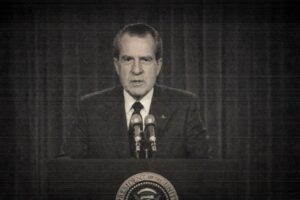
On August 15, 1971, President Nixon appeared on national television and announced the “temporary” suspension of dollar convertibility into gold. That temporary suspension was never reversed. In a single televised address, every currency on earth became fiat currency.
What Does 5,000 Years of Monetary History Tell Us About Fiat Currency?
Fiat currency is money that is not backed by any physical commodity and derives its value solely from government decree and public trust. Every currency in the world today is fiat currency — a status that has existed globally only since August 15, 1971.
History’s verdict on fiat currency is consistent and unambiguous: it always fails. Across thousands of currencies and thousands of years of recorded history, the failure rate of fiat currency is 100%. Every fiat currency experiment ends the same way — through inflation, devaluation, or outright abandonment.
What makes the post-1971 era historically unusual is that this is the first time all major world currencies became fiat simultaneously. There is no anchor currency. No gold-backed alternative anywhere in the system. Every national currency floats against every other — and all of them, as Mike Maloney explains in the video above, have been sinking in purchasing power relative to gold.
Key fact: Gold and silver have served as money for over 5,000 years. In every era when paper money has failed, populations have returned to precious metals as a store of value.
That pattern hasn’t changed. The experiment began in 1971. It is still running.
Investing in Physical Metals Made Easy

People Also Ask
Understanding the history of the gold standard requires going back to 1873. The classical gold standard, governments backed every unit of paper currency in circulation with an equivalent amount of gold held in a vault. Citizens could walk into any bank and exchange their paper money for gold at a fixed rate. The system forced governments to limit how much currency they printed to how much gold they actually held.
Countries abandoned the gold standard in stages, primarily to fund wartime spending. First, during World War I, every major combatant suspended citizens’ right to redeem paper currency for gold. The constraint was inconvenient — after all, printing money was far easier than raising taxes or admitting the true cost of war. Eventually, the final break came in 1971, when President Nixon suspended dollar-to-gold convertibility entirely under the Bretton Woods system.”
Signed in 1944, Bretton Woods established a new world monetary order in which every major currency pegged to the US dollar, and the US backed the dollar with gold at $35 per ounce. It collapsed because the US printed far more dollars than it had gold to support — financing the Korean War, Vietnam War, and domestic spending programs. When France and other nations began demanding gold for their dollars in the 1960s, the US had already issued roughly 12 times more dollars than it had gold reserves to cover.
Fiat currency is money that no physical commodity (no gold, no silver) stands behind. Its value rests entirely on government decree and public trust. Since August 15, 1971 — when Nixon ended dollar-gold convertibility — every major currency in the world has been fiat. No gold, no silver, no fixed asset backs any of them.
Throughout recorded history, every fiat currency experiment has ultimately failed. The track record across thousands of currencies and civilizations is a 100% failure rate. Inflation typically destroys them, or governments abandon them outright once public confidence collapses. Gold and silver, by contrast, have maintained purchasing power for over 5,000 years.
No government can print gold, create it by decree, or inflate it away. Its supply grows only through mining — slowly and at significant cost. Governments can issue as much paper currency as they choose, which is precisely why paper currencies lose purchasing power over time relative to gold. In a world of floating fiat currencies, all national currencies have depreciated significantly against gold over the past century.
Disclaimer: This article is for informational purposes only and does not constitute investment advice. Past performance is not indicative of future results. Always consult a qualified financial advisor before making investment decisions.