Silver Rises Over 120% YTD




Most people assume the dollar, euro, or yen are simply “money.” They’re not — at least not in any traditional sense. They’re fiat currencies: government-issued, backed by nothing but collective trust, and according to the full sweep of monetary history, temporary. Every fiat currency ever created has eventually failed or been replaced.
In the first installment of his Top 10 Reasons I Buy Gold & Silver series, Mike Maloney identifies this failure rate as the foundational reason he holds physical precious metals. His case rests on a single fact most investors have never considered. Since 1971, for the first time in recorded history, every currency on earth has been fiat simultaneously — with no gold-backed alternative anywhere in the system.
What Is a Fiat Currency?
A fiat currency is government-issued money not backed by a physical commodity like gold or silver. Its value exists because a government declares it does — and because people believe it. Unlike gold or silver, it has no intrinsic worth. The word fiat is Latin for “let it be done.” It means money created by decree — not by anything you can hold in your hand.
The dollar in your wallet isn’t redeemable for gold at a bank. It’s redeemable for other dollars. The entire system runs on confidence. And history is unambiguous about what happens when that confidence breaks: the currency fails. Not sometimes. Every single time.
Have All Fiat Currencies Really Failed?
Every fiat currency on record has either collapsed or been replaced. One analysis of 775 currencies throughout history found that not a single one survived indefinitely — with the average lifespan estimated at just 27 to 35 years.
The historical examples span every era and continent. The Roman denarius was a silver coin, not paper — but it was debased by the same logic. Emperors steadily shaved its silver content to fund spending, falling from nearly 100% purity to under 5% by the third century AD. The German Papiermark was destroyed more abruptly: by November 1923, at the peak of Weimar hyperinflation, the exchange rate had reached 4.2 trillion marks to one U.S. dollar. More recently, Zimbabwe recorded peak inflation of an estimated 79.6 billion percent in 2008. Venezuela’s bolívar surpassed 1,000,000% annual inflation at its worst.
The pattern holds across cultures, centuries, and continents. The question was never if — only when.

Get Expert Insights from Alan Hibbard Learn from Alan Hibbard, a trusted voice in precious metals delivering clear, actionable analysis on gold, silver and the global economy.
Why Did 1971 Change Everything?
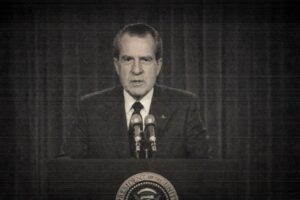
For most of monetary history, fiat currencies were the exception. Sound systems were anchored to gold — a physical constraint that limited how much money governments could create. That ended on August 15, 1971. President Nixon ended the U.S. dollar’s convertibility to gold, severing the last significant link between any major currency and a tangible store of value.
The consequences were unprecedented. For the first time in recorded history, every major currency on earth became fiat simultaneously. There was no gold-backed alternative anywhere in the system. Investors, savers, and governments alike were all operating inside the same monetary experiment at the same time. That experiment is built on a system with a 100% historical failure rate.
That is the foundation of Maloney’s argument — and why he considers this moment categorically different from any previous era in monetary history.
What Does This Mean for Gold and Silver Investors?
History is consistent on this point: when fiat systems collapse, the assets that hold value are the ones that exist outside the system. Gold and silver have filled that role for more than 5,000 years. They held value through the fall of Rome, the hyperinflation of Weimar Germany, and every collapse in between.Gold cannot be printed or created at will. Its supply grows slowly through mining, constrained by geology rather than government policy. Silver shares those properties and has historically moved alongside gold during periods of monetary stress, often with greater velocity.
For investors who understand this pattern, physical precious metals aren’t a speculative bet — they’re a hedge against a documented, repeating historical cycle. Maloney’s argument is straightforward: you don’t need to predict when the current system fails. You only need to recognize that it will, and position yourself before the majority of people reach the same conclusion.
Investing in Physical Metals Made Easy

People Also Ask
What is a fiat currency and how does it work?
A fiat currency is government-issued money not backed by a physical commodity like gold or silver. Its value comes from government decree and public trust rather than intrinsic worth. It holds value as long as people accept it in exchange for goods and services — and loses value when that trust erodes. Central banks control the money supply, which means fiat currency can be created without any corresponding increase in real economic output.
Why do fiat currencies fail?
Fiat currencies fail primarily because governments can create them without limit. Faced with debt, war, or economic crisis, governments and central banks typically increase the money supply, which erodes purchasing power over time. When inflation accelerates or public confidence breaks down, the currency collapses. This mechanism has repeated across every fiat monetary system on record, with an average lifespan estimated between 27 and 35 years.
When did the U.S. dollar become a fiat currency?
The U.S. dollar became fully fiat on August 15, 1971 — a moment known as the “Nixon Shock.” President Nixon ended the dollar’s convertibility to gold to stop the depletion of U.S. gold reserves. Prior to that, the Bretton Woods system had linked the dollar to gold at $35 per ounce. Nixon’s decision removed that anchor and marked the beginning of the era in which every major currency on earth became fiat simultaneously.
Why does Mike Maloney buy gold and silver?
Mike Maloney buys gold and silver primarily because every fiat currency in recorded history has eventually failed, and since 1971, every major currency on earth has been fiat simultaneously. He views physical precious metals as a hedge against the inevitable debasement of paper currency systems and as a store of value that has survived every monetary collapse in recorded history. His reasoning is the foundation of his Guide to Investing in Gold and Silver, the best-selling book on precious metals investing.
Is gold a better store of value than fiat currency?
Gold has maintained purchasing power across more than 5,000 years and multiple civilizations. Unlike fiat currency, gold cannot be printed or inflated away, and its supply grows slowly through mining. While gold’s price fluctuates in the short term, its long-term record as a store of value far outlasts that of any fiat currency — all of which have either collapsed or been replaced.
SOURCES
Bureau of Labor Statistics, CPI-U Annual Averages ·
World Gold Council, Gold Demand Trends Full Year 2025 ·
IMF COFER Database ·
Federal Reserve, International Role of the U.S. Dollar 2025 ·
U.S. Treasury Fiscal Data ·
Deutsche Bank Research via Bloomberg, March 25 2026 ·
WTF Happened in 1971 ·
Gini Foundation, Fiat Currency Graveyard ·
Hard Money History ·
Daily Reckoning, Fiat Currency History
Disclaimer: This article is for informational purposes only and does not constitute investment advice. Past performance is not indicative of future results. Always consult a qualified financial advisor before making investment decisions.