 Silver Rises Over 120% YTD




Gold Is Falling Today. Four Other Signals Say the Hard-Assets Trade Isn’t.
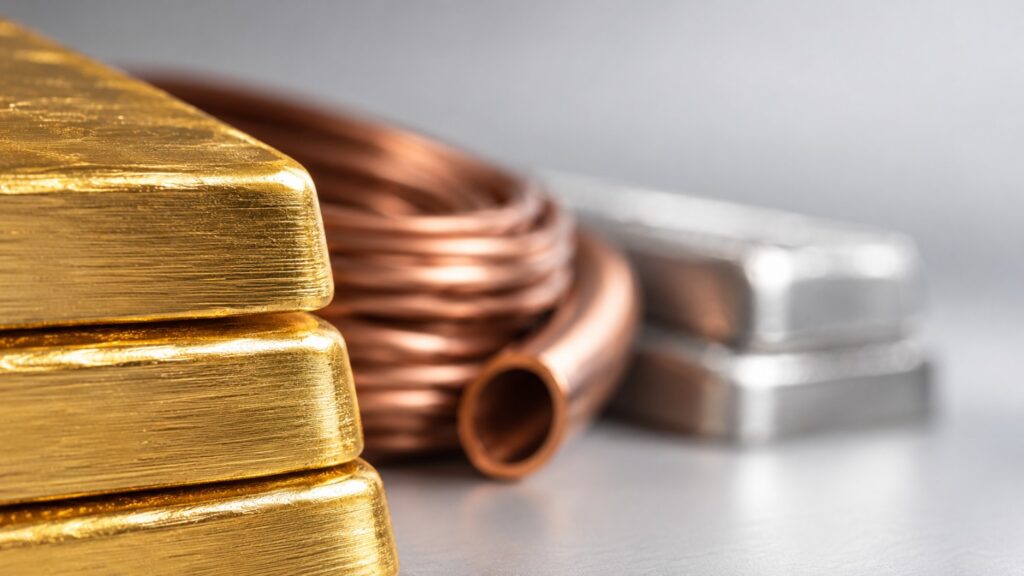
Gold dipped today, but four other signals disagree: copper hit a record high, UBS raised its silver forecast, mining stocks are outperforming bullion, and Tether keeps buying physical gold every week.
The Fed Just Priced Out Half a Rate Hike. Gold Barely Noticed.

September rate hike odds fell to roughly 50.3% after Fed Governor Christopher Waller signalled he could support a hold. Gold barely responded. It had already banked a 2.4% gain before he spoke, then slipped. Here is which channel is actually driving the metal, and what August CPI decides.
The Iran War Just Got Worse. Gold Barely Noticed.
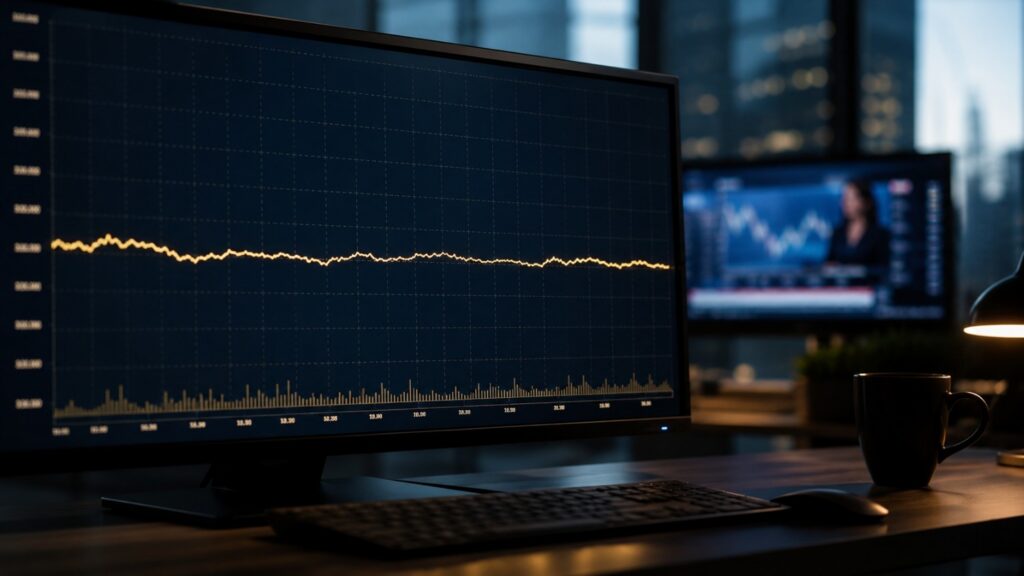
Gold and silver crashed when the U.S.-Iran conflict escalated Tuesday, then barely moved when it got worse Wednesday. The real driver isn’t the war — it’s Fed rate-hike odds, already elevated before the strikes began, and what they mean for holding non-yielding metals.
The Fed Has Two Hike Numbers Right Now. Almost Everyone Quotes the Wrong One.
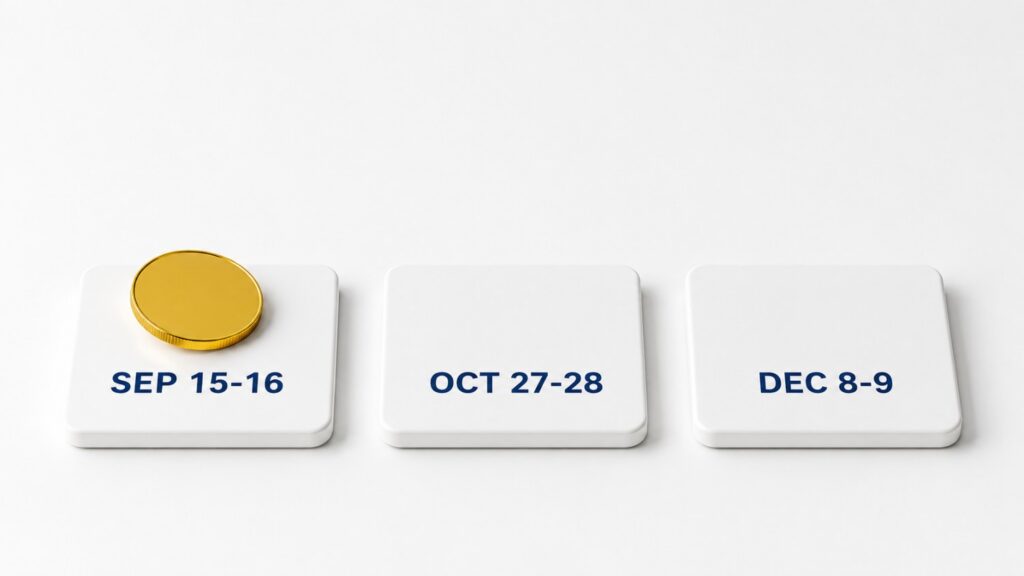
Fed funds futures report later meetings as a running total, not as separate bets. That single quirk explains why two very different hike numbers are circulating this week, why neither one is wrong, and which of the two actually sets the cost of holding metal into year-end.
Jackson Hole Is 14 Days Away. What Warsh Says Could Move Gold More Than Any Inflation Print.

Fed Chair Warsh calls Jackson Hole a chance to frame “the big questions.” Here’s the real-yield mechanism that makes his August 27 speech the most important gold catalyst of the month.
Two Soft Inflation Prints. Gold Is Still Below $4,500. One Number Is Keeping It There.
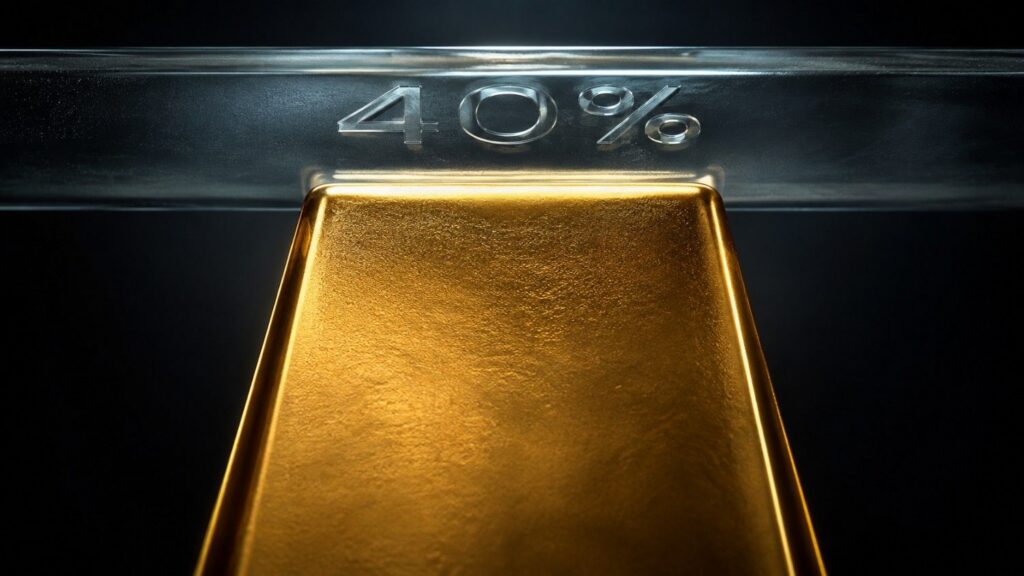
Two consecutive soft inflation prints — July PPI flat, CPI up just 0.1% — should be pushing gold through $4,500. Here is the one number keeping the ceiling in place, and the threshold to watch for when it lifts.
The Economy Lost 23,000 Jobs. Gold Climbed Toward $4,400. Here’s the Mechanism.

When the US economy loses 23,000 jobs and gold climbs toward $4,400, most investors are confused. Here is the exact monetary mechanism that explains why a bad jobs report is consistently good for gold — and why the composition of this rally makes it more durable than most.
The Same Force That Crushed Gold All Year Just Flipped
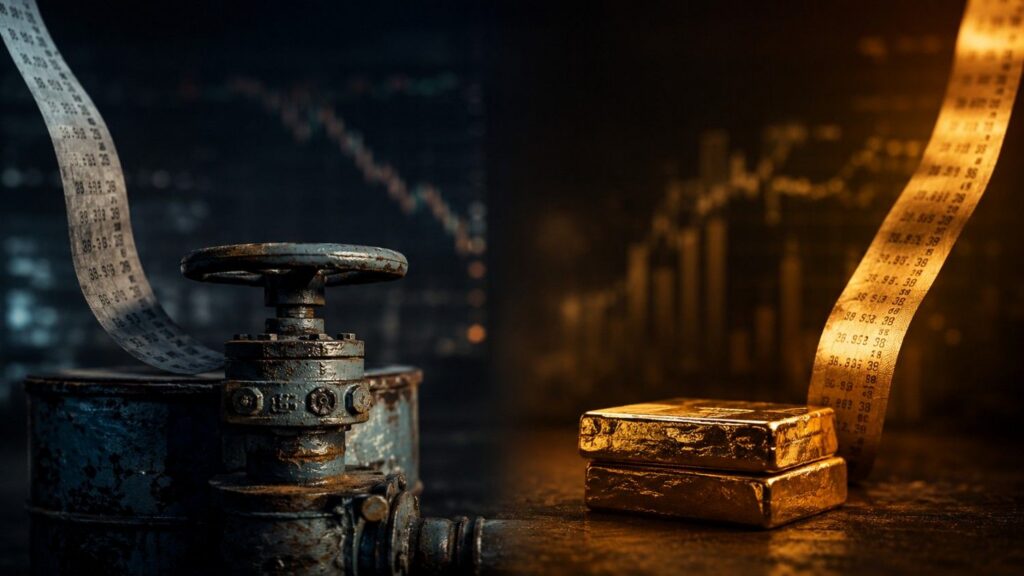
The mechanism that sent gold lower for five months just ran in reverse. Trump held off a planned strike on Iran Saturday night. Oil dropped more than 5%. Gold rose. Here is why those two moves are connected — and what this week’s jobs data decides next.
The Federal Reserve Has Eroded 97% of Your Dollar’s Value Since 1913. Here’s the Mechanism.
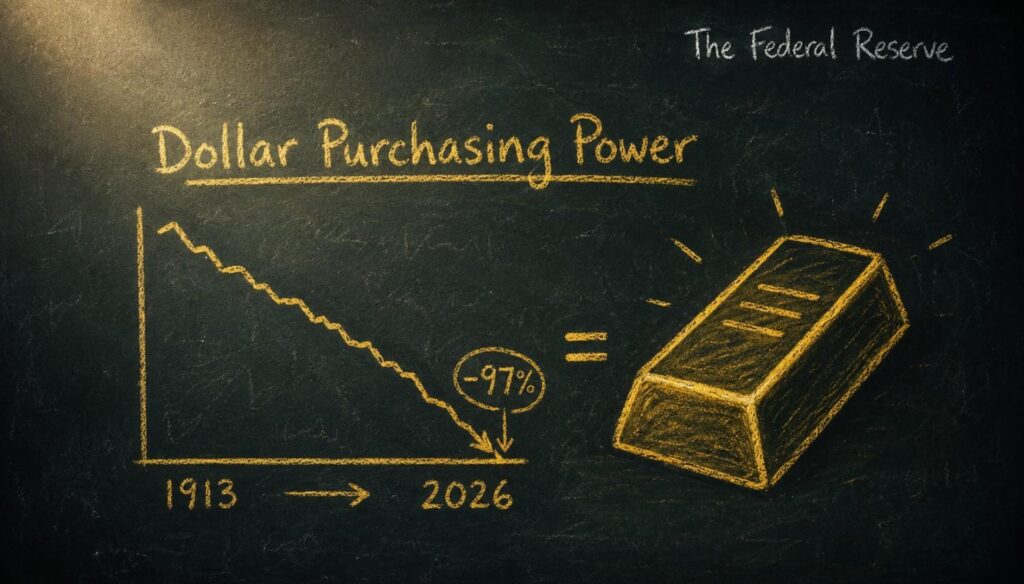
The Federal Reserve is the most powerful institution affecting what your money is worth — yet most people can’t fully explain how it works. This guide covers the Fed’s structure, dual mandate, and policy tools, and explains exactly why its 112-year track record of dollar debasement is the foundational case for owning gold.
Gold at $4,100. Silver Still Stuck Below $60. Five Signals Define the Next Six Weeks.
The Fed held rates for the fifth straight meeting. PCE cooled. Gold crossed $4,100. Silver still can’t break $60. Here are five signals defining the next six weeks before Jackson Hole.


