 Silver Rises Over 120% YTD




What Is Sound Money? Why the Dollar Lost 87% of Its Value Since 1971

Sound money is money whose supply cannot be expanded by decree, so it holds its purchasing power over time. The principle shaped the 19th-century gold standard. Since that constraint ended in 1971, the dollar has lost roughly 87% of its purchasing power.
The Canadian Gold Maple Leaf: Purer Than the Eagle, Lower Premium, and IRA-Eligible
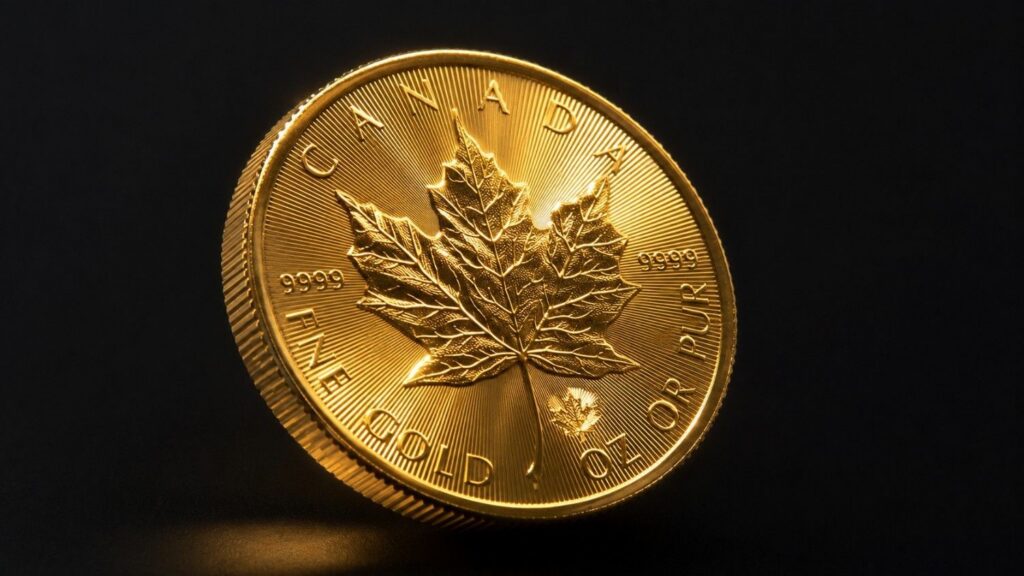
The Canadian Gold Maple Leaf is 99.99% pure gold, carries a lower dealer premium than the American Gold Eagle, and qualifies for a Gold IRA without a congressional exemption. Here is what the purity standard, security features, sizing options, and sound money case look like for investors considering physical gold ownership.
The Petrodollar System Explained: What It Is, How It Worked, and What’s Replacing It
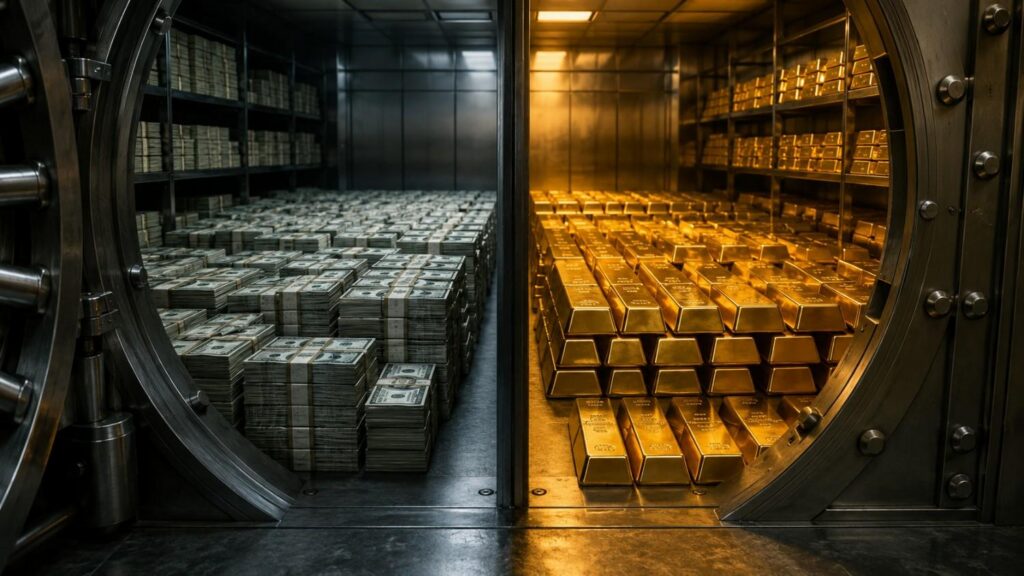
The petrodollar system gave the US dollar its dominance for 50 years — every country needed dollars to buy oil, and oil exporters recycled those dollars back into US Treasuries. That arrangement is now shifting. Here is how the system worked, why it is under stress, and why central banks are choosing gold as the alternative reserve asset.
What Is Purchasing Power — and Why Every Dollar You Save Is Slowly Being Taxed Away
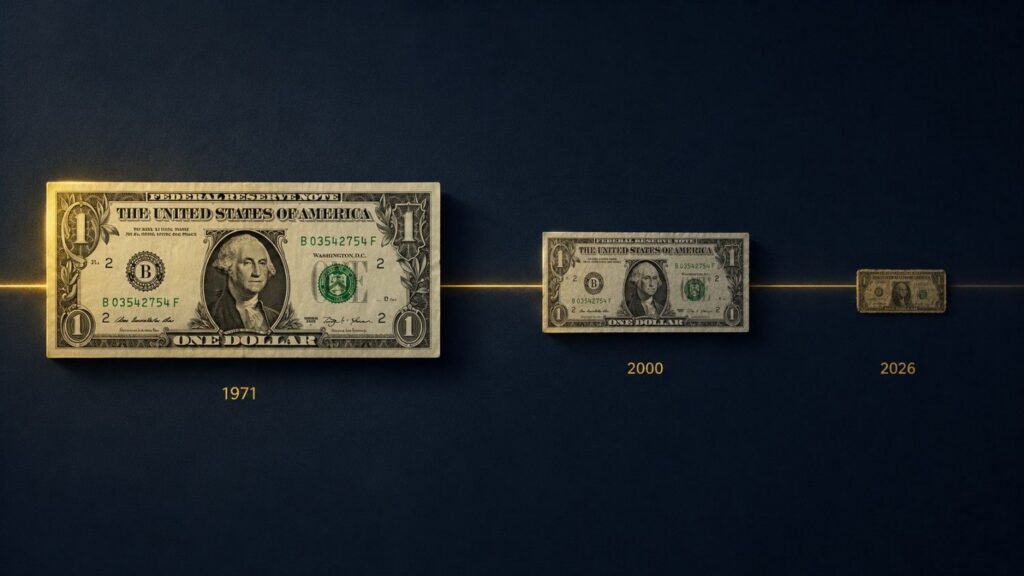
The dollar has lost 87% of its purchasing power since 1971. Learn what purchasing power actually is, why fiat currency erodes it, and why gold doesn’t.
Seigniorage: The Hidden Tax on Every Dollar You Hold
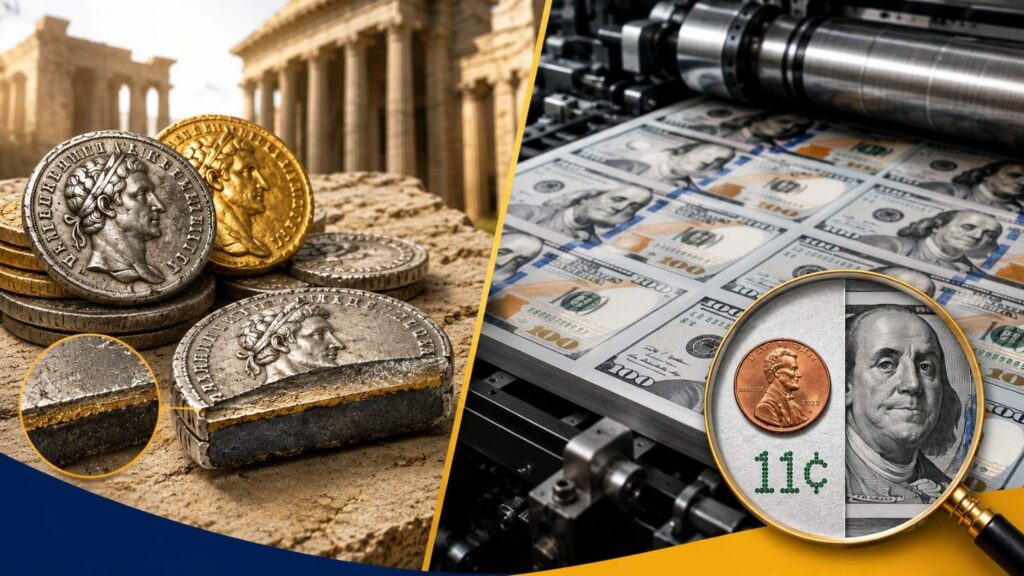
Every time a government issues currency, it pockets the difference between face value and production cost. It’s called seigniorage. Here’s how it works, why it always ends in inflation, and why gold is the only asset that can’t be debased.
Gold Price History: From $35 to $4,500 in 100 Years
Gold went from $35 in 1971 to around $4,500 today — a 12,000% gain since the gold standard ended. Meanwhile, the dollar lost 96.9% of its purchasing power over the same period. These are not two separate stories. This is the complete gold price history: decade by decade, the real cause behind every major move, and what a century of data tells investors right now.
Why Your Savings Lose Value — And How Gold Fixes the Leak
Modern investing feels overwhelming because the system — not the investor — is broken. Fiat currency punishes savers, forces speculation, and creates the leaky bucket problem at the center of modern financial stress. Here’s what’s actually draining your wealth, and why gold may be the simplest way to fix it.
What Backs the US Dollar? Not Gold. Not Silver.

Since Nixon closed the gold window in 1971, the dollar has lost 87% of its purchasing power. Here’s the structural mechanism behind that — and why it’s not reversible.
Why Is Gold Valuable? The 5,000-Year Answer Most Investors Get Wrong
Gold is valuable because no other element combines physical scarcity, chemical indestructibility, and 5,000 years of universal monetary recognition. Here’s the full explanation.
Gold Remonetization: Six Forces Restoring Gold’s Monetary Role
The 2026 In Gold We Trust report identifies six simultaneous forces restoring gold’s monetary functions — from record central bank buying to tokenized gold outcompeting CBDCs. Here’s what each vector means and why their convergence matters more than any single one alone.


