Silver Rises Over 120% YTD


The Cantillon Effect: Why Money Printing Makes Some People Rich First

New money doesn’t reach everyone at once: banks and asset holders get it first, wage earners get it last, after prices have already moved. Using Fed balance-sheet data and its own Distributional Financial Accounts, this piece traces exactly how that sequence played out from 2008 to 2022, and why physical gold and silver sit outside the mechanism entirely.
Gold Doesn’t Need a Rate Cut. It Needs What the Treasury Is Already Doing.

Six Treasury moves in six weeks, a Fed facility limit no one’s raised yet, and a Treasury Secretary calling himself ‘the house’ on the yen — GBI’s chief economist walks through what’s actually pushing gold, and how close it already sits to yield curve control.
Is Stagflation Already Here? A Mortgage Veteran Says Yes — and Explains Why

A 40-year banking veteran says stagflation isn’t coming, it’s already here. Christopher Whalen explains the falling-home-value data, a shaky Fed, and why he holds gold in his own sock drawer.
The Fed Printed $7 Trillion. Velocity Kept It Quiet. That’s Changing.

The Fed printed trillions. Inflation didn’t follow — not immediately. Here’s the monetary mechanism that kept it quiet, why it’s now reversing, and what the velocity of money chart is signaling for gold investors right now.
M2 Money Supply: The Number That Makes Your Portfolio Meaningless
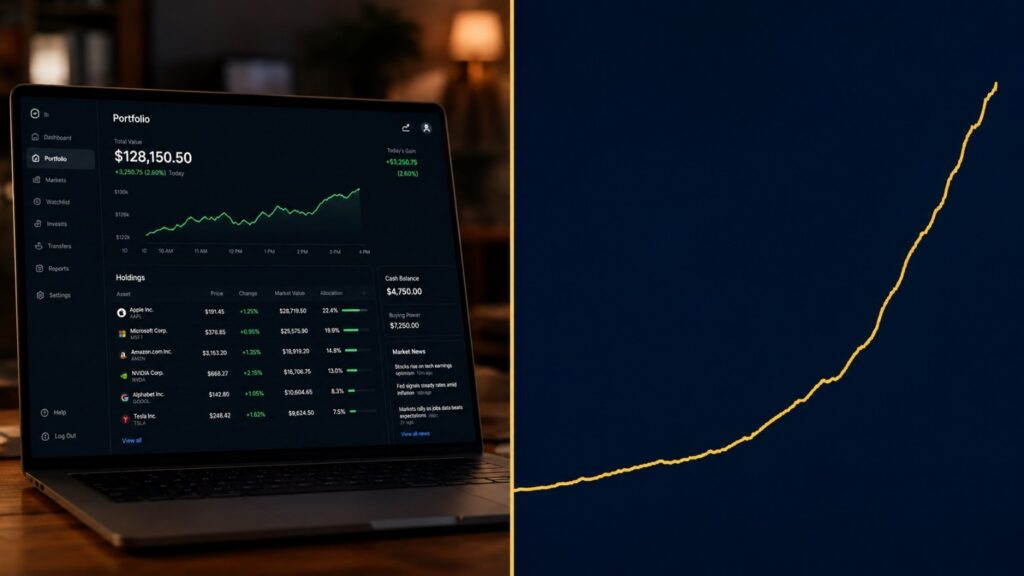
Most investors check their portfolio every day. Very few have ever looked at a chart of M2 money supply. That gap — between what feels important and what actually is — turns out to be one of the most expensive mistakes a long-term saver can make. Here is what M2 is, why it grew 55 percent since 2020, and why it tells you something your portfolio never will.
The Federal Reserve Has Eroded 97% of Your Dollar’s Value Since 1913. Here’s the Mechanism.
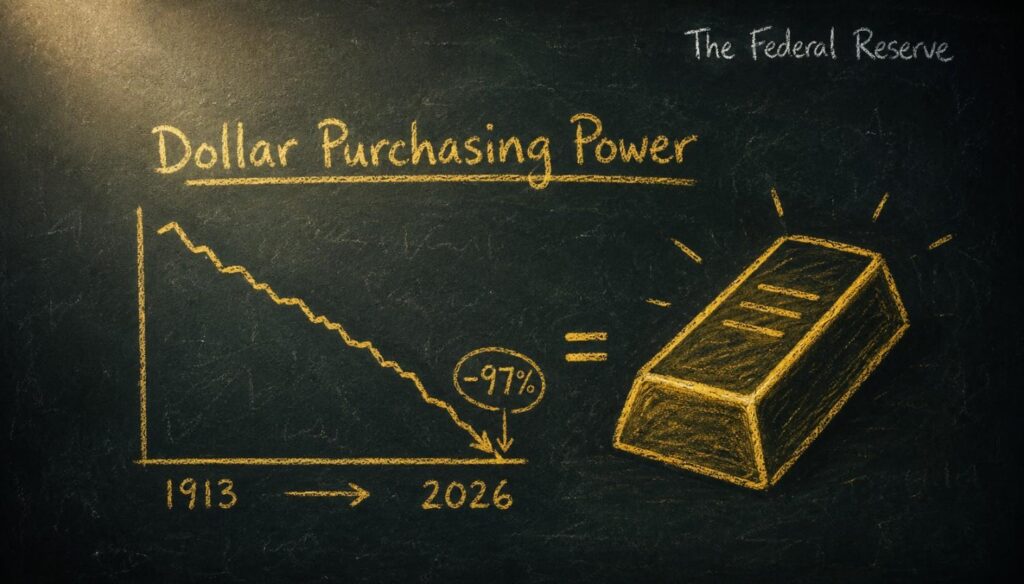
The Federal Reserve is the most powerful institution affecting what your money is worth — yet most people can’t fully explain how it works. This guide covers the Fed’s structure, dual mandate, and policy tools, and explains exactly why its 112-year track record of dollar debasement is the foundational case for owning gold.
You Don’t Need a Printing Press to Crash a Currency

Hyperinflation doesn’t always start at the printing press. When people stop trusting a currency, its purchasing power can collapse overnight. History — from Weimar to Zimbabwe — shows why gold endures when faith in paper money fails.
What Is Quantitative Easing — and How Does It Affect Metals?
Quantitative easing is the Federal Reserve’s most powerful — and controversial — monetary tool. Here’s what QE means, how it works, and what every precious metals investor should understand about its long-term impact on gold and silver.
How Does the Federal Reserve Actually Create Money?
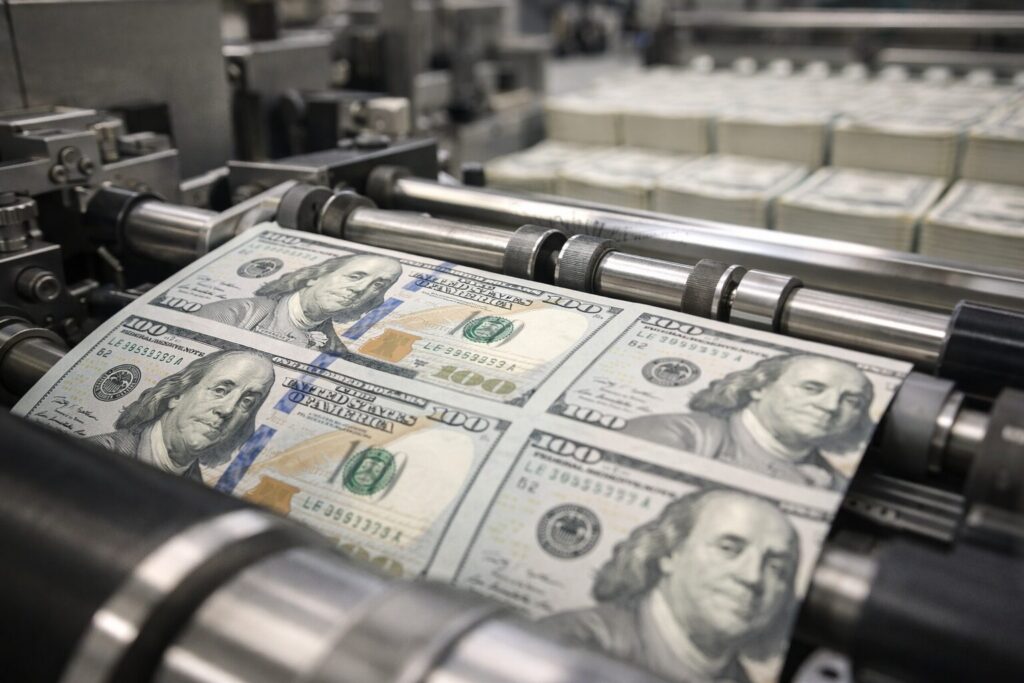
Most people assume money is printed at a mint and backed by something real. The truth is stranger. The U.S. dollar is created through debt, multiplied through bank lending, and sustained by collective agreement. Here’s how the system actually works.
What Is Velocity of Currency — and Why It Matters

The Fed has created trillions in new currency. So why doesn’t inflation always follow immediately? The answer is velocity — and understanding it changes everything about how you read today’s economic headlines.