Silver Rises Over 120% YTD




Published: 12-03-2025, 03:05 pm | Updated: 12-04-2025, 09:42 am
Most investors don’t lose money because they picked the wrong stock or timed the market poorly. They lose money because they never learned how to choose investments in the first place.
Last year was already defined by volatility, political tension, and relentless financial noise — the last thing you need is another hot tip or complex strategy. What you need is a framework: a way to cut through the hype and evaluate any asset based on fundamentals, not emotions.
That’s exactly what Alan Hibbard, GoldSilver’s senior analyst, teaches investors to do. His approach isn’t about predicting the future. It’s about asking the right questions before you invest — so you can make decisions with clarity and confidence.
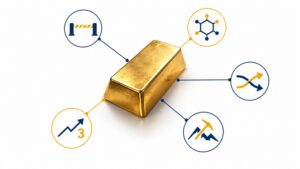
Here are the three questions Alan uses to evaluate any asset, from gold and silver to stocks, bonds, real estate, and crypto. Use them as your checklist in 2025, and the quality of your decisions will improve immediately.
1. Is This Asset True Money… or Just Another Currency?
Before you buy anything, ask whether it’s Layer 1 money — an asset that holds value on its own — or a currency built on someone else’s promise.
What’s the difference?
- Money stores value independently. Think gold or silver. No institution needs to “back” it. No counterparty needs to perform. It just is.
- Currency depends on trust in a system. Bank deposits, credit cards, stablecoins, most crypto networks — they all require someone (a bank, a company, a government) to keep their promise.
If the asset you’re considering depends on an intermediary, central bank, or institutional backing to hold its value, it’s not money. It’s currency.
Why does this matter? Because only Layer 1 assets — assets that don’t rely on anyone else — can serve as true long-term stores of value. Everything else carries counterparty risk.
When you’re learning how to choose investments that will last, this distinction is foundational.
2. What Trade-Off Is This Asset Making — and Is It Right for You?
Here’s a reality most investors don’t realize: every asset makes a trade-off.
No investment can be decentralized, secure, and scalable all at once. You get to pick two.
- Gold and silver choose decentralization + security. They sacrifice scalability (you can’t swipe a gold bar at Starbucks).
- Bitcoin makes the same trade-off: maximum security and decentralization, limited scalability.
- Currencies (dollars, stablecoins, payment networks) choose scalability. They sacrifice decentralization — and often security.
Ask yourself: What trade-off does this asset make? And does that trade-off align with what I need right now?
If you’re building long-term wealth, you want assets that prioritize security and decentralization. If you need liquidity and convenience, you’ll accept the trade-offs that come with currency.
Understanding this trade-off tells you exactly where the asset belongs in your financial plan.
3. Does This Asset Strengthen — or Weaken — the Foundation of Your Financial Life?
Think of your wealth like a pyramid. At the base, you need assets that are stable, inflation-resistant, and don’t depend on anyone else’s promise. These are your foundation assets — the ones that hold value no matter what happens in the economy or the markets.
Above that base, you can add growth assets, speculative plays, and income-generating investments. But if your foundation is weak, the rest won’t matter.
Ask yourself:
- Does this asset store value over time?
- Does it lose purchasing power to inflation or dilution?
- Is it vulnerable to policy changes, institutional failure, or counterparty risk?
- Would it collapse if the entity behind it failed?
Only assets that conserve value belong at the base. Gold, silver, and Bitcoin qualify. Most everything else — stocks, bonds, real estate, cash — sits above them in the pyramid.
If you’re serious about how to choose investments that protect your wealth long-term, start by making sure your foundation is solid.
A Framework That Works in Any Market
You don’t need a finance degree to invest well. You just need a system that keeps you grounded when everything around you feels uncertain.
These three questions — simple as they look — come straight from the way Alan evaluates assets himself. And they’re the foundation of the decision-making process he’ll be breaking down in his next live session.
Alan will walk through this framework in detail, with real-world examples and live Q&A. If you want to learn how he evaluates gold, silver, Bitcoin, stocks, and more — and how to apply this thinking to your own portfolio — make sure you’re registered.
People Also Ask
What’s the difference between money and currency?
Money stores value on its own without depending on any institution or intermediary—like gold, silver, or Bitcoin. Currency, on the other hand, relies on someone else’s promise to maintain value, such as bank deposits, stablecoins, or fiat dollars. Only true money can serve as a reliable long-term store of value because it carries no counterparty risk.
What should be at the foundation of my investment portfolio?
Your portfolio foundation should consist of assets that hold value over time, resist inflation, and don’t depend on anyone else’s promise. Gold and silver qualify because they conserve purchasing power and remain stable regardless of economic conditions or institutional failures. Above this foundation, you can add growth assets, income investments, and speculative positions.
Why do investors choose gold and silver over other assets?
Gold and silver prioritize decentralization and security, making them ideal for long-term wealth preservation. Unlike stocks, bonds, or cash, precious metals don’t lose value to inflation or institutional failure. They’ve served as stores of value for thousands of years and continue to perform that role today, especially during periods of economic uncertainty.
How do I know if an investment is too risky?
Ask whether the asset depends on counterparty performance, institutional backing, or government policy to maintain its value. If it does, it carries systemic risk—meaning it could collapse if the entity behind it fails. Assets like physical gold and silver eliminate this risk entirely because they hold value independently of any third party.
Should I invest in gold or silver in 2026?
If you’re looking to protect your wealth from inflation, currency debasement, and economic volatility, gold and silver remain essential foundation assets in 2026. They’ve historically outperformed during periods of uncertainty and offer stability that paper assets can’t match. Learn more about building a precious metals portfolio at GoldSilver.com.