Silver Rises Over 120% YTD


Published: 11-09-2026, 11:12 am
Last verified November 9, 2026.
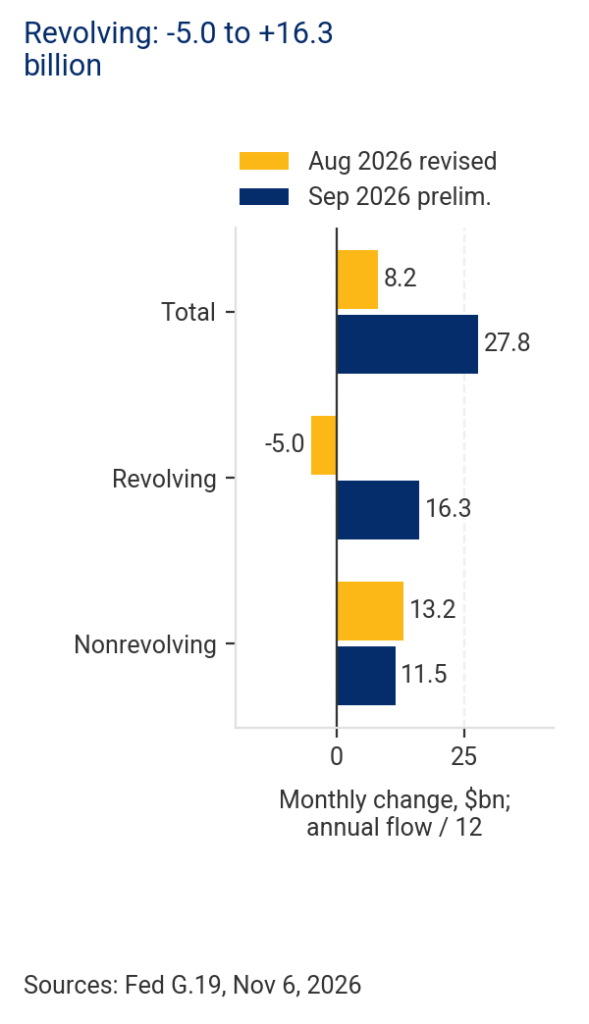
The Federal Reserve’s November 6, 2026, G.19 report shows preliminary September 2026 consumer credit rose about $27.8 billion; revolving credit supplied $16.3 billion, or roughly 59% of the gain. Revolving balances had fallen about $5 billion in revised August. That reversal shows where the borrowing mix changed, not why people borrowed or what interest they paid.
Key Takeaways
- The Fed’s November 6, 2026, G.19 report shows a preliminary September rise of about $27.8 billion, versus about $8.2 billion in revised August.
- Revolving credit fell about $5.0 billion in August, then rose $16.3 billion in September. That made up roughly 59% of September’s total gain.
- The Fed’s Q3 2026 (August) card rate of 22.36% covers commercial-bank accounts assessed interest. It is not a current rate for all borrowers.
How did September 2026 consumer credit change?
The Federal Reserve’s November 6, 2026, G.19 report puts total credit at $5.2244 trillion in September, up from $5.1966 trillion in August. These totals are seasonally adjusted. The Fed revised August’s tally; September is preliminary. The gain was more than three times August’s roughly $8.2 billion rise. One month does not make a trend.
Most of the jump came from loans you can draw on again after you pay them down. The Fed calls these revolving credit. Balances in this group rose $16.3 billion in September. In August, they fell about $5.0 billion. Meanwhile, nonrevolving loans, such as car and student loans, grew about $11.5 billion in September. That was less than August’s $13.2 billion gain. The mix changed more than the total suggests.
The Fed publishes each month’s dollar flow at a yearly rate. To compare the months, we divided those flows by 12 and rounded. Likewise, its 6.4% total growth and 14.5% revolving growth for September are annualized growth rates. They are not one-month gains or loan interest rates. The Fed’s guide to G.19, accessed November 9, 2026, also draws a line around the data: the total excludes loans backed by real estate. And while most revolving loans are on cards, the group also includes overdraft plans. So this is neither all household debt nor an all-card figure.

The Edge Every Investor Needs Smarter precious metals investing starts here. The Nuggets Newsletter brings you essential market insights, Fed updates, global trends, educational videos, and much more.
Does a jump in balances mean more people pay interest?
No. These totals tell us nothing about who paid a card bill in full or why they borrowed. Yet a card balance that does incur interest has a real cost. The report’s separate, not seasonally adjusted rate table shows 22.36% for commercial-bank credit-card accounts assessed interest in Q3 2026 (August). The Fed lists no September rate for this group. So 22.36% is neither today’s rate nor the rate on every revolving loan.
If you carry such a balance, interest can claim cash you might have saved. A cash reserve pays near-term bills without forcing you to sell an asset when prices are down. But this is a risk to weigh, not a finding about September’s borrowers. Our February 12, 2026, credit-card debt coverage looked at a different New York Fed report, not these new G.19 figures.
What does this mean for physical gold and silver?
Gold and silver can help spread monetary and counterparty exposure over the long term. But physical metal is not cash for this month’s bills. It pays no interest and can fall in price; buying, storage and sale also cost money. If you need to sell to cover a bill, the timing may not be yours to choose. Our October 16, 2026, guide to long-term physical gold ownership and liquidity needs explains the tradeoff.
Could this news signal a gold rally or a wave of missed debt payments? The G.19 has no data to support either claim. A New York Fed notice from November 4, 2026 says its Q3 household-debt report is due November 10 at 11 a.m. ET. On November 9, that report is still ahead of us. For now, the useful saver question is how much of your cash flow goes to interest and how much you can keep on hand.
Stay On Top of Gold & Silver Prices
Get important market alerts sent straight to your inbox.
SOURCES
1. Federal Reserve Board — Consumer Credit (G.19), November 6, 2026
2. Federal Reserve Board — About the G.19 Consumer Credit Release
3. Federal Reserve Bank of New York — New York Fed to Release Q3 2026 Household Debt and Credit Report on November 10
Disclaimer: This article is for informational purposes only and does not constitute investment advice. Past performance is not indicative of future results. Always consult a qualified financial advisor before making investment decisions.
You May Also Like:
- Gold Price Before CPI: Bullion Rebounds Above $4,100
- Gold Falls, Silver Holds Firm on Jobs Report
- October Gold ETF Holdings Rose as Fund Assets Fell 6%
- Bank of England Rate Hike to 4%: Two Forces for Gold Owners
- Gold Climbs to $4,124 as Treasury Yields Slide
- Gold Silver Price Today: Midterm Election Results Spark Rally
- Gold, Silver Price Today: Gold Nears $3,970 Resistance
- Q3 Central Bank Gold Buying +42%, Bar-and-Coin Demand -19%
- Gold, Silver Prices Today: Why Are They Rebounding?