 Silver Rises Over 120% YTD




To buy physical gold and silver, follow five steps: choose a reputable dealer with transparent pricing and a buyback policy; select the right product for your budget (sovereign coins for flexibility, bars for scale); pay by bank transfer to minimize costs; decide on storage — professional vault or home safe; and think in years, not months.
Physical precious metals differ fundamentally from paper alternatives like ETFs. You own the metal outright. There is no counterparty exposure and no dependency on the financial system to honour your claim.
Most people find the buying process simpler than expected. What takes longer is understanding why physical ownership matters — and that understanding is what separates investors who build lasting wealth from those who settle for paper exposure and call it the same thing.
This guide covers both metals. Gold and silver share a buying process, but they serve different roles and attract different premiums. By the end, you will know exactly what to buy, where to buy it, how to store it safely, and what most first-time buyers get wrong.
The Knowledge That Changes Everything
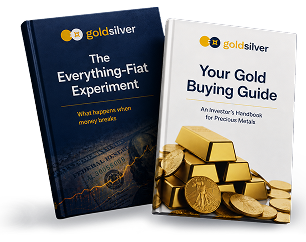
Two essential guides — yours free. Understand why gold matters and why fiat currencies always fail.
The Case for Physical: Why the Form of Ownership Matters
Every major currency today is a fiat currency. Its value comes from government decree and institutional trust — not from any tangible backing. Since August 1971, when President Nixon ended dollar-to-gold convertibility under the Bretton Woods system, every major central bank has been able to expand the money supply at will.
The results are visible in the data. A dollar from 1971 buys roughly 12 cents of what it bought then — a loss of more than 87% in purchasing power over 55 years. Gold in 1971 was fixed at $35 an ounce under Bretton Woods. At today's spot price, that same ounce is worth roughly 125–130 times more in dollar terms. Gold didn't appreciate in any fundamental sense — the dollar depreciated. Gold held its purchasing power while paper currency lost most of it.
Gold Held Its Value. The Dollar Did Not.
Both indexed to 100 in 1971 — gold price vs. US dollar purchasing power
Sources: World Gold Council; US Bureau of Labor Statistics (CPI) | GoldSilver
This is why the form of ownership matters so much. An ETF like GLD or IAU gives you price exposure — your account rises and falls with the gold price. But you do not own any gold. You own a share in a fund that owns gold, or claims to. In a functioning financial system, the difference is academic. In a genuine financial dislocation — precisely the scenario that drives people to gold — the difference becomes everything.
Physical gold and silver are not just inflation hedges. They are financial assets that exist entirely outside the banking system — they can't be printed, can't be defaulted on, and carry no counterparty risk. No ETF gives you that. Only the metal does. Central banks understand this instinctively. They purchased a record 1,136 tonnes of gold in 2022, exceeded 1,000 tonnes again in 2023 (1,037 tonnes) and 2024 (approximately 1,045 tonnes) — compared to an average of just 473 tonnes per year between 2010 and 2021.
Silver: The Industrial Angle
The case for silver runs along the same lines — but with a twist gold doesn't have. Silver is both a monetary metal and an industrial one. Industrial fabrication accounted for 680.5 million ounces in 2024 — approximately 59% of total global silver demand of 1.16 billion ounces. Solar photovoltaic manufacturing alone consumed roughly 232 million ounces in 2024, up from 94 million ounces in 2020. As a result, the silver market has run a structural supply deficit for five consecutive years (2021–2025), with 2026 projected to extend the streak. When you own physical silver, you hold an asset with real demand pressure behind it — pressure that paper silver simply doesn't capture.
What Types of Physical Gold and Silver Can You Buy?
The physical precious metals market has three main product categories — and which one you choose matters more than most first-time buyers realise.
Sovereign Coins
Sovereign coins are gold or silver bullion coins minted and guaranteed by a national government — American Gold Eagle, American Silver Eagle (US Mint), Canadian Maple Leaf (Royal Canadian Mint), South African Krugerrand, Austrian Philharmonic. Each coin carries a government guarantee of weight and purity and is recognised in bullion markets globally. For first-time buyers, sovereign coins are the standard starting point. They carry a higher premium over spot than bars — typically $50–$150 per ounce for gold coins — but that premium buys real advantages: instant global recognition, secondary market liquidity without authentication delay, and the full weight of a sovereign guarantee behind every ounce.
Bullion Bars
Bullion bars are refined gold or silver produced by accredited private refiners or national mints in standardised weights: 1 oz, 10 oz, and 1 kilo (32.15 oz) are common for individual investors. Because bars carry lower premiums over spot than coins, they are more cost-efficient for larger allocations of $10,000 or more. The trade-off is liquidity. A 1 oz American Gold Eagle can be sold in virtually any bullion market in the world without question. A 1 oz bar from a major accredited refiner — PAMP Suisse, Valcambi, Perth Mint — is nearly as liquid. An obscure bar from an unrecognised refiner takes longer to verify and usually fetches a lower buyback price.
Private Mint Rounds
Rounds are coin-shaped pieces produced by private mints, not national governments. They carry no government purity guarantee and are not legal tender. On the positive side, they have the lowest premiums of any physical precious metals product. The catch is liquidity: rounds are harder to sell, often at a discount, and require extra due diligence from buyers who don't recognise the issuing mint. Experienced investors sometimes use rounds as a low-cost way to accumulate silver ounces. For new buyers, the liquidity trade-off isn't worth the premium savings until you understand your local secondary market well.
Gold or Silver First? Or Both at Once?
This is a genuine strategic decision. Gold is stability: lower volatility, higher liquidity, the reserve asset central banks choose. Silver is leverage: higher volatility, a growing industrial demand tailwind, and historically larger percentage gains in precious metals bull markets. Many investors hold both — gold as the anchor, silver as the amplifier.
Step-by-Step: How to Buy Physical Gold and Silver
Step 1 — Choose a Reputable Dealer
The bullion market is largely unregulated, so dealer quality varies significantly. A reputable dealer has been in business for a decade or more, displays live spot prices transparently, publishes a clear buyback policy upfront, and has verifiable reviews on independent platforms.
Red flags to avoid: high-pressure sales tactics; premiums far below market (a common signal of counterfeit risk); evasiveness about storage or buyback terms; no verifiable address or customer service number. The lowest price in the market is rarely the best deal.
Step 2 — Select Your Product
For gold, a 1 oz American Gold Eagle or Canadian Maple Leaf offers maximum liquidity. At $10,000 or more, a 10 oz gold bar from an accredited refiner — PAMP Suisse, Perth Mint, or Valcambi — lowers your cost per ounce meaningfully. For silver, the American Silver Eagle is the most recognised coin worldwide. At larger quantities, silver bars (10 oz or 100 oz) reduce premiums substantially.
For most first-time buyers, sovereign coins are the right call. Investors building a larger position over time do well with a mix of coins for liquidity and bars for efficiency. Avoid numismatic (collectible) coins — premiums run 50–300% above spot and reflect collector value, not bullion weight.
Step 3 — Understand the True Cost
Total cost = spot price + dealer premium + payment method fee + storage or shipping cost. Spot price is set by global markets and changes continuously. The premium is the dealer's margin, covering minting costs, handling, and profit. Payment method fees vary: ACH bank transfer typically adds nothing; credit and debit cards typically add 3–4%. Always compare total cost — spot plus premium plus payment fee — across at least two dealers before placing your order.
Step 4 — Decide on Storage Before You Buy
Make this decision before your order is placed, not after your metal arrives.
Home storage gives you immediate possession and no ongoing fees. However, the security burden is entirely yours. Standard homeowner's and renter's insurance policies typically exclude bullion or cap coverage at $1,000–$2,500 without a specific rider. A quality, fire-rated, bolted-down safe is the minimum for any meaningful position.
Professional vault storage means holding metals in an allocated, segregated account at an institutional-grade facility — independently operated, fully insured, and outside the banking system. GoldSilver stores client metals in Class 3 vault facilities operated by Brink's, Loomis, and Malca-Amit. Your metals are allocated in your name and held separately from other clients' holdings.
The math for holdings above $5,000–$10,000: The combined cost of a properly insured home safe and an annual bullion rider typically exceeds professional vault fees of 0.3–0.5% of stored value per year. Vault storage also eliminates the personal security risk entirely.
Step 5 — Place Your Order and Take Delivery or Vault
Once you've confirmed your product and storage plan, placing an order is straightforward. Most reputable online dealers let you lock in the spot price at the time of purchase — your price is set when you order, not when payment clears. For home delivery, shipments are typically fully insured until delivery; inspect your package immediately on arrival. For vault storage, your metals go directly to the vault on your behalf, and you receive an allocation statement confirming exactly what you own.
Physical Gold and Silver in a Retirement Account (IRA)
Few wealth-building strategies are as underused as holding physical gold and silver inside a tax-advantaged retirement account. A self-directed IRA lets you hold physical precious metals with the same tax treatment as a conventional IRA — pre-tax growth with a Traditional IRA, or tax-free growth with a Roth.
IRS purity requirements (IRC §408(m)(3)): Gold must be .995 fine or better; silver must be .999 fine or better. The American Gold Eagle is the sole exception — it is .9167 fine (22-karat) but is specifically named in the statute as IRA-eligible. The South African Krugerrand is also .9167 fine but does not qualify, because it lacks that statutory carve-out. Storing IRA metals at home triggers an immediate taxable distribution. Metals must go to an IRS-approved depository.
The process has three steps: open a self-directed IRA with a custodian that handles physical metals; fund it via rollover from an existing 401(k) or IRA (a non-taxable event when executed correctly as a trustee-to-trustee transfer); and direct the purchase to an IRS-approved depository.
Should You Try to Time the Market?
No — and not just because timing is hard. The attempt itself tends to produce worse outcomes than a systematic approach. The investors who built the most wealth in gold and silver over the last two decades weren't the ones who called the bottom in 2015 or the top in 2011. They were the ones who bought consistently, held patiently, and didn't mistake short-term volatility for the long-term trend.
Dollar-cost averaging — buying a fixed dollar amount at regular intervals regardless of price — isn't a compromise. It's the optimal strategy for most individual investors. It removes the emotional weight of entry timing, captures the full trend over years, and keeps you from being your own worst enemy.
Common Mistakes When Buying Physical Gold and Silver
Buying from unverified dealers. Some sell underweight or counterfeit metal; others vanish after taking payment. Stick to dealers with a long track record, a physical address, and independently verifiable reviews.
Overpaying for numismatic coins. Rare coins carry premiums of 50–300% above spot. That reflects collector value, not bullion weight, and adds nothing for a wealth preservation buyer. Stick to bullion.
Choosing illiquid products. Obscure private mint rounds and non-standard bar sizes create real friction when you need to sell. Sovereign coins and major-brand bars from accredited refiners are products a buyer recognises and pays market price for immediately.
Skipping the storage decision. Buying first and figuring out storage later means metals end up in places that are neither secure nor insured. Decide before you buy.
Confusing price exposure with ownership. ETFs track the price. Physical metal is the asset — no counterparty, no institution to honour your claim, no mechanism by which it can fail to exist. That distinction is the entire point.
Stay On Top of Gold & Silver Prices
Get important market alerts sent straight to your inbox.
What Is the Best Physical Gold to Buy for Investment?
The American Gold Eagle or Canadian Maple Leaf is the best starting point for most buyers. Both are government-backed for weight and purity, globally recognised, and liquid in any bullion market. For larger allocations where cost efficiency matters more than maximum liquidity, a 10 oz gold bar from an accredited refiner — PAMP Suisse, Valcambi, or Perth Mint — reduces your premium-over-spot cost meaningfully.
How Much Does It Cost to Buy Physical Gold?
Physical gold costs the current spot price plus a dealer premium. Sovereign coins typically add $50–$150 per ounce over spot; large bars (10 oz and above) add less. There are no additional mandatory fees if you pay by bank transfer and use home delivery. Professional vault storage adds an annual fee — typically 0.3–0.5% of stored value per year.
Is Physical Gold a Better Investment Than a Gold ETF?
They serve different purposes. A gold ETF gives you price exposure with the ease of a stock trade. Physical gold gives you direct ownership — no counterparty risk and no dependency on the financial system. For protection against systemic risk, physical is the stronger choice. Only the metal delivers genuine financial sovereignty.
What Is the Safest Way to Store Physical Gold and Silver?
A professionally-operated, allocated vault facility is the safest option for most investors. Allocated storage means your specific metals are registered in your name and kept separate from other clients' holdings — they cannot be lent, pledged, or rehypothecated. Facilities operated by institutional-grade security companies such as Brink's, Loomis, and Malca-Amit provide full insurance coverage and independent auditing. For investors who want immediate physical possession, a fireproof, bolted-down home safe is the minimum, along with a specific insurance rider for bullion.
Can I Put Physical Gold in My IRA?
Yes. A self-directed IRA allows you to hold physical gold and silver with standard IRA tax treatment. Under IRS rules (IRC §408(m)(3)), gold must be .995 fine or better; the American Gold Eagle is a specific statutory exception at .9167 fine. Metals must be stored at an IRS-approved depository — not at home. A rollover from an existing 401(k) or IRA is a non-taxable event when structured correctly as a trustee-to-trustee transfer.
What Is the Difference Between Allocated and Unallocated Gold Storage?
Allocated storage means specific bars or coins are registered in your name — physically kept separate from other clients' holdings and off the storage provider's balance sheet. Unallocated storage gives you a credit claim on a pool of gold. You own a share of the pool, not specific metal, which makes you an unsecured creditor of the provider. In a financial stress scenario, allocated holders retain ownership of specific metal while unallocated holders may not. Always confirm storage is allocated and fully segregated before using any vault service.
What Is Spot Price in Gold and Silver?
The spot price is the current market price for immediate delivery of one troy ounce of gold or silver. It is set by global futures and over-the-counter markets — primarily COMEX in New York and the London Bullion Market — and changes continuously during market hours. All physical bullion pricing is based on spot plus a dealer premium. The spot price is the baseline; it is not the final price you pay.
The Bottom Line
Buying physical gold and silver is not complicated. Choose recognised bullion products — sovereign coins for new buyers, bars for larger allocations. Use a dealer with a proven track record, transparent pricing, and a clear buyback policy. Sort out storage before your metal arrives. Think in years, not months.
Fiat currencies are created by governments and central banks that benefit from the ability to create them. Gold and silver are created by geology and mining — they cannot be expanded by decree. The US dollar has lost more than 87% of its purchasing power since 1971. Every dollar that loses purchasing power is a quiet argument for owning something that can't be debased. That argument has held for 5,000 years and shows no signs of weakening.
This article is for informational and educational purposes only and does not constitute investment advice. Precious metals investing involves risk, including the possible loss of principal. Consult a qualified financial advisor before making investment decisions.
1. World Gold Council — Gold Demand Trends, Full Year 2024
2. World Gold Council — Central Banks, Full Year 2024
3. Silver Institute — World Silver Survey 2025
4. US Bureau of Labor Statistics — Consumer Price Index
5. Federal Reserve History — Nixon Ends Convertibility of U.S. Dollars to Gold
6. IRS — Publication 590-A, Contributions to Individual Retirement Arrangements
7. Cornell Legal Information Institute — IRC §408(m)(3), IRA-Eligible Precious Metals
8. Insurance Information Institute — Floaters and Endorsements: Special Coverage for Valuables
9. GoldSilver — Vault Storage


