Silver Rises Over 120% YTD




The digital gold vs physical gold debate has never been more relevant. Today’s investors can choose between holding a gold coin in their hand or owning gold through a smartphone app.
Both approaches track the same underlying asset, yet what you actually own — and what rights, risks, and costs come with that ownership — differs considerably. Here’s what you need to know before you decide.
What Is Digital Gold?
Digital gold is a broad term covering several investment structures: gold ETFs, gold mutual funds, gold futures contracts, and digital gold platforms that let you buy fractional ownership of vaulted bullion. Companies operating digital gold platforms enable customers to purchase gold through a technology-forward interface like a mobile app or online client portal, and these products often come with additional services such as storage, insurance, and constant tracking of the value of their metal holdings.
Crucially, not all digital gold is the same. Some products — like gold ETFs — represent a claim on a fund that may or may not hold physical gold in full. Others, like certain digital bullion platforms, are directly backed by allocated physical gold stored in professional vaults. Understanding which type you hold is the first question to ask.
What Is Physical Gold?
This one is easy. Physical gold means tangible metal: coins, bars, or rounds that you can hold, store, and transfer without going through a financial intermediary. The most common forms are bullion coins and bars, valued both for their recognized purity and weight, and for their straightforward appeal as objects to own outright.
When you own physical gold, there is no counterparty standing between you and your asset. No platform can freeze your account, no fund manager can make decisions on your behalf, and no financial institution needs to remain solvent for your gold to retain its value. This is the core appeal of physical gold — and it’s something digital alternatives simply cannot replicate.
The Financial System Isn’t Safer — And You Know It As risks mount, see why gold and silver are projected to keep shining in 2026 and beyond.
Is Digital Gold Backed by Physical Gold?
This is the question most investors forget to ask — and the answer varies more than you’d expect.
The key distinction is between allocated and unallocated gold. With allocated gold, specific bars or coins are assigned to you and held in a vault on your behalf. Your name is attached to identifiable metal. With unallocated gold, you hold a general claim against a pool of gold — meaning the custodian can use that gold for other purposes, and in an insolvency, you may be treated as an unsecured creditor rather than an owner of a specific asset.
Some digital platforms back all holdings with fully allocated physical metal stored in audited, insured vaults. In those cases, your digital position represents a genuine claim on real, identifiable metal. But many gold ETFs and paper gold instruments operate on an unallocated or partially allocated basis, or use derivatives to track the gold price rather than holding metal directly. Before assuming your digital gold is fully backed, read the fund’s prospectus carefully — and look for third-party audit documentation.
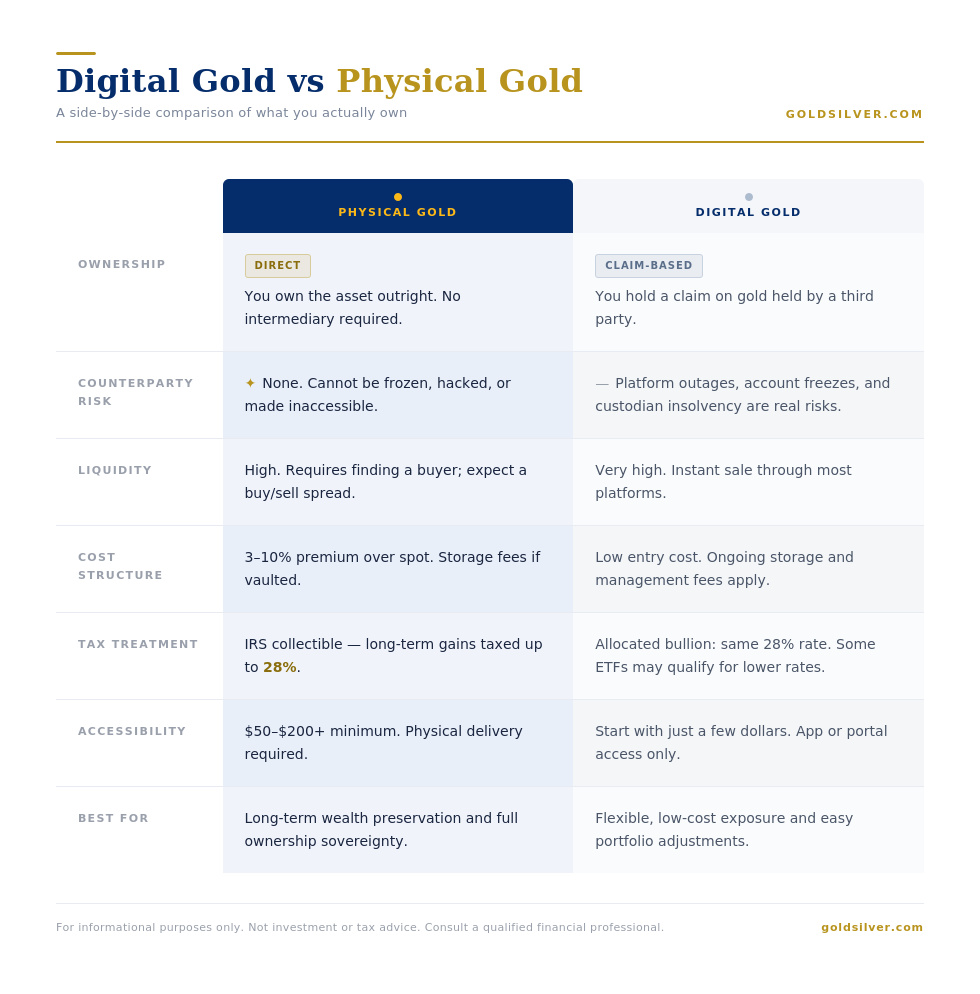
Key Differences: Digital Gold vs Physical Gold
Ownership and Control
Physical gold gives you direct, unencumbered ownership. Digital gold gives you a claim — on a fund, a platform, or a vault — that depends on someone else’s solvency and operational integrity. The type of that claim (allocated vs. unallocated) determines just how real your ownership actually is.
Liquidity
Physical gold is not as liquid as digital gold. Finding a buyer takes time, and the spread between what a dealer charges and what they’ll pay back matters — you’re often selling near wholesale and buying near retail. Digital gold can typically be sold instantly through an online platform, though platform spreads and transaction fees still apply.
Costs
Physical gold carries upfront premiums over the spot price — typically 3% to 10% — plus storage and insurance costs if you vault it. Digital gold generally has lower entry costs and fractional purchasing options. That said, ongoing storage and management fees compound quietly over time. For long-term holders, that drag deserves careful consideration.
Accessibility and Minimum Investment
Digital platforms often allow purchases starting at just a few dollars. Physical gold requires a minimum commitment tied to the smallest available coin or bar — typically $50 to $200 or more to start — and involves shipping or local pickup.
Is Your Gold Investment Taxed at the Right Rate?
Most investors don’t think about taxes until it’s too late. With gold, that oversight is expensive.
Physical gold — including digital positions in allocated bullion — is classified as a collectible by the IRS. Long-term gains, on holdings over one year, are taxed at a maximum rate of 28%. That’s nearly double the 15% rate most stock investors pay. Short-term gains are taxed as ordinary income, regardless of the instrument.
Not all digital gold carries the same tax burden. Certain commodity ETFs structured as limited partnerships fall under the Section 1256 rule. That applies a 60/40 split — 60% treated as long-term, 40% as short-term — regardless of how long you’ve held. For investors in higher brackets, the effective rate difference can be meaningful.
The structure of your investment determines your tax treatment. Two products tracking the same gold price can produce very different tax bills. Read the prospectus before you buy, and consult a qualified tax professional before making any allocation decisions.
Do You Own Your Digital Gold, or Are You Just a Creditor?
Platform outages and hacking get the headlines. But the more dangerous risk is quieter: custodian insolvency.
When a brokerage or custodian fails, client assets don’t always come back whole. The MF Global collapse in 2011 made that painfully clear. Client commodity holdings — including precious metals positions — were raided to cover the firm’s trading losses. Clients who believed they owned segregated assets ended up in bankruptcy court instead. The shortfall reached $1.6 billion.
That’s not an edge case. It’s what counterparty risk looks like in practice. If your digital gold is held in unallocated form, you are a creditor — not an owner. That distinction disappears in good times. It becomes everything in a crisis.
Physical gold in your possession has none of this exposure. It can’t be frozen, hacked, or locked behind a platform outage. No custodian needs to remain solvent for it to hold its value. That’s not a theoretical advantage. It’s the entire point.
Red Flags to Watch For
Not all digital gold platforms are created equal. Before trusting a platform with your capital, look out for these warning signs:
- No third-party audit certificates. Reputable platforms provide regular, independent audits confirming that vault holdings match outstanding positions. No audit documentation means no verification.
- Offshore custodians with no regulatory oversight. Jurisdiction matters. A platform operating outside established regulatory frameworks offers limited recourse if something goes wrong.
- No physical delivery option. If a platform won’t let you take delivery of your metal, ask why. The inability to redeem digital holdings for actual bullion is a sign your ownership claim may be weaker than advertised.
- Vague or unallocated storage disclosures. If the platform’s terms don’t clearly state that your gold is allocated and segregated, assume it isn’t.
Which Is the Better Investment?
Physical gold is the foundation. Digital gold is a tool.
The case for physical gold ownership isn’t just about price appreciation — it’s about the nature of the asset itself. Physical gold held in your possession exists entirely outside the financial system. It carries no counterparty risk, generates no platform fees over time, and cannot be made inaccessible by a third party’s operational or financial failure. For long-term wealth preservation, that combination is hard to replicate.
Digital gold — when backed by fully allocated, audited physical metal — can be a legitimate complement. It lowers the barrier to entry, enables fractional exposure, and offers easier liquidity for investors who need to adjust positions quickly.
But treat it as the complement, not the foundation. The investors best positioned for long-term wealth preservation are those who start with direct physical ownership and layer in vetted digital products for flexibility — not the other way around.
Investing in Physical Metals Made Easy

People Also Ask
What is the key difference between digital gold and physical gold?
Physical gold is a tangible asset you own outright with no counterparty risk. Digital gold is a claim on gold held by a fund or platform, meaning your ownership depends on a third party’s solvency and operational reliability.
Is digital gold backed by actual physical gold?
Not always. Some platforms back digital holdings with fully allocated physical metal stored in a secure vault. Others, like gold ETFs, may use derivatives or hold only a fraction of the gold their shares represent. Always check the product’s prospectus before investing.
Is digital gold safe compared to physical gold?
Digital gold is convenient but carries platform and counterparty risk — it can be frozen, hacked, or made inaccessible if a service goes offline. Physical gold held in your possession carries none of these risks, making it the safer option against systemic financial disruptions.
What are the tax implications of digital gold vs physical gold?
Both physical gold and digital gold backed by allocated bullion are typically classified as collectibles, subject to a capital gains tax rate of up to 28%. Some digital gold products that don’t directly hold physical metal — such as certain ETFs — may qualify for lower long-term capital gains rates. Tax treatment varies by jurisdiction, so consult a tax professional.
Which is better for long-term investment: digital gold or physical gold?
Physical gold is generally better suited for long-term wealth preservation due to direct ownership, no counterparty risk, and no recurring platform fees. Digital gold suits investors who prioritize accessibility, fractional purchases, and portfolio flexibility. Many long-term investors use both in combination.
This article is for informational purposes only and does not constitute investment or tax advice. Please consult a qualified financial professional before making any investment decisions.