Silver Rises Over 120% YTD




Published: 04-07-2026, 02:55 pm | Updated: 04-07-2026, 02:35 pm
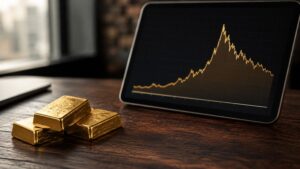
Gold’s 2026 has already been more eventful than most full years. The metal surpassed $5,000 per ounce for the first time in history, set an all-time high of $5,589.38 on January 28, then pulled back sharply to close Q1 at $4,503 — a year-to-date gain of just 3.1% that tells almost nothing about how volatile the quarter actually was [GoldSilver.com].
That gap — between an all-time high and a modest quarterly close — is the story of Q1. And it has prompted several major institutions to revise their year-end targets, in both directions.
What Happened in Q1 2026
Gold opened the year at $4,384.46 and spent January climbing steadily, driven by continued dollar weakness, ETF inflows, and persistent geopolitical uncertainty [Investing News Network]. The January 28 record of $5,589.38 marked the first time gold had ever traded above $5,500 — a level that would have seemed extreme even twelve months earlier.
The pullback that followed was just as sharp. By late March, gold had retreated to the $4,300–$4,500 range. The drivers were familiar: inflation expectations rose on energy price shocks, cooling expectations for near-term Fed rate cuts and raising the opportunity cost of holding gold. A broader equity sell-off also prompted some investors to liquidate gold positions to cover losses elsewhere.
The quarter’s trading range — $4,100 to nearly $5,600 — was extraordinary by any historical standard. But gold held its key technical support levels through the selloff, which analysts have noted as a meaningful signal about underlying demand [GoldSilver.com].
How the Major Forecasts Have Shifted
The Q1 volatility has forced several institutions off their original 2026 targets. Some have moved higher. One notable name has moved lower.
| Analyst / Firm | Original Target | Revised Target | Direction |
| UBS | $4,500 – $4,900 | $6,200 (by Sept 2026); upside to $7,200 | ↑ |
| ANZ Bank | $4,600 | $5,800 (Q2 2026) | ↑ |
| Société Générale | $5,000 | $6,000 | ↑ |
| Deutsche Bank | $6,000 | $6,000 (reiterated Feb 2026) | → |
| Yardeni Research | $6,000 | $5,000 (lowered); $10,000 by decade-end | ↓ near-term |
| JP Morgan | $6,300 | ~$5,000 by Q4 2026 (base case); $6,000+ longer term | ↓ near-term |
| State Street Global Advisors | $4,000 – $5,000 | $4,750–$5,500 base case; $5,500–$6,250 bull case | ↑ |
Sources: Scottsdale Bullion & Coin, Gold Price Forecasts 2026; JP Morgan Global Research; State Street Global Advisors, Monthly Gold Monitor March 2026.
The most notable revision is Yardeni’s. Ed Yardeni told CNBC in late March that his firm had lowered its year-end 2026 target from $6,000 to $5,000 — citing the Q1 pullback — while simultaneously raising its end-of-decade forecast to $10,000 [Investing News Network]. The message: near-term consolidation, long-term structural bull market.
UBS moved in the opposite direction, raising its target to $6,200 by September 2026 with potential upside to $7,200 — one of the more aggressive near-term calls now on record from a major bank [Scottsdale Bullion & Coin].
JP Morgan’s near-term framing has also moderated. The bank now projects gold reaching approximately $5,000 by Q4 2026 as a base case, underpinned by an expected average of 585 tonnes of quarterly central bank and investor demand — while maintaining that $6,000+ remains a longer-term possibility [JP Morgan Global Research].
Your Gold Buying Guide Most investors overpay when they buy gold. Then overpay again when they sell. This guide shows you exactly what to own — and why.
What to Watch for the Rest of 2026
The key variable is whether gold can reclaim and hold the $5,000 level. State Street identifies $4,400–$4,600 as strong near-term support, with their base case scenario of $4,750–$5,500 carrying a 50% probability and a bull case of $5,500–$6,250 assigned 35% probability [State Street Global Advisors].
The risks haven’t changed: a Fed pivot back toward tightening, a sustained dollar rally, or a reduction in geopolitical risk premium could all weigh on prices. But after a quarter in which gold hit an all-time high, pulled back sharply, and held its technical support — the structural case remains intact.
People Also Ask
What was the gold price high in Q1 2026?
Gold set an all-time record of $5,589.38 per ounce on January 28, 2026 — the first time the metal had ever traded above $5,500. It subsequently pulled back, closing Q1 at approximately $4,503.
Why did gold pull back after hitting its all-time high?
The pullback was driven by rising inflation expectations tied to energy price shocks, which cooled Fed rate cut expectations and raised the opportunity cost of holding gold. A broad equity market sell-off also prompted some investors to liquidate gold positions to cover losses elsewhere.
Have gold price forecasts changed after Q1 2026?
Yes — several institutions have revised. UBS raised its target to $6,200 by September 2026. ANZ raised its Q2 target to $5,800. Société Générale raised to $6,000. Yardeni Research lowered its 2026 year-end target from $6,000 to $5,000, while simultaneously raising its decade-end forecast to $10,000.
What is JP Morgan’s current gold forecast for 2026?
JP Morgan now projects gold reaching approximately $5,000 per ounce by Q4 2026 as a base case, supported by an expected average of 585 tonnes of quarterly investor and central bank demand, with $6,000+ remaining a longer-term possibility.
Is $5,000 gold still realistic for 2026?
Most institutional forecasts still place year-end 2026 targets at or above $5,000. State Street’s base case range of $4,750–$5,500 and JP Morgan’s Q4 target of ~$5,000 both support that level as achievable, assuming central bank demand stays elevated and the dollar continues its multi-year weakening trend [State Street Global Advisors] [JP Morgan Global Research].
SOURCES
1. GoldSilver.com — Gold vs. Stocks in 2026: What Q1 Returns Show
2. Investing News Network — Gold Price Update: Q1 2026 in Review
3. JP Morgan Global Research — Gold Price Forecast 2026 and Beyond
4. State Street Global Advisors — Monthly Gold Monitor, March 2026
5. Scottsdale Bullion & Coin — Gold Price Forecasts 2026
This article is for informational purposes only and does not constitute financial or investment advice. Always consult a qualified financial advisor before making investment decisions.