Silver Rises Over 120% YTD




Counterfeiting precious metals is as old as money itself. Knowing how to spot fake gold starts with understanding how fakes are made.
In September 2012, Manhattan dealer Ibrahim Fadl paid $100,000 for four 10-ounce PAMP Suisse gold bars. He drilled into them after a colleague’s tip — and found tungsten [NBC News]. The bars had already passed X-ray fluorescence testing and a scale check. With gold near all-time highs, the incentive for this kind of fraud has never been greater.
The good news: most fakes can be caught before money changes hands. This guide covers how counterfeits are made, which tests work, what each test misses, and what warning signs to look for when buying.
What Are the Most Common Types of Fake Gold and Silver?
Knowing how fakes are built is the first step toward spotting them. Counterfeiting techniques range from crude to sophisticated — and no single test catches all of them.
Gold-plated base metals are the most common. A thin layer of real gold is applied — via electroplating or chemical bonding — over a core of brass, copper, or nickel. The surface passes casual visual inspection and can even survive a shallow acid test if the plating is thick enough.
Tungsten-core bars and coins are the most dangerous threat. Tungsten has a density of 19.25 g/cm³, nearly identical to gold’s 19.30 g/cm³ [The Safe House / Silver Bullion]. A bar drilled out, filled with a tungsten slug, and resealed with a gold cap can match weight and dimensions closely enough to pass a scale check and a standard surface XRF scan. Standard XRF analyzers penetrate only 10 to 15 microns below the surface — roughly one-tenth the width of a human hair — making them blind to internal substitution [testyourgold.com].
Mislabeled purity is subtler: real gold, but not the karat being sold. Ten-karat gold (41.7% pure) sold as 18-karat (75% pure) is still gold — just not what you paid for. Visual inspection can’t distinguish between purity grades.
Counterfeit coins with replicated hallmarks are produced with precision CNC machining. Design details, weight stamps, and mint marks can be replicated convincingly enough to fool a casual check.
Silver fakes typically use lead, copper, or lead-tin alloy cores. No common metal closely matches silver’s density of 10.49 g/cm³, which makes silver significantly harder to counterfeit convincingly than gold [testyourgold.com]. Most silver fakes fail a basic weight-and-dimension check — a meaningful built-in advantage for investors focused on silver.
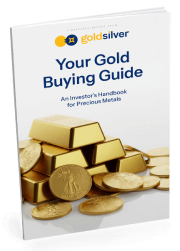
Your Gold Buying Guide Most investors overpay when they buy gold. Then overpay again when they sell. This guide shows you exactly what to own — and why.
How Can You Test Gold and Silver at Home?
Learning how to spot fake gold means stacking multiple tests, not relying on one. No single test is foolproof. The most reliable approach layers multiple methods, each designed to catch what the others miss. Start with the fastest, least invasive checks first.
Authentication guide
What does each test actually catch?
No single at-home test is sufficient. Here’s what each method detects — and where it falls short.
| Test | Plated fakes | Magnetic cores | Purity fraud | Tungsten core |
|---|---|---|---|---|
| Weight & dimensions Scale + caliper | ||||
| Magnet test Neodymium magnet | ||||
| Ping test Strike and listen | ~ | |||
| Visual inspection Hallmarks + security features | ||||
| Acid test Touchstone + nitric acid | ||||
| Ultrasound testing Professional / coin shop |
19.25 vs. 19.30 g/cm³
Tungsten’s density vs. gold’s — the razor-thin gap that makes tungsten-core fakes nearly impossible to catch without ultrasound.
1. Weight and Dimensions
This is the most objective at-home test available. Start here.
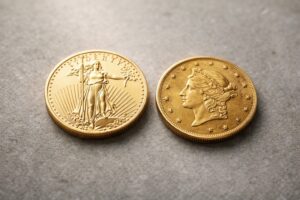
Every government mint and reputable refinery publishes exact specifications for every product they produce. A genuine 1 oz American Gold Eagle weighs 33.931 grams and measures 32.70 mm in diameter [U.S. Mint]. Any deviation — even slight — is a red flag worth taking seriously.
You need two tools: a precision scale accurate to at least 0.01 grams, and a digital caliper. Measure both weight and diameter. Compare against the mint’s published specs, available free on their official websites.
What it catches: Gold-plated fakes almost always deviate in weight or diameter. No common base metal replicates gold’s density closely enough to pass both measurements.
What it misses: Tungsten-core counterfeits. Tungsten’s near-identical density means a skilled counterfeiter can match both measurements precisely — which is exactly how the 2012 Manhattan bars slipped through [New York Post]. Weight and dimensions alone are not sufficient for large purchases.
For silver: the density gap between silver and common substitute metals is far wider than with gold. Weight testing is more conclusive here — no inexpensive metal gets close enough to pass.
2. The Magnet Test
Gold and silver are both diamagnetic — they don’t react to a magnet. If a strong rare-earth magnet pulls toward a coin or bar, that piece almost certainly contains iron, steel, or nickel.
Hold the magnet close without touching the metal. Any pull indicates a magnetic core. You can also set the coin on a slightly tilted surface — genuine gold slides freely; a magnetic fake may drag or stick.
What it catches: Low-quality counterfeits with iron or steel cores fail this test immediately. It’s a fast, cost-free filter.
What it misses: Tungsten is also non-magnetic. A tungsten-core bar passes cleanly. Treat this as a first screen, not a verdict.
For silver: same rules apply. A coin or bar attracted to a strong magnet is not genuine.
3. The Ping Test
Strike a genuine gold or silver coin and it rings — clear, sustained, like crystal. Base metals thud.
Balance the coin on a fingertip and tap it with another coin or small metal object. A real coin produces a bell-like tone that carries. A counterfeit made from brass or copper sounds noticeably flatter and shorter. It takes some practice to calibrate your ear, but the contrast is usually obvious once you’ve heard both.
What it catches: Most plated base-metal fakes, and any counterfeit with poorly matched acoustic properties.
What it misses: Tungsten fakes can partially pass. Gold transmits sound at 3,240 m/s; tungsten at approximately 5,170 m/s [testyourgold.com]. That gap is measurable with professional equipment — but not reliably by ear alone.
For silver: silver rings with a higher-pitched, longer-sustaining tone than gold — often more pronounced. The test works the same way.
4. Visual Inspection and Security Features
A careful visual check won’t catch the best fakes. It will catch most of the rest.
Start with the hallmark. Every legitimate bullion product should show purity (e.g., .999 or .9999), weight, and issuing mint — sharply stamped, clearly legible. Blurry text, misaligned stamping, or fonts that don’t match known authentic examples are immediate disqualifiers.
Next, examine the edge. The 1 oz American Gold Eagle has 161 reeds on its edge, per a U.S. Mint spokesman [Coin World]. Beginning with the redesigned 2021 coins, the Mint also added a deliberate anti-counterfeiting feature: a missing reed, or edge notch, whose position changes with each year of issue [U.S. Mint]. Counterfeits frequently show irregular reeding, a lower reed count, or a smooth edge.
On Canadian Gold Maple Leaf coins, look for the laser micro-engraved privy mark — a textured maple leaf showing the last two digits of the production year, visible only under magnification. The Royal Canadian Mint introduced this feature in 2013 [Royal Canadian Mint]. Coins dated 2014 and later are enrolled in the Mint’s Bullion DNA program, allowing authorized dealers to verify authenticity instantly using a specialized reader. A post-2013 Maple Leaf without this mark under magnification is not genuine.
Beyond security features, assess overall surface quality. Authentic coins have sharp, high-relief design details and consistent luster. Counterfeits often show blurred design edges, inconsistent surface finish, or subtly off color.
What it catches: Low- and mid-quality fakes, and coins missing required security features for their type and year.
What it misses: High-precision counterfeits produced with modern CNC equipment can replicate design details closely. Visual inspection is necessary — not sufficient.
For silver: the same approach applies. American Silver Eagles use the same anti-counterfeiting edge notch as Gold Eagles, introduced with the 2021 redesign.
5. The Acid Test
Scratch the metal against a testing stone, then apply a drop of nitric acid to the mark. Real gold doesn’t react. Base metals dissolve or discolor.
Testing kits are inexpensive and widely available. Different acid concentrations correspond to different karat levels — so beyond confirming authenticity, this test can identify approximate purity.
What it catches: Gold-plated base metals (the acid exposes whatever’s underneath), and mislabeled purity grades.
What it misses: Tungsten-core bars with genuine gold surfaces. The acid only tests the outer 20 microns [testyourgold.com]. It cannot tell you what’s inside. For large-format bars — where substitution almost always happens internally — this is a significant blind spot.
For silver: nitric acid reacts differently with silver than with gold. Genuine silver turns a creamy color; base metals produce a green or brown reaction. Silver-specific acid test kits are available and follow the same method.
When is Professional Authentication Worth it?
Home tests are a good first line of defense. For larger purchases — especially gold bars over 1 oz — they’re not enough on their own.
XRF (X-ray fluorescence) analyzers are standard at most reputable dealers and coin buyers. They identify surface elemental composition quickly and without damage. The limitation: XRF only reads the outer 10 to 15 microns [testyourgold.com]. A genuine gold exterior over a tungsten core passes.
Ultrasound testing is the most reliable available method for catching tungsten cores without cutting into the bar. It measures sound velocity through the metal — gold transmits at 3,240 m/s, tungsten at approximately 5,170 m/s, a difference of roughly 60% [testyourgold.com]. A 10 oz gold bar measuring 8 mm thick would falsely read as only 5 mm if the core were tungsten, because sound travels through it so much faster. The 2012 PAMP bars would have failed ultrasound instantly — despite passing X-ray and scale [New York Post / testyourgold.com].
Electronic conductivity testers — including the Sigma Metalytics Verifier — measure a property that varies significantly between gold, silver, tungsten, and base metals. Non-destructive, practical, and available at many coin shops on request.
PCGS and NGC (Professional Coin Grading Service and Numismatic Guaranty Company) offer expert authentication and grading for collectible coins. Authenticated pieces are returned in sealed, tamper-evident holders with full documentation — the established standard for high-value numismatic purchases.
If home tests raise questions you can’t resolve, pause. Walking away from a purchase is cheaper than discovering the problem later.
What Red Flags Should You Be Aware of?
Physical tests tell you what you have. These warning signs tell you whether to look harder in the first place.
Price below spot is the clearest signal something is wrong. No legitimate dealer sells genuine gold or silver below its metal value. Below-spot pricing means the product is fake, stolen, or misrepresented. There are no exceptions.
Unverifiable mint names. Legitimate bullion comes from recognized mints — the U.S. Mint, Royal Canadian Mint, Perth Mint, Royal Mint — or from established private refineries like PAMP Suisse, Valcambi, and Argor-Heraeus. A bar stamped with a name you can’t confirm against known, active refiners should be treated as suspect.
Imprecise design details. Government mints work to exacting tolerances. Blurry text, misaligned stamps, or inconsistent fonts aren’t quality control issues — they’re evidence the product didn’t come from a legitimate mint.
No seller history. Private sellers on eBay, social media, or classified platforms with no verifiable reviews or business track record offer no accountability. That lack of accountability is precisely the risk.
Packaging that looks right but can’t be verified. Tamper-evident assay cards and sealed documentation are legitimate anti-counterfeiting tools — but they can be faked too. The 2012 Manhattan PAMP bars came with convincing serial numbers and certificates [Manhattan Gold & Silver]. Packaging confirms nothing on its own.
Why the Source Matters More than the Tests
Every test in this guide adds real protection. Together, they catch the vast majority of fakes in circulation.
But there’s an honest ceiling to what any home test can prove. The most sophisticated counterfeits — tungsten cores, replicated serial numbers, forged documentation — are designed to defeat individual tests. They are not designed to defeat a supply chain.
Reputable dealers source directly from authorized mint distributors. Their inventory doesn’t pass through private hands or secondary markets where substitution is possible. A buyback guarantee reinforces that: a dealer willing to repurchase what they’ve sold is confident in what they sold. That confidence requires quality control before anything ships.
The cleanest way to avoid authentication problems is to not need authentication in the first place.
Investing in Physical Metals Made Easy

People Also Ask
How do I know if my gold coin is real?
Start with weight and dimensions — compare against the mint’s published specs using a precision scale and digital caliper. Add the magnet test and a visual check for the security features specific to your coin type and year. For Canadian Maple Leafs dated 2014 and later, the Bullion DNA program allows instant verification through authorized dealers [Royal Canadian Mint]. For any high-value coin, an electronic conductivity tester at a local coin shop gives reliable confirmation without damaging the piece.
Can a tungsten-filled bar pass a magnet test?
Yes. Tungsten is non-magnetic, so a gold-plated tungsten bar passes cleanly. This is exactly why the magnet test shouldn’t be used alone. Ultrasound testing — which measures sound velocity through the metal, not just its surface — is currently the most reliable method for detecting tungsten cores [testyourgold.com].
What does fake silver look like?
Most fake silver uses copper, lead, or lead-tin alloy cores plated with silver. These pieces typically weigh less than genuine silver, produce a dull thud instead of a clear ring, and may show discoloration or wear at edges where the plating is thinnest. Because no affordable metal closely matches silver’s density, weight testing catches most silver fakes — which is one reason silver investors have an easier authentication baseline than gold investors.
Is gold ever legitimately sold below spot?
No. There is no business model that allows a legitimate seller to sell genuine gold below its metal value. Below-spot pricing means the product is fake, stolen, or not what it’s claimed to be.
Do I need to test gold bought from a reputable dealer?
No — and that’s the point. A dealer with a verified supply chain and a buyback guarantee has already absorbed the authentication burden. You’re not just buying gold. You’re buying the assurance that comes with knowing where it came from.
SOURCES
1. NBC News — Counterfeit Gold Bars Discovered in New York City
2. New York Post (via testyourgold.com) — More Counterfeit Gold Bars Are Found in Manhattan
3. The Safe House / Silver Bullion — How Is Ultrasound Testing Used to Authenticate Precious Metals?
4. testyourgold.com — A Guide to Testing Gold, Silver and Fakes
5. testyourgold.com — How Ultrasound Tests Gold and Silver
6. U.S. Mint — American Eagle Gold Proof Coin Specifications
7. U.S. Mint — Redesigned 2021 American Eagle Gold Proof Coins
8. Coin World — Edge Notches on American Eagles Moved in 2022, 2023
9. Royal Canadian Mint — Bullion DNA
10. Manhattan Gold & Silver — Fake Gold Bars Found in the Diamond District
This article is for informational purposes only and does not constitute financial or investment advice. Always consult a qualified financial advisor before making investment decisions.