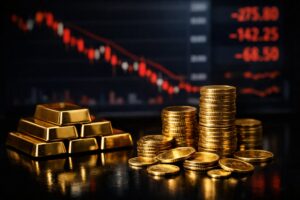
Silver Rises Over 120% YTD




🌆 Evening News Nuggets | Today’s top stories for gold and silver investors
March 26th, 2026 | Brandon Sauerwein, Editor
The Iran-Strait of Hormuz standoff is now one of the most direct drivers of gold price volatility in years — and today it got more complicated.
📊 Market Snapshot
- Gold dropped as much as 3% today to trade near $4,445/oz, extending a 16% slide over the past month.
- Silver took a harder hit — off as much as 6% on the session and down 25–28% over 30 days — now trading in the $67–$70/oz range.
How Long Could the Selloff in Gold and Silver Last?
The Iran-Strait of Hormuz standoff drove gold prices lower again Thursday as the ceasefire window appeared to close. Diplomatic progress between the U.S. and Iran stalled, with Trump publicly warning Tehran to “get serious soon.” Gold futures dropped 2.3% to around $4,400 while silver fell 4.6% on the session.
Since fighting broke out on Feb. 28, gold is now down 17% and silver has shed a staggering 28%. The real damage, according to Hargreaves Lansdown’s Derren Nathan, isn’t coming from safe-haven sentiment — it’s coming from the Fed. War-driven energy price spikes have pushed inflation expectations higher, cutting the odds of a rate cut and raising the probability of a hike.
The chance of a Fed hold through at least October has surged from 11% to 62% in just one month. Until oil routes reopen and rate expectations soften, Nathan warns, the hawkish pressure on metals is unlikely to lift.
What Happened in 1971? The guide that explains the moment our financial system changed.
Iran Rejects Ceasefire Talks — and Is Now Charging Yuan Tolls on the World’s Oil Route
The diplomatic off-ramp markets were hoping for isn’t coming. Iran’s Foreign Minister said flatly this week that Tehran has no plans to negotiate, directly contradicting White House claims that a 15-point ceasefire proposal had been delivered through Pakistan. Gold and silver extended their slide on the news.
Then a second headline reframed the story entirely. Iran is moving to charge transit fees on ships passing through the Strait of Hormuz — collectible in Chinese yuan, not U.S. dollars. For gold investors, this isn’t just a war update. It’s de-dollarization in real time: a major global chokepoint actively being repriced outside the dollar system, during a live conflict, with no resolution in sight.
The ceasefire may still come. The Yuan toll tells you what Iran is building toward regardless.
OECD Says US Inflation Will Surge to 4.2%
The OECD is warning that U.S. inflation will surge to 4.2% this year — the highest in the G7 — driven by energy price shocks from the U.S.-Israel-Iran war. The organization slashed its global growth forecast to 2.9%, noting that a promising start to 2026 has been entirely wiped out by the conflict.
The Strait of Hormuz disruption alone accounts for a quarter of global seaborne oil trade, and the ripple effects are spreading well beyond energy into metals, fertilizers, and semiconductor supply chains.
The Yuan toll tells you where the Iran-Strait of Hormuz story — and gold prices — are ultimately headed.
Investing in Physical Metals Made Easy