Silver Rises Over 120% YTD




Published: 05-06-2026, 03:46 pm
When you compare gold vs stocks vs real estate, a troubling pattern emerges. Each of these major asset classes has either been in a bubble recently, is still deflating from one, or sits at historically dangerous valuations today. So where does your wealth actually belong right now? For a growing number of serious investors, the answer is the one asset class built on structural demand rather than speculation — gold and silver.
How Stocks Compare: A Super Bubble by Historical Measures
The U.S. stock market has been flashing warning signs for years. Dr. Robert Shiller of Yale University — creator of the Case-Shiller Home Price Index and Nobel laureate in economics — has compiled stock market data all the way back to 1871. His CAPE ratio smooths earnings over a 10-year inflation-adjusted period.
As a result, it is widely regarded as one of the most reliable long-term valuation tools available. The ratio has spent much of the past decade trading at more than double its long-term historical average of roughly 17 — a level only previously exceeded during the dot-com peak of 1999–2000 [Robert Shiller / multpl.com].
Shiller himself noted in 2014 that CAPE readings above 25 had been exceeded “in only three previous periods” in the prior century. Furthermore, each of those periods was followed by a major market drop.
So what has been keeping stocks elevated? For more than a decade, central bank intervention functioned as a floor beneath markets. In effect, this inflated valuations far beyond what underlying earnings could justify. The concern isn’t simply that stocks are expensive. It’s that the mechanism propping them up has limits. When stimulus reaches diminishing returns, the markets it has been levitating will have to find their own footing.
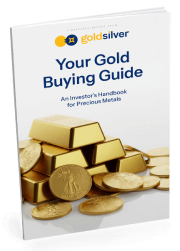
Your Gold Buying Guide Most investors overpay when they buy gold. Then overpay again when they sell. This guide shows you exactly what to own — and why.
How Bonds Compare: The 40-Year Bull Market Is Already Over
It’s easy to forget that bonds haven’t always been a safe haven. For the 35 years following World War II — from 1946 to 1981 — bonds were so consistently poor an investment that they earned a grim nickname: “certificates of confiscation.” The inflation of that era eroded fixed income returns to almost nothing in real terms.
What followed, however, was a historic reversal. Starting in the early 1980s, falling interest rates powered a 40-year bond bull market. That era ended decisively in 2022, when the Federal Reserve raised rates by 525 basis points — the fastest tightening cycle in over four decades [Federal Reserve]. That bull market is now over. Moreover, investors who loaded up on long-duration bonds during the era of near-zero rates have already absorbed significant losses.
The consequences are still playing out. Most developed nations continue to run chronic deficits. In addition, structural inflationary pressures remain elevated. As a result, the environment that made bonds a reliable wealth-builder for a generation is unlikely to return soon. For investors still treating bonds as the “safe” part of their portfolio, the risk-reward equation has fundamentally changed.
How Real Estate Compares: Institutional Money and a New Kind of Risk
The 2008 housing crisis reshaped real estate investing in ways that are still unfolding. As foreclosures swept the country, large institutional investment firms stepped in as buyers. Specifically, they acquired significant portions of distressed inventory in concentrated markets. At the time, this helped put a floor under prices. However, it also introduced a structural risk that didn’t exist before.
When individual homeowners sell, they do so one house at a time. When an institutional firm decides to exit, by contrast, it can dump thousands of properties onto the market simultaneously. That kind of supply shock is precisely what makes markets violent. Real estate values have bounced back since 2008 — yet in many markets, affordability relative to income has reached its worst level since the mid-2000s housing bubble [Morningstar]. As a result, the foundation beneath prices is less stable than it looks.
Gold vs Stocks vs Real Estate: Why Precious Metals Belong in the Conversation
Unlike stocks, bonds, and real estate — each of which experienced speculative manias and painful corrections — gold’s recent bull market has been driven by structural, institutional demand. Specifically, central banks purchased more than 1,000 tonnes of gold for three consecutive years: 2022, 2023, and 2024. That figure is more than double the annual average of the prior decade [World Gold Council]. This isn’t speculative behavior. Rather, it represents sovereign nations making a long-term decision about what they trust.
Furthermore, gold’s bull market since 2019 has seen prices more than triple from their pre-pandemic lows. This move was driven not by retail speculation, but by sovereign accumulation and institutional repositioning. The key drivers — central bank accumulation, currency debasement concerns, and geopolitical uncertainty — show no signs of reversing.
Every major asset class eventually becomes the primary destination for capital seeking safety and return. The conditions that have historically powered the strongest moves in precious metals — fiscal deficits, loss of confidence in paper assets, and low real interest rates — are not hypothetical future risks. In fact, they are the defining economic features of the current environment.
That doesn’t mean gold and silver move in a straight line. Volatility is a feature of every bull market. Nevertheless, of all the major asset classes, precious metals are the ones most directly positioned to benefit from the very conditions that pose the greatest risk to everything else.
Stay On Top of Gold & Silver Prices
Get important market alerts sent straight to your inbox.
People Also Ask
Is gold a better investment than stocks right now?
The comparison depends on your time horizon and risk tolerance. Stocks have spent much of the past decade trading at more than double their long-term average CAPE valuation — a level only previously exceeded at the dot-com peak. Gold, meanwhile, has been in a strong bull market since 2019.
Moreover, prices have more than tripled from pre-pandemic lows, setting successive all-time highs. The key drivers — central bank buying, geopolitical uncertainty, and dollar debasement concerns — show no signs of reversing. As a result, investors looking for assets backed by structural macro tailwinds increasingly find precious metals compelling relative to richly valued equities.
Why are bonds considered risky right now?
The 40-year bond bull market that began in 1981 ended in 2022, when the Federal Reserve raised rates by 525 basis points — the fastest tightening cycle in over 40 years. Because bonds move inversely to interest rates, long-duration bondholders absorbed severe losses as rates rose.
Furthermore, with most developed governments running large structural deficits and inflationary pressures proving persistent, the environment that made bonds reliably profitable for a generation has fundamentally changed.
What makes gold and silver different from other investments?
Gold and silver are tangible assets with no counterparty risk. In other words, they are not someone else’s liability — they cannot be inflated away and cannot default. They have functioned as money and stores of value across virtually every human civilization for thousands of years.
In addition, they tend to perform well precisely when conditions harming stocks, bonds, and real estate — such as currency debasement, financial instability, and loss of confidence in institutions — are at their worst.
Is real estate still a good investment after the 2008 crash?
Real estate can still make sense depending on the specific market, price point, and investment structure. However, a significant factor has changed since 2008: large institutional firms now own substantial portions of single-family housing inventory in many markets.
Unlike individual homeowners, these firms can liquidate en masse. As a result, they introduce a source of volatility that didn’t exist in prior cycles. This doesn’t mean real estate is universally a bad investment — but the risk profile has shifted in ways worth understanding before committing capital.
How do I start investing in gold and silver?
The best starting point is education. In particular, understanding which products to buy (coins vs. bars vs. ETFs), where to purchase, how to store, and what pitfalls to avoid will save you time and money. GoldSilver’s free resources and guides cover everything a first-time buyer needs to get started with confidence.
The Bottom Line: What the Data Actually Tells Us
Three of the four major asset classes available to ordinary investors are either in a bubble, emerging from one, or carrying structural risks that didn’t exist a generation ago. Gold and silver, however, are different. Not because they’re undiscovered, but because the macro conditions driving them are structural, not speculative. Central banks are buying at a generational pace. Governments are spending. Meanwhile, confidence in fiat currencies is eroding. These aren’t short-term trends.
In summary, the conditions that drive precious metals bull markets are already in place and gaining momentum. The question for most investors isn’t whether gold and silver belong in their portfolio. It’s how much — and whether they’re acting early enough to matter.
SOURCES
1. multpl.com — S&P 500 Shiller CAPE Ratio
2. Federal Reserve — Monetary Policy and Economic Developments
3. Morningstar — How Much Will the Fed Cut Interest Rates?
4. World Gold Council — Gold Demand Trends Full Year 2024: Central Banks
Disclaimer: This article is for informational purposes only and does not constitute investment advice. Past performance is not indicative of future results. Always consult a qualified financial advisor before making investment decisions.
You May Also Like:
- When Markets Crash, Gold Does This Every Time
- Gold vs. Fiat Currency: A 50-Year Reckoning
- Gold Purchasing Power: What History Really Shows
- The Dollar Is Losing Ground. Here’s Why It Matters.
- Gold vs. Stocks: What Long-Term Ratios Are Telling Investors
- Silver broke a historic record. The bigger signal isn’t the price.
- Does Timing the Gold Market Work? What 56 Years of Data Shows
- Central Banks Are Buying Gold: Here’s What They See Coming