Silver Rises Over 120% YTD




What if “rich” has nothing to do with having millions — and everything to do with how you store the value you already have?
A few years after Alan Hibbard walked away from his finance career, he sat in a small room with his Spanish tutor, explaining why he was so fascinated with money and value.
She stopped him mid-sentence.
“¿Estás rico? Are you rich?”
Alan laughed. Not because he felt poor — but because he finally understood something most people never discover:
“I might not be a millionaire… but I feel like the richest man in the world. I can spend my time however I choose.”
This is where Episode 6, the finale of Hidden Secrets of Value, begins — with a simple question that leads to a radically different definition of wealth.
And the journey that gets him there looks nothing like what mainstream financial advisors recommend.
The Silent Theft That Keeps You From Feeling Rich
For most of his life, money felt scarce. Opportunities felt out of reach. And like many Americans, Alan assumed that having more was the only solution.
But as he studied money and value in depth, he realized something shocking:
Value wasn’t just hard to build — it was being stolen.
Not loud theft… Not visible theft… But the most reliable, predictable theft in the world:
Inflation — the tax nobody voted for and everybody pays.
Every new dollar the government prints dilutes the dollars you worked for. It’s extraction disguised as policy.
“Every person on the planet is being taxed by inflation — unfairly, silently, and without their consent.”
Once Alan saw this, he couldn’t unsee it. And he couldn’t rely on a system designed to erode what people spend their entire lives trying to save.
The Portfolio No Financial Advisor Would Recommend
Most investors don’t really want to invest. They just don’t want to fall behind.
So they do what everyone else does: buy stocks and bonds. It’s the default mode.
Alan used to do the same thing. Then he sold everything.
His entire portfolio today? Gold. Silver. Bitcoin.
That’s it.
“I used to own stocks and bonds, but I wasn’t interested in taking on all that risk for such a small reward,” he says. “I found I could get the same preservation of purchasing power by reducing my risk dramatically—by holding money.”
He even sold both his IRAs.
Extreme? Maybe. But Alan studied wealth cycles for years before making this decision.
The Wealth Cycle the Financial Industry Never Taught You
The turning point in Alan’s thinking came from something Mike Maloney calls wealth cycles — the predictable rhythm between asset classes as they rise and fall relative to each other.
The clearest example is the Dow/Gold Ratio: Dow Jones ÷ Price of Gold
It shows how expensive stocks are in terms of gold, and how expensive gold is in terms of stocks.
Over the last century, the ratio moves like a tide:
- When it rises, stocks outperform gold.
- When it falls, gold outperforms stocks.
- And each cycle eventually returns to where it began.
Right now?
Stocks are extremely expensive. Gold is extremely cheap.
Alan says: “If an asset is overpriced, I sell it. If it’s underpriced, I buy it. It’s simple arbitrage.”
The same principle his grandmother — a banker — taught him as a kid:
Buy low, sell high.
Borrow at 6%, lend at 7%.
The banks changed the rules. But value hasn’t.
Wealth cycles still reveal opportunity to anyone willing to look.
Why Alan No Longer “Invests” — and Why He Doesn’t Have To
Across six episodes, Alan breaks down the difference between price and value, money and currency, intrinsic and extrinsic value, and how entropy destroys stored value over time.
Most people invest out of fear.
Fear of inflation.
Fear of doing nothing.
Fear of not having enough in retirement.
But when you understand what actually preserves value — and what destroys it — you stop acting from fear and start acting with confidence.
And sometimes the most rational decision is the simplest:
**Hold real money.
Avoid unnecessary risk.
Store the value you worked for.**
As Alan puts it:
“Storing the fruits of your labor is a basic human right.”
When you understand value, you make better decisions, sooner.
You keep more of what you have.
And you avoid losses most people never see coming.
That’s what it really means to be “rich.”
A Better Way to Protect the Value You’ve Already Earned
Understanding value isn’t just theory — it’s protection. Once you see how value is created, stolen, transferred, and preserved, you start noticing threats that were invisible before. And more importantly, you start recognizing the opportunities.
But most people never learn where their value actually leaks away.
That’s why Alan put together a brand-new, 100% free report:
It distills the biggest lessons from Hidden Secrets of Value into a simple, practical guide you can use immediately — whether you’re just starting your wealth-building journey or you’ve been investing for decades.
If you want to protect the fruits of your labor — and keep more of the value you work so hard to create — this report is an easy next step.

People Also Ask
What does Alan Hibbard mean when he says inflation “steals value”?
Inflation reduces the purchasing power of every dollar you’ve earned, which means your savings buy less over time. Alan explains that newly printed currency dilutes existing value, functioning like a hidden tax most people never notice. You can watch his full explanation in Hidden Secrets of Value Episode 6 on GoldSilver’s YouTube channel.
Why did Alan sell all his stocks and bonds and move into gold, silver, and Bitcoin?
Alan says he realized stocks and bonds carried high risk for relatively low reward, especially when adjusted for inflation. He found he could preserve his purchasing power more reliably by holding forms of money that can’t be printed. Learn more about his portfolio strategy in Episode 6 of Hidden Secrets of Value at GoldSilver.com.
What is the Dow/Gold Ratio and why does Alan use it?
The Dow/Gold Ratio measures how expensive stocks are compared to gold by dividing the Dow Jones index by the price of gold. Alan uses this ratio to identify long-term wealth cycles—periods where one asset is historically overvalued or undervalued relative to the other. He walks through this concept in detail in Episode 6 of Hidden Secrets of Value.
How does Alan define “real money” compared to currency?
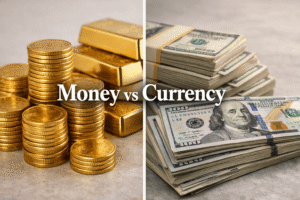
Alan distinguishes money as something that stores value over time, while currency is simply a medium of exchange that loses value through inflation. In his view, gold, silver, and Bitcoin meet the criteria for money because they’re scarce and resistant to dilution.
Why does Alan say understanding value helps people make better financial decisions?
Alan believes that knowing how value is created, destroyed, or transferred helps people avoid losses and preserve what they’ve already earned. When you understand value, you’re less likely to invest out of fear and more likely to choose assets that actually protect your wealth. He covers these principles in Episode 6 and across the full HSOV series on GoldSilver.com.
Investing in Physical Metals Made Easy