Silver Rises Over 120% YTD




Published: 03-09-2026, 04:30 pm | Updated: 03-09-2026, 12:27 pm
If you’re looking to add silver to your portfolio, one of the first decisions you’ll face is choosing between silver bars and silver coins. It sounds like a simple choice — bars or coins — but each option comes with its own set of trade-offs that can meaningfully affect your investment strategy. Understanding those differences is what separates a thoughtful silver investor from someone who just bought the shiniest thing available.
This guide breaks down what you actually need to know before you buy.
Why Silver Deserves a Spot in Your Portfolio
Before getting into the bars vs. coins debate, it’s worth understanding what makes silver compelling in the first place.
Silver isn’t just a monetary metal — it’s one of the most industrially useful materials on earth. Solar panels, electric vehicles, semiconductors, and medical equipment all depend on silver. In fact, according to the Silver Institute, industrial demand reached a record 680.5 million ounces in 2024 — more than half of all silver consumed globally. That’s a fundamental structural tailwind that gold doesn’t have to the same degree.
This industrial dimension gives silver a dual identity: part monetary asset, part industrial commodity. For investors, that’s a double-edged sword. When manufacturing slows, silver can feel the pinch. But when the clean energy transition accelerates or tech spending heats up, silver benefits in ways that go beyond safe-haven buying.
Silver isn’t just a cheaper version of gold. It’s a distinct asset with its own demand drivers.
Silver’s Volatility: What You Should Expect
One of the most important things to understand before buying silver bars or silver coins is that silver moves fast — in both directions.
Silver is significantly more volatile than gold. It has a smaller market, less institutional liquidity, and its industrial sensitivity means it can swing sharply when economic sentiment shifts. During the 2020 market recovery, silver surged over 140% in just a few months. But silver also fell harder during the 2008 financial crisis before rebounding.
For investors who understand this, silver’s volatility is a feature, not a bug. The potential for outsized gains is real. But you have to be prepared for drawdowns, and you shouldn’t allocate more than you’re comfortable watching fluctuate.
A common framework: gold as the foundation, silver as the growth component. Gold tends to act as a steadier anchor in uncertain times. Silver can turbocharge returns when the metals cycle turns — but it requires patience and a longer time horizon.

The Edge Every Investor Needs Smarter precious metals investing starts here. The Nuggets Newsletter brings you essential market insights, Fed updates, global trends, educational videos, and much more.
Silver Bars: Lower Premiums, More Metal for Your Money
Bars are straightforward. You’re buying a standardized amount of .999 fine silver at the tightest possible premium over the spot price.
Why investors choose silver bars:
- Lower premiums over spot. Because bars are simple to produce and don’t require the design complexity of coins, they typically carry the smallest markup. The larger the bar, the lower the per-ounce premium.
- Efficient stacking. Bars are flat, uniform, and easy to store. If you’re building a meaningful position in silver, bars make physical stacking practical.
- Straightforward valuation. A 10 oz bar is 10 oz of silver. No numismatic considerations, no collectibility factor.
Common sizes: 1 oz, 5 oz, 10 oz, and 100 oz bars are the most popular. The 100 oz bar is a favorite among serious investors who want to accumulate at the lowest cost-per-ounce.
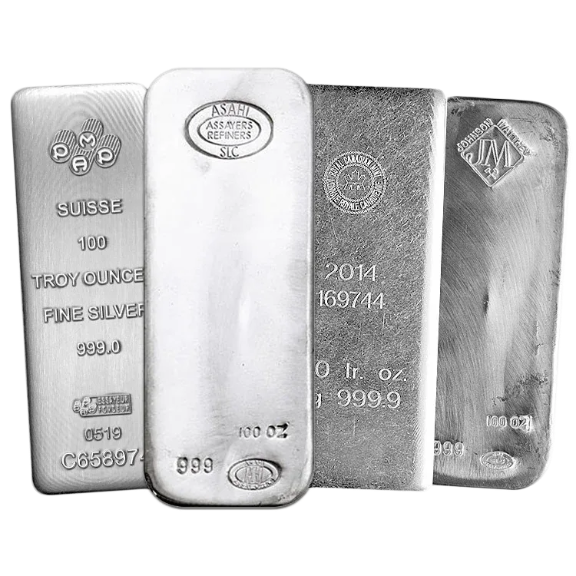
100 oz Silver Bar – Various Mints
The trade-off: Bars can be slightly harder to liquidate in smaller increments. If you want to sell 5 oz of a 100 oz bar, you can’t. You’re selling the whole thing. That’s less flexible than coins if you ever need to make partial sales.
Silver Coins: Liquidity, Legal Tender, and Recognizability
Silver coins occupy a different category. Government-minted coins — like the American Silver Eagle, Canadian Maple Leaf, or Austrian Philharmonic — carry legal tender status and are universally recognized worldwide. That recognition comes at a price: coins carry higher premiums than comparable bars.
Why investors choose silver coins:
- Global recognizability. A Silver Eagle is understood everywhere. That matters when it comes time to sell.
- Legal tender status. Minted by sovereign governments, coins carry a nominal face value and are subject to certain legal protections in some jurisdictions.
- Divisibility. Individual 1 oz coins are the easiest way to buy, hold, or sell smaller amounts of silver. Perfect for dollar-cost averaging over time.
- Collector crossover. Some coins carry numismatic value above and beyond their silver content, though pure investors should be cautious about overpaying for collectibility.
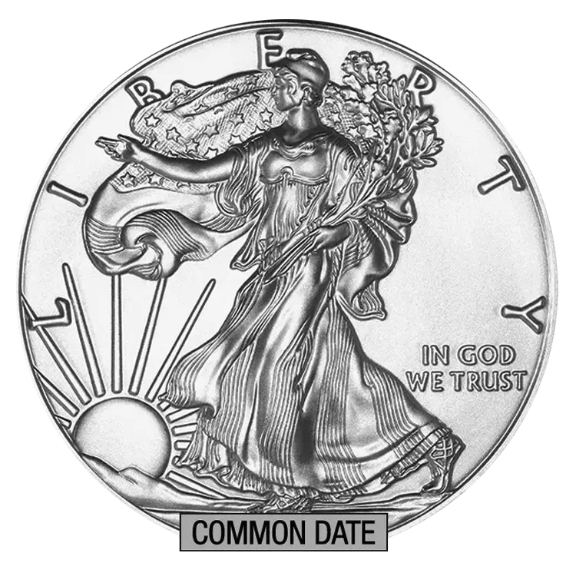
1 oz American Silver Eagle Coin (Common Date)
The trade-off: Coins cost more per ounce than bars. That premium can add up meaningfully at scale. If your goal is maximizing your silver holdings for a given dollar amount, coins aren’t the most efficient vehicle.
Silver Bars vs Silver Coins: Which Is Right for You?
Here’s how to think about it based on your situation:
Choose bars if:
- You’re focused on accumulating as many ounces as possible
- You’re comfortable storing larger denominations
- You’re a more experienced investor who prioritizes cost efficiency
Choose coins if:
- You’re a new investor who wants recognizable, liquid assets
- You’re building your position gradually over time
- You want maximum flexibility to sell in smaller increments
Many seasoned silver investors hold both. Coins for liquidity and ease of transaction, bars for the bulk of their position where cost efficiency matters most.
Entry Point: Why Silver Is the Accessible Precious Metals Investment
If you’ve been curious about precious metals but found gold’s price tag intimidating, silver is where most investors start — and for good reason.
At current prices, you can buy a 1 oz silver coin for a fraction of what a gold coin costs. That low entry point makes silver accessible for investors who want to start building a position without committing thousands of dollars upfront. Dollar-cost averaging into silver — buying a fixed dollar amount each month regardless of price — is a practical strategy for building exposure gradually while smoothing out the impact of volatility.
Silver coins and small silver bars are ideal for this approach. Starting with 1 oz coins allows you to build the habit and knowledge base of physical ownership before scaling into larger purchases.
Storage: Don’t Overlook This Part
Whether you buy silver bars or silver coins, storage is a real cost and consideration — not an afterthought.
Home storage: Possible, but requires a quality safe, proper insurance, and discretion. Silver is bulky. A 100 oz bar weighs just over six pounds. A meaningful position in silver takes up real physical space.
Professional vault storage: GoldSilver’s secure vault storage offers allocated, insured storage at professional-grade facilities. For larger holdings, this is often the smarter option — lower risk, fully insured, and your metals remain in your name.
Key considerations:
- Silver tarnishes over time if not stored properly. Airtight capsules or tubes matter.
- Insurance is non-negotiable for home storage.
- Vault storage fees are real, but so is the peace of mind.
One important note: bars are generally more storage-efficient than coins. Their flat, stackable geometry means you can store more silver in the same amount of space. For investors building serious positions, that’s a practical advantage.
Final Thoughts
There’s no universally right answer between silver bars and silver coins — it depends on your goals, budget, and how you plan to use your silver.
Bars offer the best value per ounce and suit investors focused on accumulation. Coins offer recognizability, liquidity, and a lower entry point, making them ideal for new investors or those who want flexibility.
What matters most is getting started. Silver’s combination of monetary history, industrial demand, and accessibility as an asset makes it one of the most compelling ways to diversify outside the traditional stock-and-bond portfolio.
Ready to go deeper? Explore GoldSilver’s guides on how much silver to own, the best way to buy silver, and how to store precious metals securely.
Stay On Top of Gold & Silver Prices
Get important market alerts sent straight to your inbox.
People Also Ask
Are silver bars or silver coins better for investing?
Both silver bars and silver coins can be good investments, but they serve slightly different purposes. Silver bars typically have lower premiums, making them more cost-efficient for buying larger amounts of silver. Silver coins, on the other hand, are widely recognized and easier to sell in smaller quantities.
Why do investors buy silver coins instead of silver bars?
Many investors choose silver coins because they are widely recognized and easier to sell around the world. Government-minted coins like the American Silver Eagle carry strong credibility and can be more convenient for selling smaller portions of your holdings. This flexibility is especially useful for investors who value liquidity.
Is silver a good investment for beginners?
Silver is one of the most accessible entry points into precious metals investing, with 1 oz coins available at a fraction of the cost of gold. Its low entry price makes it well-suited for dollar-cost averaging — buying a set amount each month to build a position over time.
Why is silver more volatile than gold?
Silver tends to be more volatile because it has a smaller market and strong ties to industrial demand. Industries such as electronics, solar energy, and manufacturing use significant amounts of silver, which can cause prices to rise or fall with economic cycles. This can create larger price swings compared to gold.
How should I store silver bars and coins at home?
Home storage requires a quality safe, proper insurance, and airtight containers to prevent tarnishing. Silver is bulkier than gold, so a meaningful position takes up real physical space — something worth planning for before you buy. For larger holdings, professional vault storage through services like GoldSilver’s vault storage program offers allocated, insured storage with less risk.
Disclaimer: This article is for informational purposes only and does not constitute investment advice. Past performance is not indicative of future results. Always consult a qualified financial advisor before making investment decisions.
You May Also Like:
Gold vs. Silver: Roles, Risks, and Portfolio Strategy
Gold Silver Prices: Short-Term Noise, Long-Term Signal
Silver Canadian Maple Leaf: Why It’s One of the World’s Top Bullion Coins
Gold Portfolio Allocation 2026: What J.P. Morgan’s Forecast Means for Investors