 Silver Rises Over 120% YTD




What Is Sound Money? Why the Dollar Lost 87% of Its Value Since 1971
Sound money is money whose supply cannot be expanded by decree, so it holds its purchasing power over time. The principle shaped the 19th-century gold standard. Since that constraint ended in 1971, the dollar has lost roughly 87% of its purchasing power.
Your Bank Balance Is Lying to You. The Number Is Real. The Wealth Isn’t.
Your bank balance shows a number. That number is not your wealth — it’s a measuring stick. And measuring sticks can shrink. Megan King Diaz explains why, and what actually holds its value.
What Is a Monetary Reset — and Is One Already Happening?
Everyone pictures the same scene: one Monday morning, the dollar cracks and cash is worthless by lunchtime. That version makes for a great movie. The real monetary reset looks nothing like it — and it may already be underway. Here is what four structural shifts are quietly telling us.
The Federal Reserve Has Eroded 97% of Your Dollar’s Value Since 1913. Here’s the Mechanism.
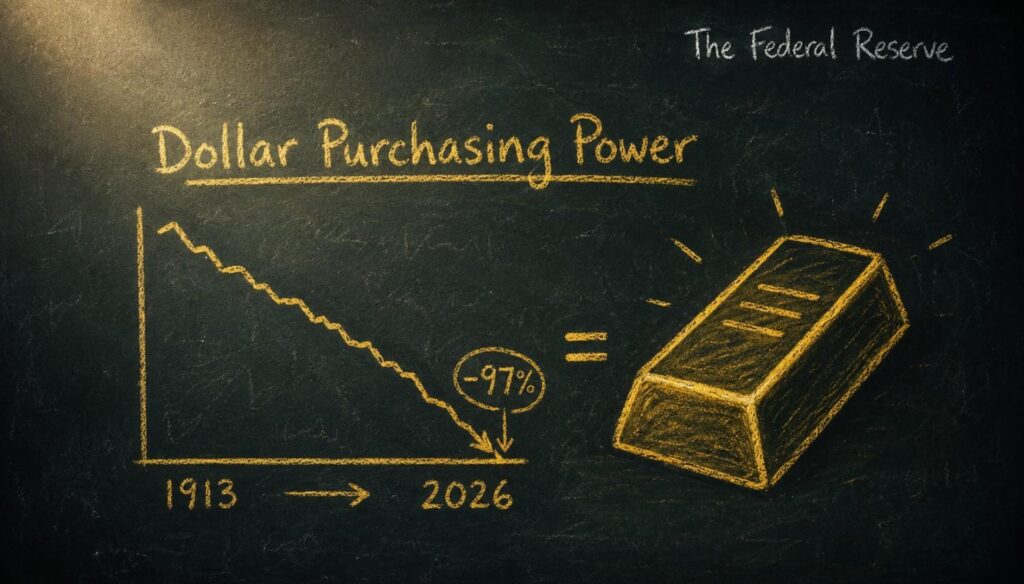
The Federal Reserve is the most powerful institution affecting what your money is worth — yet most people can’t fully explain how it works. This guide covers the Fed’s structure, dual mandate, and policy tools, and explains exactly why its 112-year track record of dollar debasement is the foundational case for owning gold.
The Petrodollar System Explained: What It Is, How It Worked, and What’s Replacing It
The petrodollar system gave the US dollar its dominance for 50 years — every country needed dollars to buy oil, and oil exporters recycled those dollars back into US Treasuries. That arrangement is now shifting. Here is how the system worked, why it is under stress, and why central banks are choosing gold as the alternative reserve asset.
What Is Purchasing Power — and Why Every Dollar You Save Is Slowly Being Taxed Away
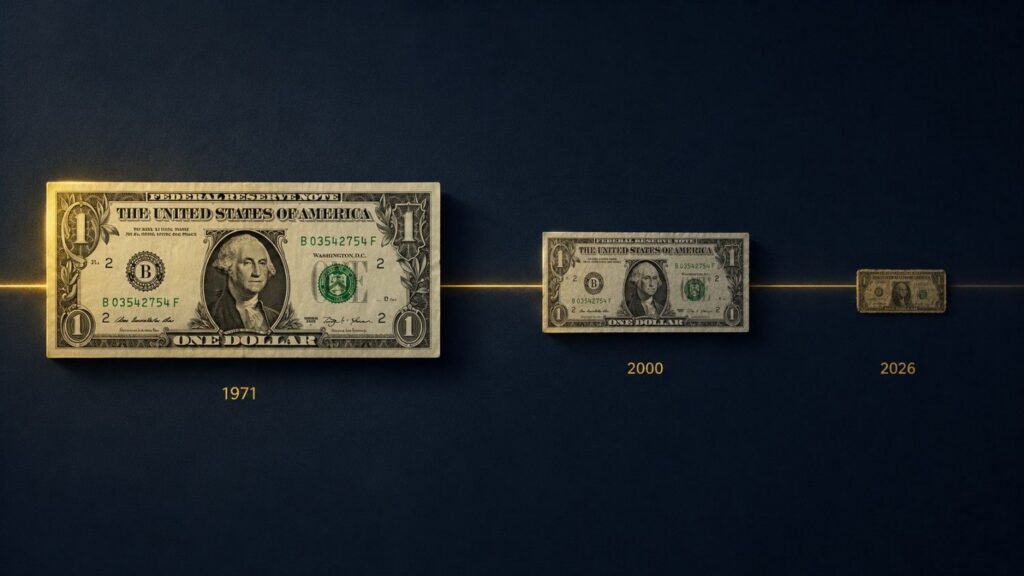
The dollar has lost 87% of its purchasing power since 1971. Learn what purchasing power actually is, why fiat currency erodes it, and why gold doesn’t.
Gold Price History: From $35 to $4,500 in 100 Years
Gold went from $35 in 1971 to around $4,500 today — a 12,000% gain since the gold standard ended. Meanwhile, the dollar lost 96.9% of its purchasing power over the same period. These are not two separate stories. This is the complete gold price history: decade by decade, the real cause behind every major move, and what a century of data tells investors right now.
What Backs the US Dollar? Not Gold. Not Silver.
Since Nixon closed the gold window in 1971, the dollar has lost 87% of its purchasing power. Here’s the structural mechanism behind that — and why it’s not reversible.
How Gold Once Balanced the World’s Economies — And Why It Matters Now
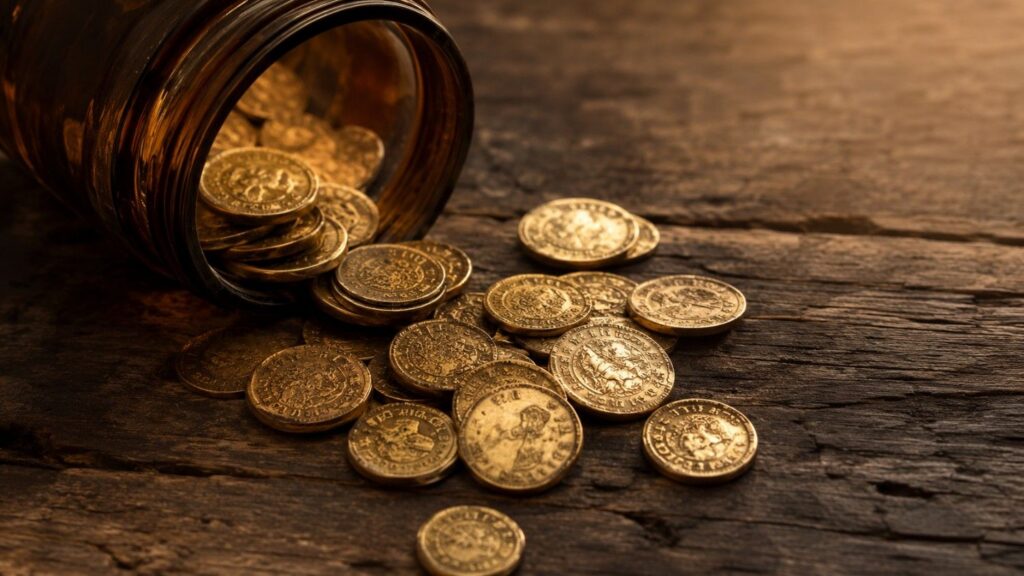
For most of recorded history, trade between nations was governed not by policy meetings or central bank coordination — but by gold. Here’s how the gold standard’s built-in correction mechanism worked, and what its absence means for the $102 trillion in global public debt recorded as of 2024.
Gold vs. Fiat Currency: A 50-Year Reckoning
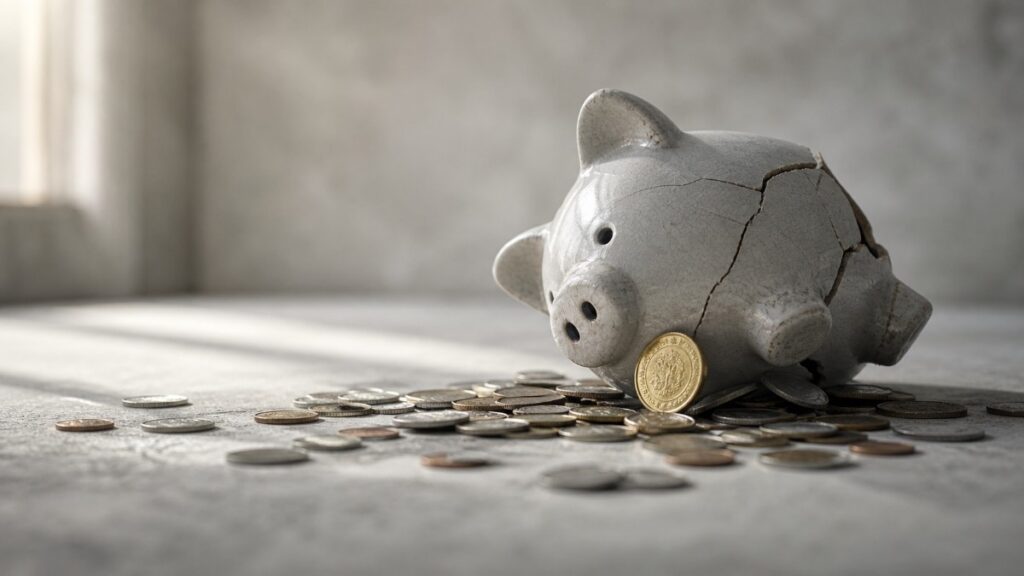
When governments abandoned gold-backed money in the 1970s, they didn’t just change monetary policy — they rewired human behavior. Understanding that shift is key to understanding where precious metals are headed.


