Silver Rises Over 120% YTD




Bank of America’s $6,000 Gold Forecast Isn’t a Price Call. It’s a System Call.

Bank of America has set a $6,000 gold price target for 2026. But the more important question isn’t whether gold gets there — it’s what the forecast reveals about the monetary system. The thesis rests on U.S. fiscal deterioration, record central bank buying, and a private investor base that’s barely started buying. Here’s what that means for anyone holding physical gold.
Gold’s Center of Gravity Has Moved East — 5 Stories That Prove It

Incrementum hit its $4,800 gold target four years early. Russia is selling reserves to fund a war. China has bought gold for 18 consecutive months. India holds $3.6 trillion in metal and still imports more. And Citi is calling $5,000 near-term while turning cautious on the medium term. Five events, one signal: the gold market has a new power structure — and the West is still reading the old map.
BRICS Is Hoarding Gold. Here’s What It Means for Your Portfolio.
Central banks are buying gold at near-record pace. BRICS+ nations are building a monetary alternative. Most investors are the last to hear about it — and the last to position. Here’s the mechanism, the portfolio logic, and what to actually do about it.
Trump Called Off the Strike. Gold’s Real Risk Is Still $39 Trillion.
Trump’s decision to pause a planned Iran strike sent gold swinging $45 intraday and crude oil down more than 2% — but the two metals told completely different stories. Oil priced out the geopolitical risk. Gold barely moved. Five briefs explain why: Iran is the catalyst, not the cause. The monetary fundamentals driving gold — $39 trillion in national debt, fifteen years of money creation, central banks in their fifteenth straight year of net buying — don’t get resolved by a phone call.
The Institutions Are Buying. Yields Are Rising. What Does That Tell You?

Goldman Sachs revealed central bank gold demand was being systematically undercounted. HSBC raised silver forecasts but flagged real limits. Treasury yields hit a one-year high. The institutions that understand sovereign debt risk best are still buying. Here’s what’s driving each story.
Gold Up 40% in a Year. The Moody’s Downgrade Explains Why.
One year ago, Moody’s completed a 15-year process — stripping the US of its last AAA credit rating. Gold closed at $3,237 that day. It trades above $4,550 today. Here’s what happened, why it happened, and what it means for the year ahead.
Gold Fell. China Bought Its Most in 17 Months. Here’s Why.
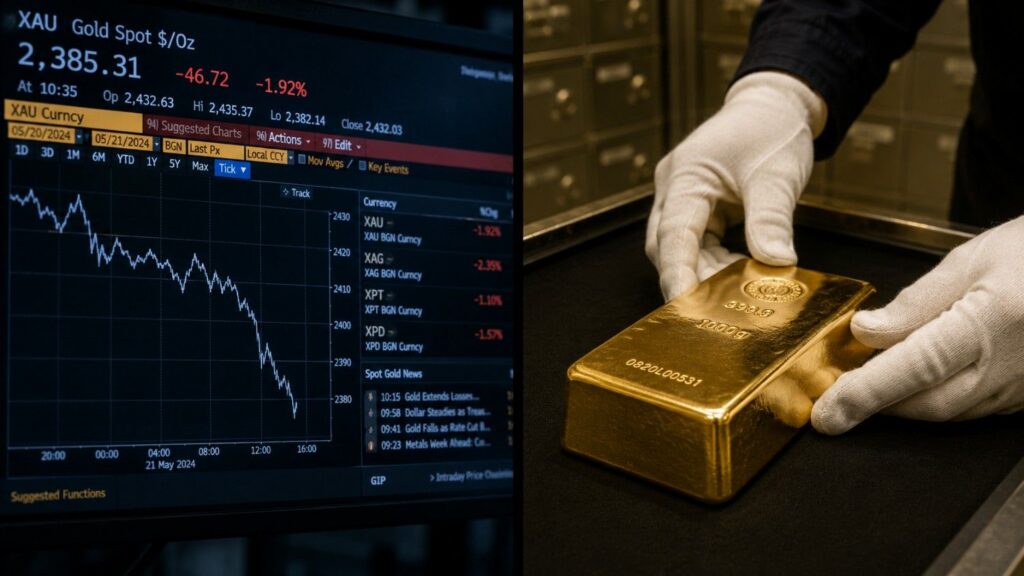
Five things drove gold and silver lower this week — a stronger dollar, spiking Treasury yields, the hottest US producer inflation in over three years, a new Federal Reserve chair, and a Trump-Xi summit with no deal. All five are documented and short-term. Meanwhile, the People’s Bank of China quietly made its largest gold purchase in 17 months. That contrast is the story.
World Bank: Precious Metals to Surge 42% This Year

The World Bank’s April 2026 Commodity Markets Outlook projects a 42% surge for gold and silver — outpacing every other commodity class. Here’s what’s driving the forecast and what it means for long-term investors.
What Do Central Banks Know About Gold That You Don’t?

Central banks purchased a net 244 metric tons of gold in Q1 2026 — the fastest pace in over a year — despite prices hitting a record $5,405 per ounce. The World Gold Council data reveals who’s buying, who’s selling, and why this relentless accumulation at all-time highs signals a growing loss of confidence in fiat currencies. If central banks are protecting themselves regardless of price, the rest of us should be paying attention.
Dollar Dominance Is Fading. Gold and Silver Are Paying Attention.
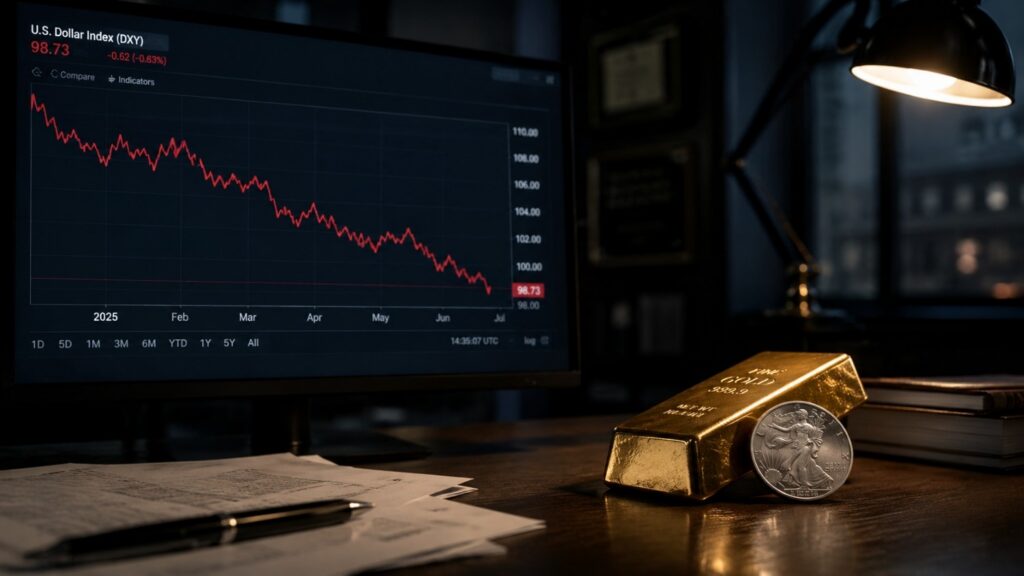
With gold above $4,600 and silver trading at historically unprecedented price levels, one signal explains the move: dollar dominance is fading — and precious metals are the direct beneficiary.