Silver Rises Over 120% YTD


Tariff Refunds, Dollar Weakness, the AI Bust: Gold’s Case

Gold and silver market update — April 21, 2026 In this update: Five stories made headlines this week that have nothing obvious to do with gold — tariff refunds, Apple’s leadership change, a weakening dollar, Canada’s political shift, and an AI productivity bust. Together, they are gold structural tailwinds. Here’s what each one means. Who’s Actually Getting the $166 Billion in Tariff Refunds? Not you. The US government opened a refund portal this week for $166 billion in tariff money — duties the Supreme Court struck down as unconstitutional in February. Over 56,000 importers have now registered, claiming $127 billion in Phase 1 alone. However, the refunds […]
Gold Price After Ceasefire Violation: The Floor Has Moved

The US Navy seized an Iranian ship Sunday, oil surged 7%, and gold dropped just around 1%. Three months ago that same escalation would have sent gold down 3%. Here’s what changed — and what it means for investors holding physical gold.
Why Are BRICS Countries Buying So Much Gold?

BRICS nations are buying gold at record pace — and it’s not just about price. From sanctions-proofing to de-dollarization, discover the four forces driving the biggest shift in global reserve strategy since Bretton Woods, and what it signals for investors.
Every Major Bank Cut Its 2026 Gold Forecast. Now They Almost Agree — Near $4,500
Gold is 13% below its January all-time high — and every major bank is calling it a buying opportunity. This analysis covers 2026–2027 forecasts from J.P. Morgan, Goldman Sachs, Wells Fargo, UBS, and more, plus the five structural forces driving the rally.
Is Now a Good Time to Buy Gold? Here’s the Macro Case
Gold has pulled back 13–14% from its January all-time high of $5,589. The dollar is weakening, the IMF has cut its growth forecast, and central banks bought 863 tonnes of gold in 2025. Here’s what the macro picture is signaling.
Is the Petrodollar Ending? What the Iran War Means for Gold

Deutsche Bank calls the Iran war a “perfect storm for the petrodollar.” Not everyone agrees — but the dollar’s reserve share has already fallen from 71% to 57% since 1999. Here’s what five key market developments mean for gold and silver investors today.
Gold Outranks the Dollar at Central Banks — What It Means for Your Savings
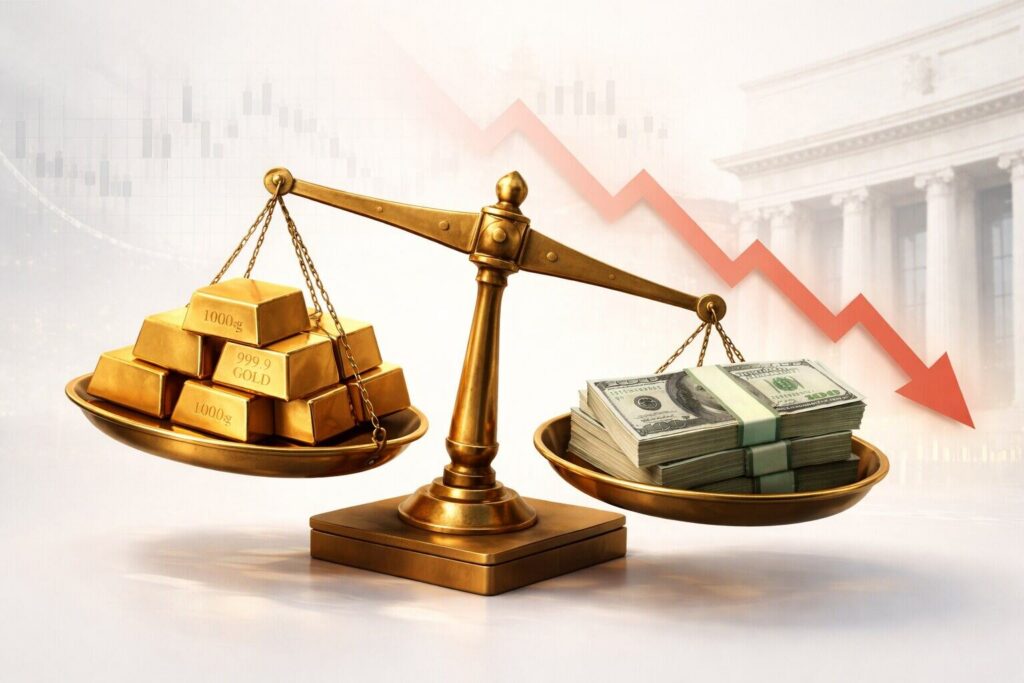
For the first time since the collapse of Bretton Woods, central banks now hold more gold than dollars — $3.87 trillion vs. $3.73 trillion. Here’s what that structural shift means for your savings.
Hormuz Blockade Sent Gold Down 2%. Here’s Why That’s Bullish

The Hormuz blockade sent gold down 2% as oil surged past $100. But margin liquidation — not fundamentals — drove the drop. With CPI at 3.3%, central banks buying, and the petrodollar requiring a navy to defend, the structural case for gold just got stronger.
$88 Billion a Month: Why U.S. Debt Is Driving Gold Prices
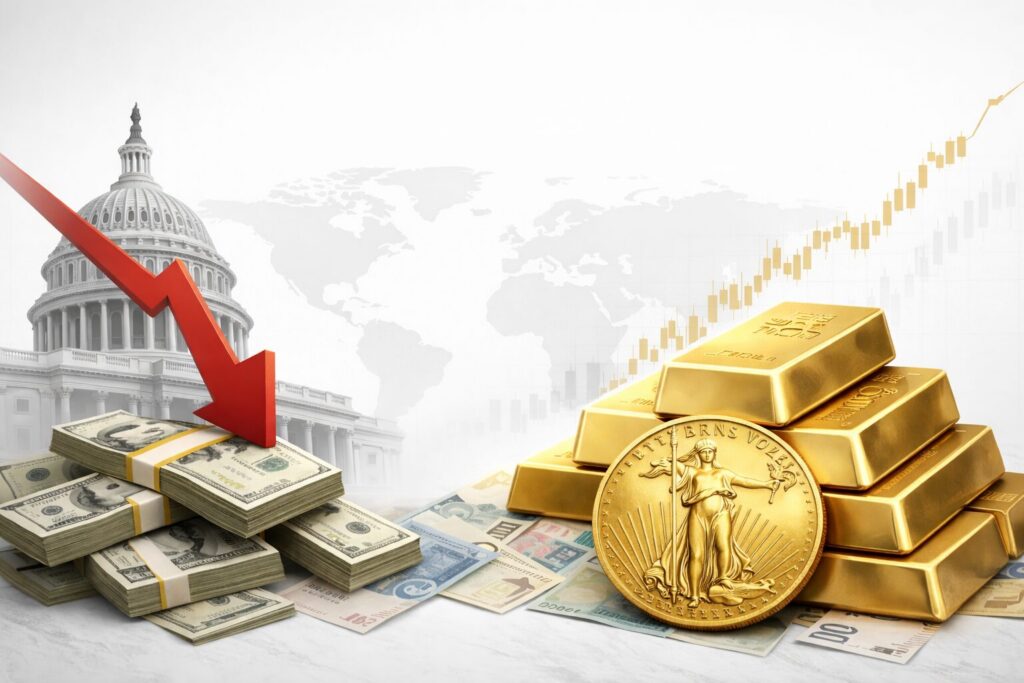
Does US debt drive gold prices? The CBO confirmed the U.S. paid $529 billion in interest in just the first half of fiscal 2026 — $88 billion a month. Gold is at record highs and climbing. Here’s the fiscal mechanism every saver needs to understand before the next $88 billion bill arrives.
What Is De-Dollarization? Why Countries Are Moving Away from the US Dollar

The dollar’s share of global reserves has hit its lowest level since 1994. Central banks are buying gold at historic rates. And the petrodollar system faces its most serious challenge in 50 years. Here’s what de-dollarization actually means — and why it matters now.