Silver Rises Over 120% YTD




Published: 04-16-2026, 02:07 pm
Gold and Silver market update — April 16, 2026
In this update: gold holds near $4,828 as the dollar hits a 7-session low · Deutsche Bank flags the petrodollar under pressure · silver crosses $80 on a sixth straight supply deficit · the Fed’s own study links tariffs to all excess goods inflation · why war headlines don’t move gold the way most investors think
Why is gold holding near $4,828 today?
The U.S. Dollar Index (DXY) just logged its seventh straight daily decline, falling to 98 — its lowest since before the Iran conflict began. That’s driving gold.
The mechanism is simple. A weaker dollar makes gold cheaper in every other currency. That expands the pool of global buyers. More demand at the same price pushes it up.
But there’s a deeper signal here. Both the dollar and gold reflect monetary confidence. When investors doubt a currency’s long-term purchasing power, capital moves toward assets that can’t be printed. Gold is the primary destination.
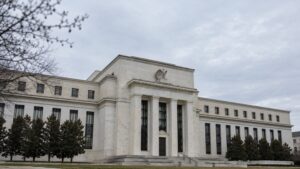
The bear case is real: a quick Iran resolution plus a hawkish Fed pivot would lift real yields and pressure gold. That’s a legitimate risk. But it requires several things to happen at once. Chicago Fed President Austan Goolsbee said April 15 that rate cuts could be delayed until 2027 if energy prices stay high. That keeps the dollar under pressure — and gold’s floor firm.
The Edge Every Investor Needs Smarter precious metals investing starts here. The Nuggets Newsletter brings you essential market insights, Fed updates, global trends, educational videos, and much more.
Is the Iran war ending the petrodollar?
Deutsche Bank FX strategist Mallika Sachdeva called the U.S.-Iran conflict “a perfect storm for the petrodollar” in a March 24 research note. The petrodollar is the 1974 arrangement in which Saudi Arabia prices oil in dollars and reinvests surpluses in U.S. Treasuries. It has created structural demand for the dollar for over 50 years.
Sachdeva’s concern: U.S. security guarantees in the Gulf underpin the whole arrangement. If those weaken, Gulf nations have less reason to hold dollars. She also flagged reports that Iran is negotiating yuan-denominated tolls for tankers through the Strait of Hormuz.
The counterargument is worth taking seriously. Enodo Economics founder Diana Choyleva argued on April 14 that the war has actually strengthened the petrodollar — by reasserting U.S. military credibility and disrupting China’s slow-erosion strategy. That’s a credible read.
Here’s what both sides agree on: the dollar’s share of global FX reserves has already fallen from 71% in 1999 to roughly 57% today. That decline is structural, not cyclical. Gold is the asset most directly positioned to benefit as it continues.
Why is silver above $80 — and is the rally sustainable?
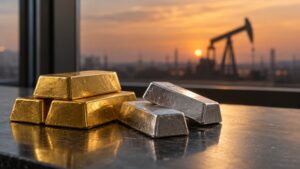
Silver crossed $80 per ounce Thursday. The monetary tailwind is the same as gold’s — weaker dollar, compressed real yields. But the supply story underneath is what makes this rally structurally different.
According to the Silver Institute’s World Silver Survey 2026, released April 15, the silver market is heading for its sixth consecutive annual deficit. The projected 2026 shortfall: 46.3 million troy ounces — roughly 15% wider than 2025. Since 2021, approximately 762 million troy ounces have been pulled from above-ground stockpiles to cover those gaps. That’s nearly a full year of global mine output, drawn down over five years.
One nuance worth understanding: industrial demand is forecast to decline 2% in 2026 to a four-year low. Solar manufacturers are substituting away from silver. The deficit persists because investment demand is rising faster than supply can respond — bar and coin purchases are forecast to jump 18% this year.
The gold-silver ratio sits near 60:1, below its 30-year average. Historically, that compression happens when real yields fall and physical demand tightens. Both conditions are present today.
Did tariffs cause consumer goods inflation — and what can the Fed do about it?
A Federal Reserve Board study published April 8 reached a stark conclusion. Tariffs implemented through November 2025 raised core goods PCE prices by 3.1% through February 2026. The authors found they “explain the entirety of the excess inflation in the core goods category since January 2025.” Without those tariffs, goods prices would have fallen below pre-pandemic trend levels.
Here’s why that matters for monetary policy. Rate hikes reduce demand. They don’t reduce the cost of tariffed imports. The Fed’s primary tool cannot fix this type of inflation.
A rival study from the Federal Reserve Bank of Minneapolis, published the same week, disputes whether full pass-through is the sole driver. That internal Fed disagreement signals genuine uncertainty about what the tools can achieve.
For gold and silver investors, the key insight is this: tariff-driven inflation is precisely the kind the Fed struggles to address cleanly. The result is prolonged real yield compression — the structural environment in which precious metals have historically performed best.
Why doesn’t gold always go up when there’s a war?
This week is a useful case study. Stalled Iran ceasefire talks and Strait of Hormuz disruption generated major headlines. Gold’s reaction was modest. Silver briefly dipped. Investors expecting war to automatically lift metals were confused.
Here’s the actual mechanism. Gold doesn’t respond to fear. It responds to what fear means for inflation and monetary policy.
Persistent Hormuz disruption keeps oil elevated. Elevated oil feeds into CPI. When the Fed can’t raise rates aggressively — because employment growth is already slowing — real yields stay depressed. Depressed real yields are gold’s actual driver. The war is just the catalyst upstream.
Crude was near $91.66/barrel on April 16. That’s down from recent highs but still historically elevated. And Goolsbee’s rate-cut warning signals the Fed isn’t tightening its way out of this anytime soon.
The deeper signal is in the floor, not the daily moves. Since the conflict began, gold has not returned to pre-conflict levels. Silver sits roughly 15% below its January 2026 all-time high above $100/oz — but has not collapsed. In past geopolitical cycles, a ceasefire typically triggers a 3–5% selloff as the risk premium unwinds. That hasn’t happened. The floor has moved. That’s the real story.
Stay On Top of Gold & Silver Prices
Get important market alerts sent straight to your inbox.
SOURCES
1. Federal Reserve Board — Detecting Tariff Effects on Consumer Prices in Real Time – Part II · Minton, Ray, Somale (April 8, 2026)
2. Deutsche Bank Research — What Iran means for the dollar: a perfect storm for the petrodollar · Mallika Sachdeva (March 24, 2026)
3. Silver Institute — World Silver Survey 2026 (April 15, 2026)
4. Trading Economics — DXY U.S. Dollar Index
5. Trading Economics — Silver Spot Price
6. USAGOLD — Daily Precious Metals Market Report (April 16, 2026)
7. Fortune — Daily Gold Price (April 16, 2026)
8. Fortune — Daily Silver Price (April 16, 2026)
By the GoldSilver Editorial Team — helping investors understand sound money since 2005. This article is for informational purposes only and does not constitute financial, investment, or tax advice. Always consult a qualified financial advisor before making investment decisions.
You May Also Like
- France’s Gold Repatriation Is Done. Germany Is Next
- Gold/Silver Ratio Hits 61.1 — Silver’s Turn to Run
- Silver Holds Near $80 as Iran Ceasefire Revives Rate-Cut Bets
- The Fed Goes Silent in 3 Days – What Does That Mean For Gold?
- Gold Is Down 10% From Its War-Peak — and Still Up 46% in a Year
- Gold Outranks the Dollar at Central Banks — What It Means for Your Savings
- Hormuz Blockade Sent Gold Down 2%. Here’s Why That’s Bullish
- Gold Jumps 2% as Trump Plans Iran War Address Tonight