 Silver Rises Over 120% YTD




Gold and Oil Move Opposite Ways. Here’s Why That Matters

Gold is trading near $4,700/oz while Brent crude surged past $120/bbl before pulling back sharply. The two commodities keep moving in opposite directions — and the reason reveals something important about protecting wealth in volatile markets. (243 characters)
Gold Price Forecasts for 2026, Revisited After Q1

Gold prices are shaped by powerful forces — real interest rates, U.S. dollar strength, central bank demand, and geopolitical risk. This guide breaks down the key drivers behind gold future prediction, reviews a decade of historical performance, and outlines what investors should watch heading into 2026.
$26,000 Gold?! The Truth Behind the Viral Chart

A chart making the rounds recently makes a bold claim: gold may need to skyrocket—potentially to $26,000 — to match historical levels of U.S. debt coverage. At first glance, the argument is compelling. Today, U.S. gold reserves cover just about 3% of federal debt—near record lows. In 1980, that number was closer to 18%. Go back further to the 1940s, and it exceeded 50%. So yes… if gold were to “rebalance” against debt the way it has in the past, prices would need to rise dramatically. But that doesn’t mean those price targets are realistic. The Flaw in the $26K Gold Argument It’s easy to look at historical ratios and […]
Dollar vs Gold Relationship: Why They Often Move in Opposite Directions

When the U.S. dollar weakens, gold prices typically rise — and vice versa. This inverse relationship between gold and the dollar is one of the most consistent patterns in global markets, driven by gold’s dollar-denominated pricing, competing safe-haven demand, and Federal Reserve interest rate policy. But the relationship isn’t absolute. Central bank gold buying, geopolitical risk, and shifting real yields can all disrupt the traditional correlation. Here’s what every investor needs to understand about the dollar vs gold relationship and what it means for your portfolio.
Gold’s Worst Week in 46 Years: Should You Be Worried?

Gold just recorded its worst week in 46 years, dropping over 10% in a single week and 17% in three. But history shows these rare selloffs don’t end bull markets—they often precede the next leg higher. Here’s what’s really driving the decline and what investors should do next.
Gold vs Stocks & Bonds: What the Data Really Suggests

Most investors rely on stocks for growth and bonds for stability — but the data tells a more complex story. Discover what gold actually does in a portfolio that traditional assets cannot, and why the case for including it has never been stronger.
Why Central Banks Are Buying Gold Again
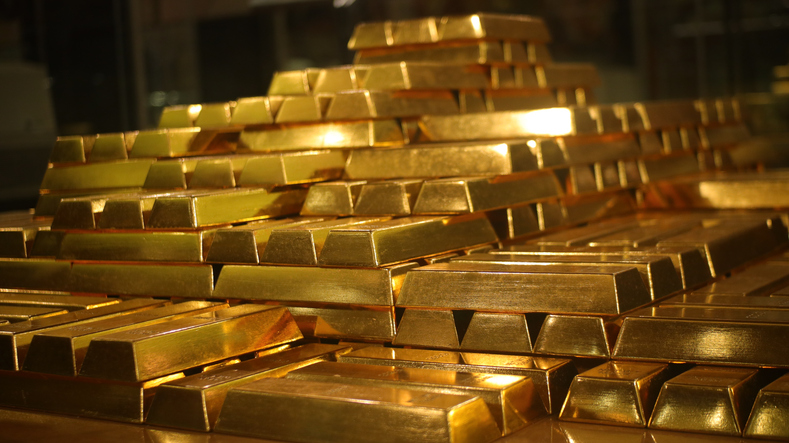
Central banks have been accumulating gold at the fastest pace since the 1950s. Discover the economic, geopolitical, and monetary forces driving this historic shift in global reserve strategy—and what it means for investors.
Gold vs. Silver: Roles, Risks, and Portfolio Strategy
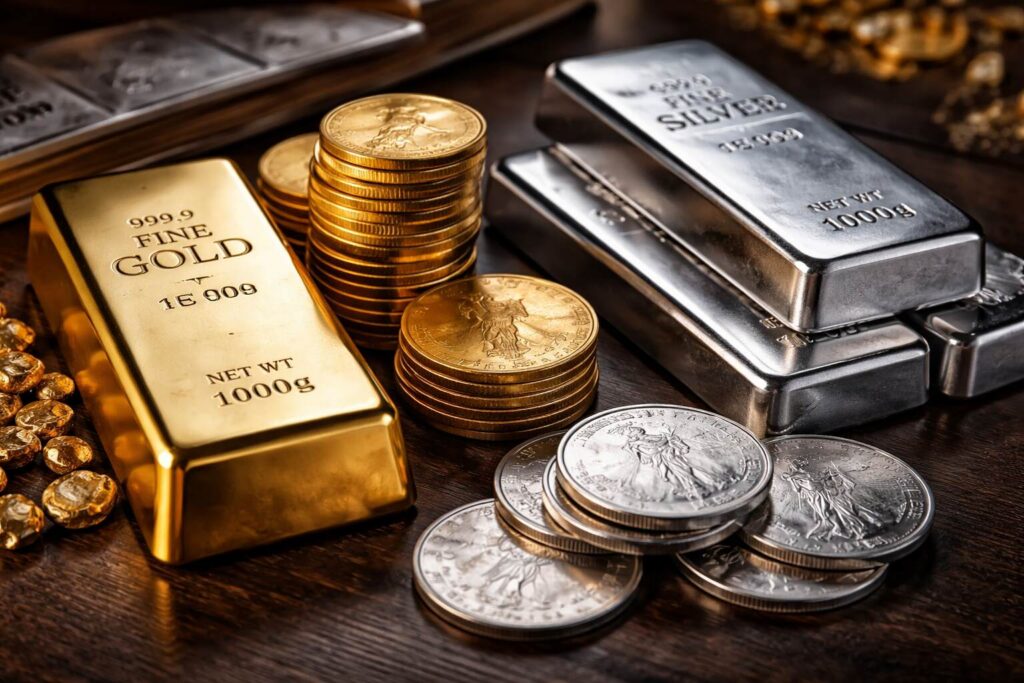
Gold and silver portfolio allocation isn’t about predicting which metal will outperform. It’s about understanding their roles. Gold offers stability, liquidity, and long-term purchasing power protection. Silver brings industrial demand exposure and greater upside potential — along with more volatility. The right balance depends on your goals, risk tolerance, and how precious metals fit within your broader investment strategy.
Gold Portfolio Allocation 2026: What J.P. Morgan’s Forecast Means for Investors

J.P. Morgan has raised its gold price target to $6,300 per ounce by end of 2026—with an $8,000 upside scenario on the table. Here’s what their smart money playbook means for your gold portfolio allocation strategy this year.
Commodity Balance: How to Build the Right Gold and Silver Mix

Discover how to strategically balance gold and silver in your investment portfolio. This comprehensive guide analyzes the gold-to-silver ratio, historical performance data, and risk-reward profiles to help smart investors optimize their precious metals allocation. Learn specific allocation strategies for conservative, moderate, and aggressive portfolios while understanding how industrial demand, inflation protection capabilities, and market dynamics affect each metal’s investment potential.


