Silver Rises Over 120% YTD




Published: 04-21-2026, 11:34 am | Updated: 04-21-2026, 11:45 am
Gold is trading near $4,800 per ounce in April 2026 — roughly 14% below its all-time high of $5,589.38 set on January 28, 2026. The best way to buy gold for the first time is to purchase recognised bullion coins or bars from a reputable dealer, then store them in professional vault storage or at home with appropriate security. The structural forces driving gold’s value — persistent inflation, central bank accumulation, and monetary debasement — remain fully intact. This guide covers every step.
If you want to know how to buy gold for beginners, the good news is that it’s simpler than it looks. That record high of $5,589 per ounce didn’t last. Since January 2026, geopolitical turbulence has pulled prices back roughly 14% to around $4,800 — and for many investors, that gap looks like an opportunity.
However, the bigger question isn’t about the price. It’s about the process. If you’ve never bought physical gold before, the landscape can feel overwhelming: coins or bars, physical or paper, stored at home or in a vault? This guide cuts through every one of those questions. By the end, you’ll know exactly how to buy gold — safely, efficiently, and with confidence.
Why Should Beginners Buy Gold Right Now?
Gold serves three core functions in any portfolio: inflation hedge, crisis insurance, and long-term store of value. All three are relevant in 2026.
Inflation has proven stubbornly persistent despite years of central bank tightening. Every dollar that loses purchasing power is a quiet argument for an asset that can’t be printed. As a result, gold gained approximately 67% in 2025 — its strongest annual performance since 1979 [World Gold Council, Gold Market Commentary, December 2025]. That kind of return doesn’t happen by accident.
Then there’s what institutional buyers are doing. Central banks are forecast to purchase approximately 800 tonnes of gold in 2026 — well above the 400–500 tonne pre-2022 average — according to J.P. Morgan Global Research [J.P. Morgan Global Research, Gold Price Predictions 2026]. When the world’s largest reserve managers buy at elevated levels, that tells you where they think the risks are: dollar debasement, geopolitical instability, and the limits of fiat currency.
Furthermore, gold doesn’t pay a dividend. It doesn’t earn interest. What it does — and has done for thousands of years — is hold value when everything else is being debased.
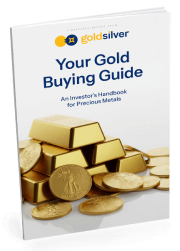
Your Gold Buying Guide Most investors overpay when they buy gold. Then overpay again when they sell. This guide shows you exactly what to own — and why.
What Types of Gold Can You Buy?
There are two main categories: physical gold and paper gold. Most beginners don’t realise how different they are — and that gap in understanding is where expensive mistakes get made.
Physical Gold — Coins, Bars, and Rounds
Physical gold is the metal itself. You can hold it, store it, and own it outright. There are three main forms:
- Sovereign coins: American Gold Eagle, Canadian Maple Leaf, South African Krugerrand. These are government-backed for weight and purity, globally recognised, and the most liquid option for first-time buyers.
- Gold bars: Available in 1 oz, 10 oz, and kilo sizes. Bars carry lower premiums over spot than coins, so they are more cost-efficient for larger purchases.
- Private mint rounds: Lower cost than sovereign coins, but less recognised in secondary markets. These are better suited to experienced buyers who understand the liquidity trade-off.
For most beginners, sovereign coins are the right starting point. In particular, the American Gold Eagle is the most widely recognised and traded gold coin in the world.
Paper Gold — ETFs, Futures, and Mining Stocks
Paper gold gives you price exposure without owning any metal. For example, ETFs like GLD or IAU track the gold price. Futures are derivative contracts. Mining stocks, on the other hand, are equity in extraction companies.
The critical point is this: with paper gold, you own a financial claim — not the commodity. That distinction is easy to ignore in a calm market. In a genuine financial crisis, however, it becomes everything. If you want the real benefits of gold — the protection, the privacy, the tangibility — you need to own the real thing.
How Do You Buy Gold? Step by Step
Buying gold is simpler than most people expect. Choose a trusted dealer, select your product, pay, and decide on storage. Once you know what you’re doing, the whole process takes less than 10 minutes.
Step 1 — Choose a Trusted Dealer
First, look for transparent pricing, a clear buyback policy, and a verifiable track record. Verified third-party reviews, a publicly listed phone number, and upfront premium disclosure on every product page are all good signs. Red flags include high-pressure sales tactics, premiums that seem too good to be true, and evasiveness about storage or buyback terms.
Step 2 — Select Your Product
New buyers should start with a 1 oz American Gold Eagle or Canadian Maple Leaf. Both are government-backed, widely accepted in the global bullion market, and easy to resell. If you are investing $10,000 or more, however, gold bars carry lower premiums over spot and make more sense at scale.
Step 3 — Pick Your Payment Method
ACH bank transfer is typically the lowest-cost option. Wire transfer works well for larger orders. Credit cards are convenient, but they usually add a 3–4% processing fee. For retirement accounts, a self-directed IRA rollover is a separate process — covered below.
Step 4 — Choose Storage or Delivery
Finally, decide whether to take physical delivery or store your metals in a professional vault. This decision matters more than most new buyers realise. The next section covers both options in full.
Where Should You Store Your Gold?
There are two main options: home storage and professional vault storage. Both are legitimate choices. Most serious long-term investors, however, eventually move to vault storage for the security, insurance, and ease of liquidation it provides.
Home Storage
Pros: Immediate access, complete personal control, no ongoing storage fee.
Cons: The security burden falls entirely on you. Standard homeowner’s or renter’s insurance typically doesn’t cover bullion without a specific rider. For holdings above a few thousand dollars, a high-quality safe is a minimum requirement — and even then, fire, theft, and flood are real risks.
Home storage is therefore best for smaller positions, or for investors who specifically want immediate physical possession.
Professional Vault Storage
With vault storage, your gold is allocated and segregated in your name inside an institutional-grade facility. It is fully insured, and you can sell or request delivery at any time.
GoldSilver stores client metals in independent, fully-insured vaults operated by established logistics and security companies including Brink’s, Loomis, and Malca-Amit. As a result, your metals are never commingled with anyone else’s holdings — what you own is identifiably yours [GoldSilver Vault Storage].
For larger holdings, vault storage removes the most significant practical risks of physical ownership. Learn more at GoldSilver Vault Storage.
Should You Try to Time the Gold Market?
No. Even professional traders struggle to time gold reliably. A better approach is dollar-cost averaging — buying a fixed dollar amount at regular intervals, regardless of price.
To illustrate, consider what has happened recently. Gold hit $5,589 in January 2026 and has since corrected roughly 14%. Investors who bought at the 2024 lows around $2,000 more than doubled their money. Similarly, those who bought at “high” prices in 2023 are still significantly ahead. The lesson isn’t that every entry is equal — it’s that in a bull market, the cost of waiting usually exceeds the cost of imperfect timing.
Dollar-cost averaging removes the emotional decision entirely. You buy $500 in gold every month. Some months you buy high, some low. Over time, your average entry reflects the genuine trend — not the anxiety of a single moment. According to many financial advisors, this disciplined approach is one of the most effective ways to build a gold position over time.
Can You Buy Gold in an IRA?
Yes — and it’s one of the most underused strategies in retirement planning. A self-directed IRA lets you hold physical gold in a tax-advantaged account.
The IRS sets specific purity requirements for gold held in an IRA. Gold bars must be .995 fine or better. Most coins must meet the same threshold. However, the American Gold Eagle is a statutory exception — it’s .9167 fine yet qualifies under a specific carve-out written into the U.S. tax code. Importantly, that exception applies only to American Eagles. The South African Krugerrand, also .9167 fine, does not qualify [IRS Publication 590-A; U.S. Code Section 408].
The process is straightforward. First, open a self-directed IRA. Then, fund it via rollover from an existing 401(k) or IRA. Next, select your products. Finally, the metals go directly to an IRS-approved depository — not your home.
Tax treatment depends on account type. Traditional IRA contributions are pre-tax, so growth is tax-deferred. Roth IRA contributions are post-tax, meaning qualified withdrawals are tax-free. Either way, you’re holding an asset with no counterparty risk inside a structure designed to protect long-term wealth.
What Mistakes Do First-Time Gold Buyers Make?
Most mistakes come down to impatience or insufficient research. Fortunately, all of them are avoidable.
- Buying from unverified dealers. Not every gold website is legitimate. Therefore, stick to dealers with long operating histories, transparent pricing, and reviews on independent platforms.
- Overpaying for collectible coins. Numismatic coins carry premiums 50–300% above spot price. That premium adds no investment value, so stick to bullion.
- Choosing illiquid products. Obscure private mint rounds or unusual bar sizes are hard to resell. In contrast, sovereign coins and major brand bars have deep, global secondary markets.
- Skipping storage planning. Decide on home storage or a vault before you buy — not after. It matters more than most people think.
- Trying to time the market. Consistency beats precision every time. Start small and build.
- Confusing paper gold with ownership. An ETF is a financial product. Physical gold, however, is a tangible asset. In a genuine systemic crisis, only one of those is unambiguously yours.
Stay On Top of Gold & Silver Prices
Get important market alerts sent straight to your inbox.
People Also Ask
Is it safe to buy gold online?
Yes, provided you use a reputable dealer with transparent pricing, insured shipping, and a clear buyback policy. Look for verified third-party reviews and a proven track record. Additionally, avoid any dealer who isn’t upfront about premiums or fees.
What is the best gold coin for beginners?
The American Gold Eagle is the standard recommendation for new buyers. It’s the most widely recognised and liquid gold coin in the world, backed by the U.S. government for weight and purity. That combination of recognition, liquidity, and government backing makes it the ideal starting point.
How much does it cost to buy 1 oz of gold in 2026?
As of April 2026, gold is trading at approximately $4,800 per ounce. On top of that spot price, expect a dealer premium — typically $50–$150 per ounce for sovereign coins, and less for bars. Check GoldSilver.com for live pricing before placing any order.
Is physical gold better than a gold ETF?
They serve different purposes. An ETF gives you price exposure — nothing more. Physical gold, however, gives you direct ownership with no counterparty risk. If your goal is genuine portfolio protection against systemic risk, physical gold is the stronger choice. In a severe financial crisis, the gap between the two becomes impossible to ignore.
Where is the safest place to store gold?
A professional vault run by an established security company — such as Brink’s, Loomis, or Malca-Amit — offers the highest standard of protection. Your metals are allocated in your name, segregated from other holdings, and fully insured. According to GoldSilver, allocated and segregated storage means your specific holdings are identifiable at all times.
Gold Rewards the Investor Who Starts
Buying gold doesn’t have to be complicated. Choose recognised bullion — sovereign coins for beginners, bars for larger allocations. Use a dealer with a verifiable track record and a clear buyback policy. Sort out storage before the metal arrives. And think in years, not months.
The case for gold hasn’t quietly faded. Central banks are forecast to buy approximately 800 tonnes of gold in 2026 — well above the 400–500 tonne pre-2022 average [J.P. Morgan Global Research, Gold Price Predictions 2026]. Inflation hasn’t gone away. The trend that drove gold from around $2,624 in early 2025 to $5,589 in January 2026 has real foundations — it isn’t a flash in the pan.
Gold rewards the investor who starts, not the one who waits for the perfect moment. When you’re ready to take the next step, GoldSilver.com has the education, the products, and the storage options to help you do it right.
SOURCES
1. World Gold Council — Gold Market Commentary, December 2025
2. J.P. Morgan Global Research — Gold Price Predictions 2026
3. GoldSilver — Vault Storage
4. IRS — Publication 590-A
5. Office of the Law Revision Counsel — U.S. Code, Title 26, Section 408
This article is for informational purposes only and does not constitute investment advice. Precious metals investing involves risk, including the possible loss of principal. Price data referenced as of April 2026. Consult a qualified financial advisor before making investment decisions.
You May Also Like
- Silver Price Forecast 2026-2027: The bull case and bear case laid out
- How to Buy Silver Bars: The Investor’s Guide
- Why Silver Falls While Gold Rises: What It Means for You
- Why Are BRICS Countries Buying So Much Gold?
- Gold Price Forecast 2026–2027: Key Predictions from Top Analysts
- Is Now a Good Time to Buy Gold? Here’s the Macro Case
- Is Gold a Better Investment Than Bitcoin Right Now?
- What the Silver-to-CPI Ratio Reveals That Spot Price Hides