Silver Rises Over 120% YTD




Published: 09-18-2026, 09:28 am
The Bank of Japan raised its policy rate 25 basis points to 1.25% on September 18, 2026. That is its highest level since 1995. The board voted 7-2. The move was 89% priced in beforehand [CNBC], so the yen and Japanese bond yields barely moved. Gold and silver kept climbing anyway, on a separate story: this week’s Federal Reserve hike and easing oil prices.
The Edge Every Investor Needs Smarter precious metals investing starts here. The Nuggets Newsletter brings you essential market insights, Fed updates, global trends, educational videos, and much more.
Why Did the Bank of Japan Raise Rates to a 31-Year High?
The Bank of Japan’s policy board voted 7-2 on September 18, 2026. The move lifted the benchmark rate from 1.00% to 1.25%. That is a quarter-point hike. It pushed Japanese borrowing costs to their highest point since 1995 [Japan Times]. Board members Toichiro Asada and Ayano Sato dissented. Both preferred to hold, and both are reflationists appointed to the board in 2026 by Prime Minister Sanae Takaichi.
The bank’s own statement named the real risk: inflation could drift back above its 2% target. Japan’s core inflation reading for August 2026 came in at 1.7%. That is down slightly from July 2026’s 1.8% [CNBC]. The board is acting on where prices are headed. It is not just reacting to where they sit today.
Washington added pressure of its own. US Treasury Secretary Scott Bessent ran a public campaign for weeks urging Tokyo to act, saying he expected BOJ Governor Kazuo Ueda to “do the right thing” [Japan Times] and declaring himself “the house” on the yen’s direction [Bloomberg]. Japan’s Finance Minister Satsuki Katayama recently described the pressure campaign as “scary” [Asia Times]. The yen has spent much of 2026 near multi-decade lows, falling to its weakest level against the dollar in 40 years in July before a joint intervention by Tokyo and Washington. Japan has run negative real interest rates for years. Savers have lost ground to inflation while the central bank held nominal rates below it. The September 18, 2026 hike is Tokyo’s clearest signal yet that it wants to close that gap faster. This is the second increase since the last hike in June 2026. It arrived in three months instead of the usual six.
Why Didn’t the Yen Carry Trade Break Markets This Time?
A BOJ hike carries a specific mechanism worth naming: the yen carry trade. Cheap yen has funded trillions of dollars in trades where investors borrow yen at low cost. They then invest the proceeds in higher-yielding assets abroad. Raise Japanese rates, and two things happen at once. Yen borrowing gets more expensive. The yen also tends to strengthen, which punishes anyone holding the trade unhedged. That exact mechanism triggered a sharp, global unwind in August 2024. A surprise BOJ hike caught traders offside back then, and it hit equities and commodities within days [Fortune].
The September 18, 2026 hike did not repeat that pattern. The yen initially weakened to 156.64, down 0.45%, before extending its slide past 157 later in the session as markets digested the dovish 7-2 split. Japan’s 10-year government bond yield fell about 4.9 basis points [CNBC]: the opposite of what a hawkish surprise would produce. Preparation explains the gap: 89% of the 18 economists CNBC surveyed between September 9 and 14, 2026 correctly called the size of the hike [CNBC], and roughly a third of that same group specifically named both eventual dissenters in advance [CNBC]. A move the market has already priced in does not force anyone to unwind a position in a panic. Priced-in and disorderly are not the same event, even when the headline rate change is identical.
What Does This Mean for Gold and Silver Right Now?
Today’s move in gold and silver is still the Federal Reserve’s story, not Japan’s. This week’s rise is running on the Fed’s September 16, 2026 rate hike, on easing oil prices tied to Saudi Arabia’s pipeline restoration, and on a US 10-year Treasury yield that touched 5.00% on September 15, 2026 [FRED] before pulling back. The BOJ decision is a second data point on the same board. It has not taken over as the driver yet.
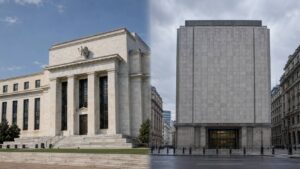
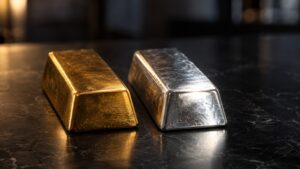
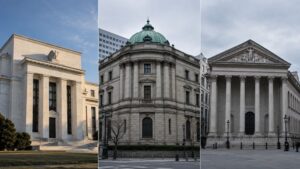
Three central banks moved three different directions in three days, September 16 through September 18, 2026. The Federal Reserve hiked. The Bank of England held. Japan’s central bank hiked again, to its highest rate since 1995. Each of those votes changes what a dollar, a pound, or a yen is worth by decree. None of them is tied to anything physical. Gold and silver carry no equivalent vote. Their supply grows by roughly 1.5% to 2% a year for gold, set by geology and mining output, not by a committee of nine people meeting in Tokyo, Washington, or London. That is the case for holding metal alongside the three currencies that just moved on a single week’s votes.
For more on how this week’s Fed decision and the oil-driven rebound are shaping gold and silver, see Gold and Silver Rip Higher as the Fed-Hike Selloff Reverses and The Fed Hiked. The Bank of England Held. They Landed on the Same Rate.. Live prices are available on GoldSilver’s gold and silver charts.
Stay On Top of Gold & Silver Prices
Get important market alerts sent straight to your inbox.
SOURCES
1. CNBC — Bank of Japan Raises Interest Rates to 31-Year High, Flags Concerns Over Inflation, Why Japan’s Markets Flipped the Usual Script After Central Bank Rate Hike, BOJ Expected to Hike Rates by 25 Basis Points to Fresh Three-Decade High: CNBC Survey
2. Bloomberg — BOJ Hikes Rates in Split Decision After Bessent’s Pressure
3. The Japan Times — Bank of Japan Raises Rates, and Might Do So Again Soon, Bessent Expects Japan to Act to Boost Yen, Signaling BOJ Rate-Hike Chance
4. Asia Times — Bank of Japan Rate Hike Exposes Cracks in Bessent’s Facade
5. Fortune — How an Obscure Japanese Yen Trade Sparked a Global Market Meltdown
6. Federal Reserve Bank of St. Louis (FRED) — 10-Year Treasury Constant Maturity Rate (DGS10)
7. Price benchmarks per CME Group and LBMA spot references.
Disclaimer: This article is for informational purposes only and does not constitute investment advice. Past performance is not indicative of future results. Always consult a qualified financial advisor before making investment decisions.
You May Also Like:
- The Fed Hiked. The Bank of England Held. They Landed on the Same Rate.
- Jobless Claims Just Beat Estimates. Gold Rallied Anyway. Here Are 4 More Signals Behind It.
- Gold and Silver Rip Higher as the Fed-Hike Selloff Reverses
- The Fed Just Hiked. 16 of 18 Officials Say It’s Not Done.
- $603 Million Left the World’s Biggest Gold ETF. It Didn’t Leave Gold.
- Texas Just Made Gold Legal Money. Four More Non-Fed Stories Followed.