 Silver Rises Over 120% YTD




Central Bank Gold Buying: Why 39 Tonnes Matters

Central banks reported 39 tonnes of net gold purchases in August 2026. The latest data highlights multiyear reserve plans and practical lessons for physical gold owners.
The Case for Holding Gold Long Term

Long-term gold ownership is about more than price appreciation. Discover why physical gold, secure vaulting, and a patient approach can make wealth preservation simpler, without turning every market move into another decision.
Investors Turn to Treasuries as AI Stocks Slide

AI-stock weakness sent investors toward Treasury bonds as concerns about technology valuations intensified. Gold also drew attention as yields eased. Here’s what the latest market shift reveals about the different risks behind government debt and physical bullion.
London Gold Vault Holdings Rose 3.78% in Q3. What Changed?

London gold vault holdings increased 3.78% to 9,821 tonnes in Q3 2026, while silver rose 3.22% to 28,985 tonnes. The LBMA’s October 14 report examines those inventory gains alongside volatile precious-metals prices.
Gold Rebounds Above $4,130: What Changed for Owners?

Gold fell 1.3% after the September CPI report, then recovered above $4,130. Here is what the reversal means for physical gold owners.
Treasury Yields Are Tightening: What It Means for Gold

Long-term Treasury yields remain elevated even as expectations for an immediate Fed hike fade. Here is why that bond-market tightening matters for gold, real yields, and the outlook for investors.
Why Are Central Banks Buying So Much Gold in 2026?
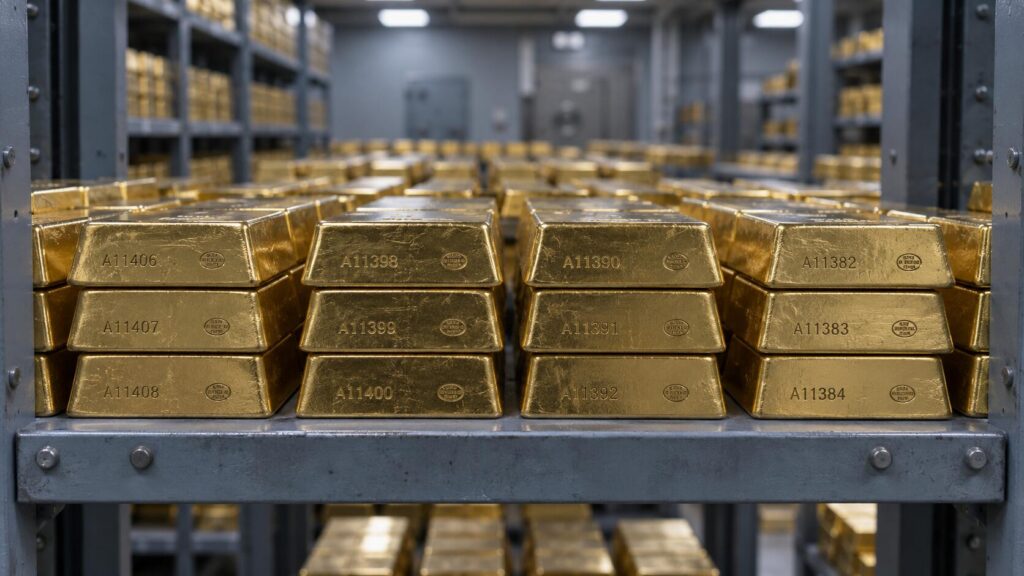
Central bank reserve managers are running a decades-old diversification playbook at sovereign scale, and the 2026 data shows it accelerating even through a price correction. Here is the mechanism behind the headlines, and what it means for an individual saver’s own allocation.
When Should a Central Bank Sell Its Gold? One Just Did. Most Won’t.

Turkey sold gold under acute currency pressure this year, and it looks like evidence the central-bank buying spree is ending. The actual survey data, from OMFIF, the European Central Bank and the World Gold Council, says otherwise, and shows why.
September Payrolls Just Missed by 70,000. Gold and Silver Didn’t Wait to React.

September payrolls missed by 70,000 against consensus, and gold and silver reacted within the same reporting minute. This breaks down the real-yield mechanism connecting the two and what the miss means for the Fed’s October 28 rate decision.
Silver Fell Harder Than Gold in September. The Solar Thrifting Story Isn’t Why.

Solar thrifting headlines get the blame for silver’s rough September, but CFTC positioning data rules out a sell-off. A small real-yield move explains far more of the gap than any single demand forecast, solar included.


