Silver Rises Over 120% YTD




Most people who buy physical gold or silver aren’t coin collectors. They’re investors. That distinction matters more than it sounds — because the coin market offers two very different products, and mixing them up is an expensive mistake.
Bullion coins are bought for their metal. Numismatic coins are bought for their rarity, history, and collector appeal. Both are real, tangible gold or silver. But they behave differently, price differently, and serve different purposes.
What Is a Bullion Coin?
A bullion coin’s value tracks the live spot price of gold or silver. The American Gold Eagle, Canadian Maple Leaf, and South African Krugerrand are classic examples — all government-issued, all globally recognized, all priced on metal content.
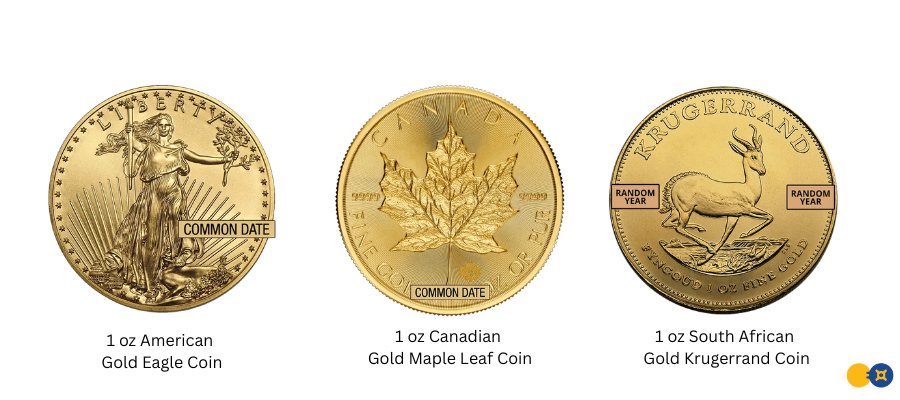
Because these coins are minted in large quantities by sovereign mints, they trade in continuous, liquid markets. Dealers buy and sell them every day at transparent spreads. You always know roughly what your coins are worth.
Standard 1 oz gold bullion coins from major sovereign mints typically carry premiums of 3–8% over the gold spot price under normal market conditions [GoldSilver]. Gold bars run lower — sometimes 1–3% over spot. Fractional coins (1/10 oz, 1/4 oz) run higher, often 15–20% or more, because fixed minting costs are spread over less metal. Silver bullion follows the same logic, with premiums running higher as a percentage since the per-ounce price is lower.
What Is a Numismatic Coin?
A numismatic coin is valued for more than its metal. Rarity, condition, historical significance, and collector demand all factor into the price — above and beyond what the metal is worth [Metalorix].
The gap between melt value and sale price is called the numismatic premium. For a certified Pre-1933 $20 Saint-Gaudens Double Eagle in high grade, that premium can run 30–100% or more above melt value. More common semi-numismatic pieces — circulated pre-1965 U.S. silver coins, for instance — typically carry premiums of 5–15% over spot under normal conditions, with demand spikes pushing them higher [CoinAge Rings].
Numismatic premiums are not fixed. They contract sharply during precious metals bull markets, when buyers flood in focused purely on metal content. A coin that commanded a 19% collector premium when gold was $1,250/oz may trade at a single-digit premium at $2,400 — same coin, same grade, very different story [CoinAge Rings].
How Does Coin Grading Work?
Numismatic coins are graded on a scale of 1–70 by independent services — primarily PCGS (Professional Coin Grading Service) and NGC (Numismatic Guaranty Company). Grade determines value, and the gaps can be dramatic. A 1921 Morgan silver dollar might fetch $45 at MS-63 and $575 at MS-66 — a single point on the scale [CoinAppraiser].
Getting a coin graded isn’t free or fast. Economy submissions at PCGS and NGC start at roughly $20–$25 per coin for lower-value pieces. Express services run $70–$150 or more, before shipping and annual membership costs [GreatCollections]. Grading fees apply whether your coin upgrades or not.
For someone without deep numismatic knowledge, that overhead adds up quickly — in money, time, and risk.
What Happened in 1971? The guide that explains the moment our financial system changed.
Bullion vs. Numismatics: How Do They Compare?
Price transparency. Bullion prices update in real time alongside spot markets. Numismatic values depend on grading standards, recent auction results, and shifts in collector demand — none of which are visible on a ticker.
Liquidity. Bullion trades anywhere, anytime. When you sell a standard bullion coin to a dealer, you typically receive spot minus a spread of about 1–3%. The total round-trip cost — buy-side premium plus sell-side spread — usually runs 5–9% for standard 1 oz sovereign coins. Numismatic coins require finding qualified buyers. In a down market for collectors, dealer bids can fall well below what you paid.
Expertise required. Owning bullion means tracking spot prices. Owning numismatics means understanding grading scales, population reports, provenance, and dealer reliability. One of those is a few minutes a week. The other is a second education.
Performance. Bullion moves with metal markets — predictably, transparently, in both directions. Numismatics can diverge: appreciating independent of spot when collector demand is strong, compressing when it softens or when a metals rally pulls buyers back toward pure metal content. Key-date rarities have historically held collector premiums over the long run. Common-date pieces offer no such guarantee [Numismatic News].
Why Does GoldSilver Focus on Bullion?
Because the goal is to own metal — not to speculate on collector tastes. Bullion gives you a direct claim on the underlying asset. The price is transparent. The market is global. When you need to convert to cash, you’re not waiting for the right auction or the right buyer.
Numismatic coins can reward knowledgeable collectors who enjoy the history and the hunt. But when the objective is wealth protection, an unpredictable collector premium is an unnecessary variable — one that sits between you and the metal you actually paid for.
How Should You Build a Bullion Strategy?
Start with well-recognized 1 oz sovereign coins. American Gold Eagles and Canadian Maple Leafs offer the deepest global liquidity and the most straightforward resale. Add fractional pieces — 1/2 oz, 1/4 oz, 1/10 oz — for flexibility at different price points, understanding their per-ounce premiums run higher. Dollar-cost averaging smooths out both spot price and premium fluctuations over time [GoldSilver].
Own the metal. Understand what you’re paying for it. Everything else follows.
Investing in Physical Metals Made Easy

People Also Ask
What is the difference between bullion coins and numismatic coins?
Bullion coins are valued primarily for their precious metal content and priced close to the live spot price of gold or silver. Numismatic coins carry additional value based on rarity, historical significance, condition, and collector demand — meaning you pay a premium above the metal itself. That premium can work in your favor or against you depending on market conditions and collector interest at the time you sell.
Are numismatic coins a good investment?
Numismatic coins can appreciate significantly, but their value depends on factors beyond metal prices — including collector demand, professional grading, and market timing. Key-date rarities have historically held collector premiums over the long run, while common-date pieces offer no such guarantee. For investors whose primary goal is wealth protection or inflation hedging, that added unpredictability is a meaningful risk.
How much over spot price should I pay for gold bullion coins?
Standard 1 oz gold bullion coins from major sovereign mints typically carry premiums of 3–8% over the spot price under normal market conditions. Gold bars run lower — sometimes 1–3% over spot — while fractional coins often carry premiums of 15–20% or more because fixed minting costs are spread over less metal. The total round-trip cost, including the dealer’s buy-back spread, usually runs 5–9% for standard 1 oz sovereign coins.
What does it cost to get a coin professionally graded?
Economy grading submissions at PCGS and NGC start at roughly $20–$25 per coin for lower-value pieces, with express services running $70–$150 or more before shipping and annual membership fees. Grading fees apply whether or not your coin receives a higher grade, so there’s no guarantee of a return on the investment. For investors without deep numismatic knowledge, those costs add up quickly in money, time, and risk.
Which gold coins are the easiest to sell?
The most liquid gold coins are well-recognized sovereign bullion issues — the American Gold Eagle, Canadian Maple Leaf, and South African Krugerrand trade in active global markets and are accepted by dealers worldwide. When you sell, you typically receive the spot price minus a dealer spread of about 1–3%. Less recognized coins, including many numismatic pieces, require finding specialized buyers and can take significantly longer to sell at a fair price.
SOURCES
1. Metalorix — Understanding Numismatic Value in Precious Metals
2. GoldSilver — What Premiums Are Reasonable for Gold and Silver?
3. CoinAge Rings — Golden Calculations: Understanding Melt Value vs. Collector Premium in St. Gaudens Double Eagles
4. CoinAppraiser — Everything You Need to Know About Grading with PCGS or NGC
5. GreatCollections — Grade & Auction Program
6. StonexBullion — How Much Does It Cost to Grade a Coin?
7. Numismatic News — With Soaring Gold and Silver Prices, What Happens to Numismatics?
8. GoldSilver — Bullion Premiums Explained: How to Spot Reasonable Prices
This article is for informational purposes only and does not constitute financial or investment advice. Always consult a qualified financial advisor before making investment decisions.
You May Also Like: