 Silver Rises Over 120% YTD




Gold Price Outlook August 2026: What Three Data Prints in One Week Mean for Your Metals
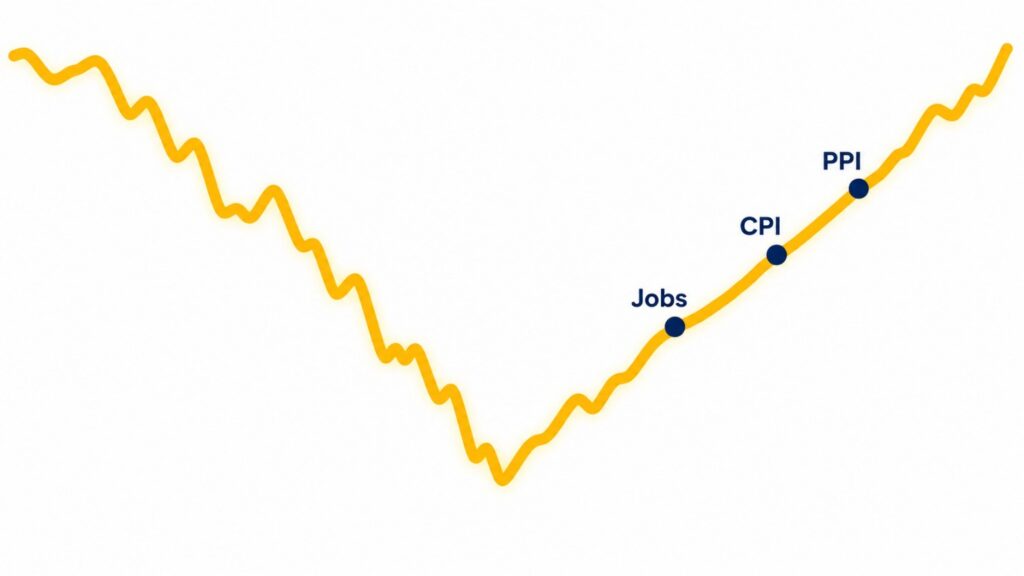
Gold is up 10% in August from near $4,000 — its best monthly gain since January. Three data prints in one week flipped the September rate-hike calculus: jobs, CPI, and PPI all came in soft. Hike odds fell from 50% to 31%. Central banks bought a quarterly record 288.9 tonnes in Q2 even as prices fell. Here is what it means for gold holders — and what to watch before the September 15–16 FOMC.
Gold Isn’t Down 27%. It’s Down 5%. Here’s Why That Distinction Changes Everything.

Gold is down 5% from year-end 2025 — not 27%. Chief Economist Trey Reik explains why most investors are measuring the correction wrong, and why the gold bull market is still intact.
Gold’s 27% Drawdown Matches 2008 and COVID Almost Exactly. That’s Not a Warning.

Gold has fallen roughly 27% from its January 2026 high — almost identical to its drawdown in 2008 and during COVID. Both of those corrections resolved to significant new highs. Jeff Clark breaks down what history says comes next, why central bank buying hasn’t slowed, and the third historical parallel that makes this moment even more precise than either prior comparison.
Gold Fell 47 Percent in the 1970s Before Its Biggest Run. The Chart Looks Like Right Now.

In the middle of the 1970s gold bull market, gold fell 47 percent. Most investors sold. The ones who held watched it run nearly eight times from that low to the January 1980 peak. GoldSilver’s Megan King Diaz walks through the historical chart — and draws the parallel to where gold sits right now.
Gold Stocks Just Hit 7% Bullish Sentiment. Here Is What History Says Comes Next.
On one day last month, bullish sentiment on gold stocks hit zero. Not low. Zero. Adrian Day, chairman of Adrian Day Asset Management, tells GoldSilver’s Maggie Lake why that extreme — paired with 50-year-low valuations and relentless central bank buying — is the setup contrarian investors wait years to find.
Gold Is Down 26%. Silver Is Down 51%. What Does the Stacker Do Now?
Gold and silver have pulled back sharply from their January 2026 peaks. The structural case — six consecutive silver deficits, 863 tonnes of central bank gold buying, and a gold-silver ratio above its long-run average — has not changed. This guide covers the floor thesis, how to read the GSR as a strategic compass, and how dollar-cost averaging turns volatility into an advantage.
What Is the Gold Volatility Index (GVZ) — and What Does It Mean for You?
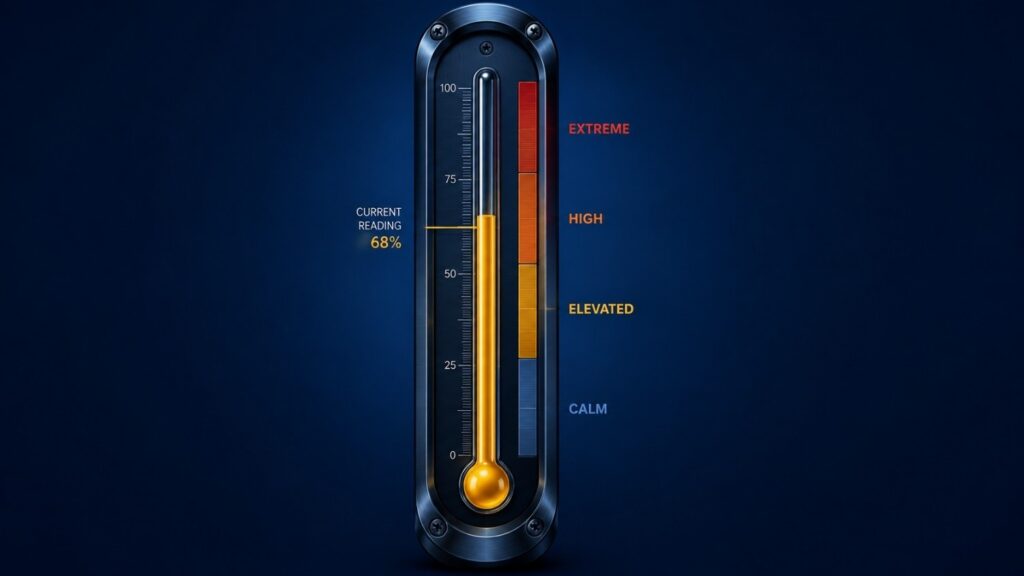
The GVZ (Cboe Gold ETF Volatility Index) measures what options traders expect gold prices to do over the next 30 days — using the same methodology as the VIX, applied to GLD options. Here’s what the historical regimes mean, why GVZ can spike during a gold bull market, and what it actually signals for long-term physical gold holders.
Gold & Silver Market Correction: Is the 2026 Bull Market Over?

Gold fell nearly 28% from its January 2026 all-time high. Silver dropped over 52%. Here is what caused the correction, why the structural bull case remains intact, and what central banks, the WGC, and institutional forecasters say about where gold and silver go from here.
Why HSBC Still Believes Gold Hits $4,750 by Year-End (And What the Mainstream Is Missing)
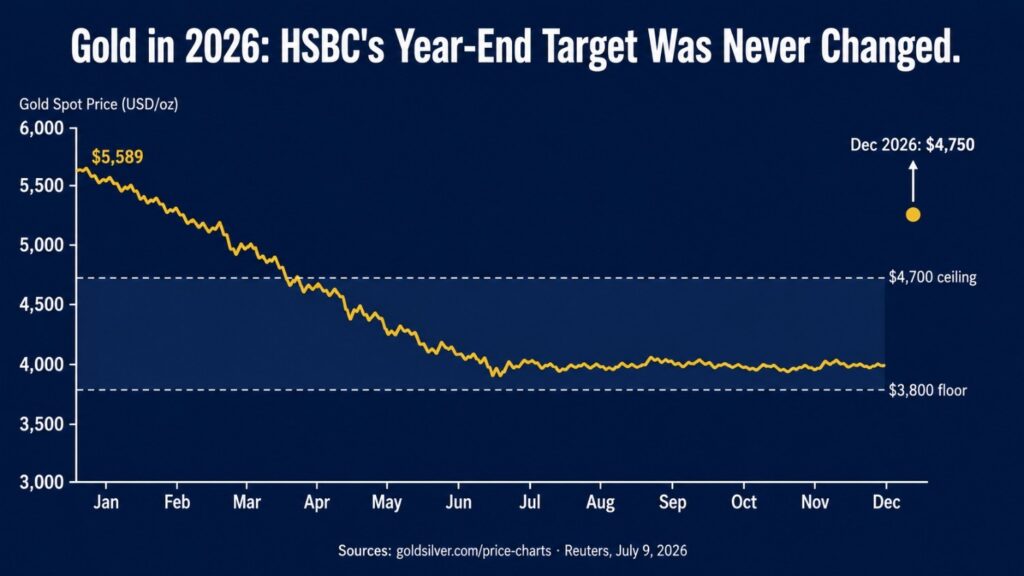
HSBC cut its 2026 average gold forecast by $304 on July 9. It left its year-end target at $4,750 unchanged. That gap between the two numbers is what the mainstream missed — and it tells you everything about where gold goes from here.
Gold Went Up 600%. Your Mining Stocks Didn’t. Here’s Why.

Gold went up 600% since 2006. Junior miners are still negative over the same period. Rob McEwen — the operator who built Goldcorp into a multi-billion dollar producer — explains the exact mechanism behind the gap, what finally closes it, and why mining stocks at 2% of global equity may be the setup of the decade.


