Silver Rises Over 120% YTD




Published: 04-17-2026, 12:29 pm | Updated: 04-17-2026, 02:21 pm
Gold and Silver market update — April 17, 2026
In this update: Why is gold rising? This week delivered five separate answers — all at once. The Fed’s independence is under threat, the IMF flagged stagflation, Iran is closing waterways, and silver is in its fifth straight annual deficit. Here’s what’s driving it.
What Does Trump’s Threat to Fire Powell Mean for Gold?
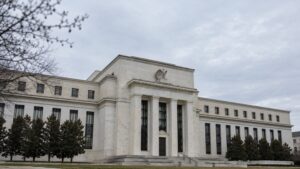
President Trump told Fox Business this week he would remove Fed Chair Jerome Powell if he refuses to leave when his chairmanship expires May 15. “Then I’ll have to fire him.” Powell has refused to resign. A federal judge has blocked a DOJ grand jury subpoena tied to the $2.5 billion Fed renovation probe. Senate Majority Leader Thune is urging the White House to drop it — the investigation is now delaying confirmation hearings for Trump’s nominee Kevin Warsh, set for April 21.
The issue for gold isn’t the drama. It’s the precedent. A central bank that yields to political pressure loses its most valuable asset: credibility. When inflation expectations stop being anchored by an independent Fed, they get anchored by gold instead. Gold was trading near $4,870 as the standoff escalated.
Is the IMF’s Latest Forecast Signaling Stagflation?
On April 14, the IMF cut its 2026 global growth forecast to 3.1% while raising its inflation forecast to 4.4% — in the same report, on the same day. It blamed the Strait of Hormuz closure for a “major negative supply shock.” US growth is forecast at 2.3%.
Also on April 14, the Bureau of Labor Statistics reported March PPI at +0.5% month-over-month — well below the +1.1% Dow Jones consensus — but annual headline PPI hit 4.0%, its highest since February 2023. The monthly number offered relief. The annual number did not. That’s the Fed’s trap: cut rates and risk reigniting inflation; hold rates and choke a slowing economy. Gold doesn’t need the Fed to act. It just needs the Fed to stay stuck.
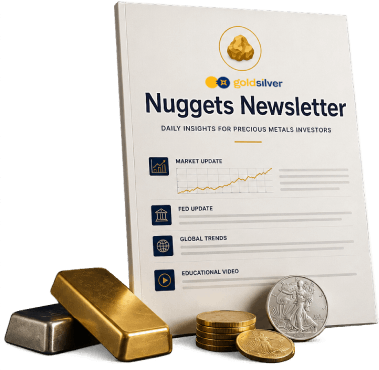
The Edge Every Investor Needs Smarter precious metals investing starts here. The Nuggets Newsletter brings you essential market insights, Fed updates, global trends, educational videos, and much more.
How Does the Iran-US Standoff Affect Gold and Silver Prices?
The April 8 ceasefire held for four days. Peace talks in Islamabad collapsed on April 12. The US then imposed a naval blockade of all Iranian ports on April 13. Iran’s IRGC commander Major General Ali Abdollahi responded with a direct warning: if the blockade continues, Iran “will not allow any exports or imports to continue in the area of the Persian Gulf, the Sea of Oman and the Red Sea.”
The ceasefire expires April 22. Both sides have indicated in-principle agreement to a two-week extension — but nothing is signed. Roughly 20% of the world’s oil and LNG still can’t reach global markets normally. An extension doesn’t change that. The energy risk premium is already in gold’s price. The question is whether it stays there — or grows.
Why Are Gold and Copper Rising at the Same Time?
Copper and gold usually move in opposite directions. Copper rises when the economy is strong. Gold rises when confidence in institutions is weak. When both rise together, two different problems are present at once — and that’s exactly what’s happening now.
Tariff-driven supply disruptions are pushing copper higher on constrained supply. The same tariff environment — inflationary, growth-dampening — is strengthening gold’s monetary bid. This week, the IMF specifically warned that political pressure on independent central banks raises inflation expectations. That’s not a theoretical risk. The Trump-Powell standoff is testing it in real time. For gold holders, the copper signal isn’t a curiosity. It’s confirmation.
Why Did Silver Jump 15% in a Week — and Is There More to Come?
Silver climbed from roughly $69.80 to $79.55 in a single week in early April, then consolidated around $79–80. Two forces drove it: falling real yields as stagflation expectations built, and easing oil prices after the April 8 ceasefire. The gold-to-silver ratio compressed from roughly 64:1 to 60:1 — approaching its modern long-run average of 50–60.
The price move is the headline. The supply data is the story. The Silver Institute’s World Silver Survey 2026, released April 15 by Metals Focus, confirmed a fifth consecutive annual deficit in 2025. A sixth is projected for 2026 at 46.3 million troy ounces — 15% wider than last year. Cumulative stock drawdowns since 2021 now total 762 million troy ounces. The market has depleted above-ground inventory every year for five straight years. No surplus is in sight.
Stay On Top of Gold & Silver Prices
Get important market alerts sent straight to your inbox.
SOURCES
1. Bureau of Labor Statistics — Producer Price Indexes, March 2026
2. International Monetary Fund — World Economic Outlook, April 2026
3. CNBC — Trump Threatens to Fire Powell if the Fed Chair Doesn’t Leave Office on His Own
4. CNN — Trump Says He’ll Fire Powell Next Month if He Stays in His Role at the Fed
5. PBS NewsHour — As Trump Threatened to Fire Powell, Federal Prosecutors Showed Up Unannounced at the Federal Reserve Building
6. Al Jazeera — Iran Warns US Naval Blockade Threatens Ceasefire
7. NBC News — Live Updates: US Blockade of Iran, Hormuz, Trump Peace Talks
8. Silver Institute — Global Silver Investment to Remain Strong in 2026 Against the Backdrop of a Sixth Consecutive Annual Market Deficit
9. Trading Economics — Gold Price, April 15–17, 2026
10. CBS News — What Is the Price of Gold Today, April 16, 2026
By the GoldSilver Editorial Team — helping investors understand sound money since 2005. This article is for informational purposes only and does not constitute financial, investment, or tax advice. Always consult a qualified financial advisor before making investment decisions.
You May Also Like:
- The Largest Gold ETF Outflow Ever – But China Disagrees
- Silver Market Deficit 2026: Six Years and Getting Worse
- Is the Petrodollar Ending? What the Iran War Means for Gold
- France’s Gold Repatriation Is Done. Germany Is Next
- Gold/Silver Ratio Hits 61.1 — Silver’s Turn to Run
- Silver Holds Near $80 as Iran Ceasefire Revives Rate-Cut Bets
- The Fed Goes Silent in 3 Days – What Does That Mean For Gold?
- Gold Is Down 10% From Its War-Peak — and Still Up 46% in a Year