Silver Rises Over 120% YTD




Published: 04-15-2026, 04:38 pm | Updated: 04-15-2026, 04:41 pm
History doesn’t always repeat — but when it comes to gold and silver, it rhymes loudly enough to keep paying attention.
The 1970s bull market in precious metals remains one of the most dramatic wealth events of the 20th century: a decade-long run fueled by monetary breakdown, inflation, and a global loss of confidence in the dollar.
Understanding what drove that bull run — and what finally ended it — gives modern investors a remarkably useful lens for reading today’s market. Because the structural conditions that launched metals in 1971 look a lot like the world we’re navigating right now.
The Nixon Shock: When the Dollar Lost Its Anchor
The story of the 1970s bull run begins not with a market move, but with a policy decision. On August 15, 1971, President Nixon suspended the convertibility of the U.S. dollar into gold — ending the Bretton Woods system that had governed global monetary order since 1944. For the first time in modern history, the world’s reserve currency was backed by nothing but faith in the U.S. government [Federal Reserve History].
The consequences unfolded over the decade. With no gold anchor restraining money creation, inflation surged. The oil embargo of 1973 added fuel to the fire, but the deeper problem was monetary: too many dollars chasing too few goods. By the late 1970s, the U.S. was experiencing double-digit inflation and the purchasing power of the dollar was visibly eroding.
Gold and silver are, at their core, the market’s answer to monetary debasement. When fiat currency loses credibility, real assets reassert their value. The 1970s bull run wasn’t a speculative bubble — it was a repricing of money itself.
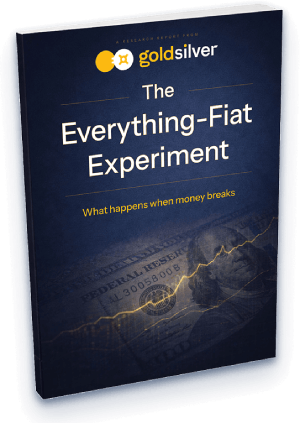
What Happened in 1971? The guide that explains the moment our financial system changed.
What the Numbers Actually Looked Like
The scale of the 1970s move is worth sitting with, because it reframes what “a good year” in metals really means.
Gold started the decade at $35 per ounce — the fixed Bretton Woods price. By January 1980, it peaked near $850. That’s a gain of over 2,300% across the decade, with the most explosive move coming right at the end. In 1979 alone, gold returned approximately 130% — more than doubling in a single year [In Gold We Trust Report / Incrementum AG, sourced from Federal Reserve St. Louis data].
Silver’s performance was even more striking. In 1979, silver gained roughly 400% — more than a 4x return in twelve months. Both metals continued rising into early 1980 before Federal Reserve Chairman Paul Volcker broke inflation by raising the federal funds rate to a peak of approximately 20% — the highest overnight rate in U.S. history [Federal Reserve History]. That monetary tightening ended the bull market in metals.
The lesson: the run ended when the monetary problem was credibly solved. Not before.
The Pattern That Matters: Late-Stage Acceleration
One of the most important features of the 1970s bull run — and one directly relevant to investors today — is the shape of the move. Precious metals did not rise steadily throughout the decade. They moved in fits and starts, with long consolidation periods and sharp corrections, before an explosive acceleration in the final years.
From 1974 to 1976, gold fell more than 40% — a pullback that shook out many investors who had bought the initial surge. Silver went through similar volatility. But those corrections happened within an intact structural bull market, and both metals ultimately resumed with greater force.
This pattern is characteristic of bull markets driven by fundamental monetary shifts rather than speculation. The move takes years to fully develop, has multiple correction phases that test conviction, and then accelerates dramatically near the end as mainstream awareness catches up to what the fundamentals have been signaling all along.
The investors who understood why they owned metals — not just that prices were rising — were the ones who held through the corrections and captured the full move.
What the 1970s Teach Long-Term Investors
The most important lesson from the 1970s bull run isn’t a price target. It’s a framework for thinking about what gold and silver actually are and why they move.
They are not speculative assets. They are monetary assets — stores of value that appreciate when confidence in fiat currency systems erodes. The 1970s bull run lasted nearly a decade, included brutal corrections, and still produced some of the most significant real wealth preservation in modern financial history for those who understood the thesis and held through the volatility.
That same thesis — own real money outside the financial system, understand the mechanism, hold through the noise — remains as relevant today as it was when Nixon closed the gold window in 1971. The specific price targets matter less than understanding the structural reason metals are moving.
Those structural reasons — monetary expansion, dollar credibility questions, negative real yields — have proven durable, and they remain the investor’s primary framework for evaluating metals allocation at any point in the cycle.
Stay On Top of Gold & Silver Prices
Get important market alerts sent straight to your inbox.
People Also Ask
Is today’s gold market similar to the 1970s?
Several structural conditions mirror the 1970s: elevated government debt, persistent inflation above target, dollar credibility concerns, and central bank gold buying at record levels. While no two cycles are identical, the monetary dynamics that drove the 1970s bull run — currency debasement and loss of confidence in fiat systems — are again active drivers in today’s market.
How much did gold go up in the 1970s?
Gold rose from $35 per ounce in 1971 to a peak of approximately $850 in January 1980 — a gain of over 2,300% across the decade. The single strongest year was 1979, when gold returned approximately 130%.
How much did silver go up in 1979?
Silver gained approximately 400% in 1979 — rising from around $6 per ounce at the start of the year to nearly $50 at the January 1980 peak. It remains one of the most dramatic single-year performances of any major asset class in modern financial history.
What caused the 1970s gold bull market?
The primary driver was the collapse of the Bretton Woods system in 1971, when President Nixon ended the dollar’s convertibility to gold. This removed the monetary anchor that had restrained inflation and dollar creation, leading to a decade of monetary instability, surging inflation, and a repricing of real assets including gold and silver.
What ended the gold bull market in 1980?
Federal Reserve Chairman Paul Volcker raised the federal funds rate to a peak of approximately 20% to break inflation. This restored confidence in the dollar and removed the core structural driver of the metals bull market. Gold and silver peaked in January 1980 and entered a prolonged bear market that lasted into the early 2000s.
SOURCES
1. Federal Reserve History — Nixon Ends Convertibility of U.S. Dollars to Gold
2. Incrementum AG / In Gold We Trust Report — Annual Gold & Silver Performance Table since 1971
3. Federal Reserve Bank of St. Louis (FRED) — Commodities: Historical Gold Price Data
4. Federal Reserve History — Volcker’s Announcement of Anti-Inflation Measures
5. Statista — Annual Change in the Gold Price Since 1965
6. World Gold Council — Gold Demand Trends: Central Banks, Full Year 2024
7. Federal Reserve Bank of St. Louis (FRED) / U.S. Office of Management and Budget — Federal Debt: Total Public Debt as Percent of GDP
By the GoldSilver Editorial Team — helping you understand sound money since 2005. This article is for informational purposes only and does not constitute financial, investment, or tax advice. Always consult a qualified financial advisor before making investment decisions.
You May Also Like
- What Is a COMEX Silver “Delivery”? — And Why Most People Get It Wrong
- The Quiet Bank Run in Gold: Why Comex Data Shouldn’t Be Ignored
- COMEX’s Emergency Actions Reveal Gold Market in Distress
- Record Gold Deliveries Hit US as Banks Rush to Beat Tariffs
- Copper Prices on Comex Exchange Hit All-Time High
- Gold Returns to London as Tariff Exclusion Normalizes COMEX Premium