Silver Rises Over 120% YTD




Published: 01-28-2026, 02:28 pm
Gold recently hit a record $5,111 per ounce, driven by geopolitical uncertainty and concerns about dollar stability. For centuries, gold has played a unique role in the global economy. It’s been used as money, as a store of value, and as a hedge against uncertainty.
But one of the simplest — and most powerful — ways to understand gold’s value has nothing to do with charts, forecasts, or price targets.
It’s this:
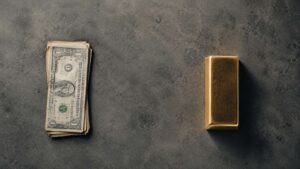
What can one ounce of gold actually buy?
When you look at gold this way, something remarkable appears. Over long periods of time, gold’s purchasing power stays surprisingly consistent, even as currencies rise and fall.
In fact, a single ounce of gold has quietly preserved its buying power across generations.
A Dinner at the Savoy: Gold vs. Wages Over 50 Years
A recent real-world example brings this idea into sharp focus — and it comes from one of London’s most iconic restaurants: the Savoy Grill.
George Cooper, Chief Investment Officer of Equitile Investments, recently analyzed how the cost of dining at the Savoy has changed over time when measured in wages versus gold. Cooper is resurrecting the “Savoy Gold Ratio,” an entertaining metric created by legendary City investor Julian Baring in the 1970s. Baring, a member of the famous Baring banking dynasty, used this comparison to demonstrate gold’s enduring purchasing power against government-debased fiat currencies.
His findings reveal a stark contrast:
Measured in wages, a dinner for two at the Savoy has remained consistently expensive—costing roughly three days of average UK wages from 1971 through today. In other words, decades of nominal wage increases haven’t made fine dining at the Savoy any more affordable for the average worker.
But measured in gold, the story changes completely.
The Financial System Isn’t Safer — And You Know It As risks mount, see why gold and silver are projected to keep shining in 2026 and beyond.
Gold’s Purchasing Power: One Ounce, Fourteen Dinners
In 1971, when a sirloin steak cost £1.55, dinner for two at the Savoy ran £11.33 — requiring 0.68 ounces of gold at the then-prevailing $35/oz price. Fast forward to January 2025, when Cooper and friends ordered celeriac velouté, beef wellington, and wine at the same restaurant. The bill for two: £472.65.
When Cooper did his calculations, gold’s price was around $4,642/oz. That dinner required just 0.14 ounces — roughly the weight of a thin wedding ring.
The math is striking: one ounce of gold bought dinner for three people in 1971. Today, it buys dinner for fourteen.
With gold now surpassing $5,000/oz, you can add a few more seats at the table.
Not Just a Metal: A Long-Term Store of Value
As Baring himself explained in 1989: “I regard gold as a form of currency. If you hold an ounce of gold for 20 years, I believe it will buy you the same number of Savoy dinners at the end of that time as it would have done at the beginning.”
More than three decades later, Cooper’s data proves Baring wasn’t just right—he was conservative. Gold didn’t just maintain purchasing power; it increased it dramatically.
Nothing about the Savoy changed. The quality didn’t collapse. The restaurant didn’t become cheaper. What changed was the purchasing power of currency. Gold quietly absorbed decades of inflation, while paper money steadily lost ground.
The Savoy example isn’t unique. Look at nearly any good or service across decades, and the same pattern emerges: measured in gold, prices either stay stable or decline. Measured in fiat currency, they soar.
The Famous “Gold Suit” Example
Another long-standing comparison illustrates the same point even more clearly — and this one spans an entire century.
👔 One Ounce of Gold = One Fine Suit
In the 1920s, during the era of Prohibition and the Great Gatsby, a well-tailored men’s suit cost about $20–$30 — roughly the price of one ounce of gold at the time. This wasn’t a basic off-the-rack suit, but a quality garment from a reputable tailor: wool fabric, hand-stitched details, proper construction.
Fast-forward a century.
Today, a high-quality suit from a respected brand like Brooks Brothers, a bespoke creation from a Savile Row tailor, or a premium Italian suit from brands like Canali or Zegna runs $4,000–$5,000. Once again, that’s roughly the price of one ounce of gold at current prices.
The suit hasn’t fundamentally changed. The craftsmanship is similar. The materials are comparable. What changed is the currency used to measure it.
Consider what happened to the dollar in that time: that same $20–$30 from the 1920s? Today it would buy you perhaps a tie, or maybe a dress shirt on sale — certainly not a quality suit.
The dollar lost over 95% of its purchasing power. Gold did not.
Whether you’re buying dinner at London’s finest restaurant or a well-made suit, the story is the same: gold preserves wealth across generations. Fiat currencies do not.
What About Gold’s Traditional Drawbacks?
Critics correctly point out that gold costs money to store and insure, yields no dividends, and historically has underperformed stocks and real estate over many periods.
But these traditional objections miss the point. Gold isn’t meant to outperform productive assets — it’s meant to preserve purchasing power when currencies are debased.
The Savoy Gold Ratio demonstrates this perfectly: while the pound lost 97% of its purchasing power since 1971, gold maintained and even increased its ability to buy real goods and services.
Why Gold’s Role Matters for Your Portfolio
Most people think about gold in dollar terms: “Gold is up,” “Gold is down,” “Gold is volatile.”
But gold isn’t trying to outperform stocks or beat inflation headlines. Gold’s real role is simpler: it preserves purchasing power over time.
While currencies are constantly being created, expanded, and devalued, gold remains scarce, durable, and globally recognized. That’s why comparisons like meals, suits, and housing resonate—they cut through noise and show what gold actually does.
Over long periods, paper currencies tend to lose value while gold tends to hold value. This doesn’t mean gold always goes up every year—it doesn’t. But measured across decades, not quarters, gold consistently maintains its ability to buy real goods and services.
That’s why central banks hold it. That’s why civilizations have trusted it for millennia. And that’s why investors still turn to it today.
Gold as Financial Insurance
When you stop thinking of gold as a trade and start thinking of it as stored purchasing power, its role becomes clearer.
Gold isn’t meant to replace productive assets like stocks or real estate—it’s meant to protect what you’ve already built. It’s insurance against currency debasement, a hedge against uncertainty, and a proven store of value that has outlasted every paper currency in history.
The simplest measure often tells you the most: What can one ounce of gold buy today—and what will it buy tomorrow?
History suggests the answer is remarkably consistent.
Ready to preserve your purchasing power? Explore our selection of gold bullion coins and bars, backed by decades of trusted service. Whether you’re just beginning to diversify or adding to an existing position, physical gold remains one of the most reliable ways to protect your wealth across generations.
Stay On Top of Gold & Silver Prices
Get important market alerts sent straight to your inbox.
People Also Ask
What is the Savoy Gold Ratio?
The Savoy Gold Ratio is a metric created by 1970s investor Julian Baring that measures how many dinners at London’s Savoy Grill one ounce of gold can purchase. It demonstrates gold’s purchasing power over time: in 1971, one ounce bought dinner for three people, while today it buys dinner for fourteen—showing that gold maintained and increased its buying power while fiat currency lost value.
Does gold maintain its purchasing power over time?
Yes, gold has consistently maintained its purchasing power across decades and even centuries. Historical comparisons show that one ounce of gold bought a quality men’s suit in the 1920s and still buys one today, while the same dollar amount from the 1920s ($20-30) now barely covers a tie. This makes gold an effective hedge against currency debasement and inflation.
How much gold do I need to buy to preserve my wealth?
The amount of gold you need depends on your overall portfolio size and financial goals, but many financial advisors recommend allocating 5-10% of your portfolio to physical gold as insurance against currency debasement. GoldSilver offers a range of gold bullion coins and bars to fit different investment levels, from fractional ounces to full bars, making it accessible whether you’re just starting or adding to an existing position.
Why is gold better than cash for storing value?
Gold maintains its purchasing power while cash loses value over time due to inflation and currency debasement. Since 1971, the British pound has lost 97% of its purchasing power, while gold has actually increased its ability to buy real goods and services. Unlike paper currencies that can be printed in unlimited quantities, gold remains scarce, durable, and globally recognized.
Is gold a good investment during inflation?
Gold has historically served as an effective hedge against inflation and currency debasement, though it’s best viewed as wealth preservation rather than a growth investment. While gold may not outperform stocks during bull markets, it maintains purchasing power when currencies lose value—as demonstrated by the Savoy Gold Ratio, where gold’s buying power increased while wages stagnated. Most investors hold physical gold as portfolio insurance, not as a speculative trade.
You May Also Like:
- Foreign Investors Are Selling U.S. Debt — Here’s Why Gold Is Surging
- Why Metals Dominated Every Asset Class in 2025 [and What It Means for 2026]
- Why New CME Trading Rules Could Push Silver to $100
- Best Investment Of 2026: Silver’s Setup Is Hard To Ignore
- What the Falling Gold-to-Silver Ratio Means for Investors