Silver Rises Over 120% YTD




Published: 05-12-2026, 09:49 am
Gold and silver market update — May 12, 2026
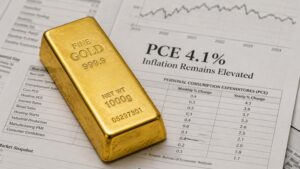
Gold is down today, even though inflation just hit a three-year high. Many investors are asking why is gold down when inflation is high, and that question gets to the heart of what’s actually driving markets right now. April CPI just came in at 3.8% — the highest since May 2023.
A new Fed chair known for hawkish instincts takes the reins on Friday. If you hold gold for the long term, this is not a moment to panic. It’s a moment to understand exactly what’s happening. Here are the five updates that matter most right now.
What Did April 2026 CPI Come In At?
April 2026 headline inflation came in at 3.8% year-over-year, according to the Bureau of Labor Statistics (BLS), which released the data this morning at 8:30 a.m. ET. That beat the 3.7% consensus forecast. It also rose sharply from 3.3% in March — the highest annual rate since May 2023.
Energy was the dominant driver. Oil prices sit roughly 40% above pre-war levels due to the Hormuz disruption, and energy alone accounted for more than 40% of the monthly increase. Core CPI — which excludes food and energy — came in at 2.8% annually. As a result, a hotter-than-expected print keeps the Fed frozen and real yields elevated. That caps gold’s near-term upside, while also strengthening the long-term case for holding it.
The Edge Every Investor Needs Smarter precious metals investing starts here. The Nuggets Newsletter brings you essential market insights, Fed updates, global trends, educational videos, and much more.
What Does Kevin Warsh Mean for the Gold Price?
Jerome Powell’s term as Federal Reserve chair ends Friday, May 15, 2026. His successor is Kevin Warsh, who is on track for full confirmation this week. The Senate Banking Committee advanced his nomination 13–11 on April 29 — the first fully partisan committee vote on a Fed chair nominee in its history, according to Roll Call.
On Monday, the full Senate voted 49–44 to invoke cloture, with only Senators Fetterman and Coons crossing party lines. Warsh previously served as a Fed governor from 2006 to 2011 and is widely regarded as a hawk on inflation. The Fed has held rates at 3.50–3.75% for 3 consecutive meetings, and CME futures markets are pricing zero cuts in 2026. What Warsh signals first as chair will largely set where gold trades in the second half of the year.
Why Is the Strait of Hormuz Still Driving Gold’s Price?
The US-Iran conflict began February 28, 2026, and is now in its 11th week. Running through that region, the Strait of Hormuz carries roughly 20% of globally traded oil, and it remains effectively closed despite a fragile ceasefire. The mechanism for gold investors is direct: a closed strait keeps oil elevated, high oil keeps CPI high, high CPI keeps the Fed on hold, and a frozen Fed keeps real yields elevated.
That is precisely why gold is range-bound between $4,600 and $4,800. Trump launched Operation Project Freedom on May 4 to escort merchant vessels through the strait. He paused it May 6 citing diplomacy, then declared Iran’s latest proposal “totally unacceptable” on May 10, according to CNN. Consequently, any genuine breakthrough here is the single most likely catalyst to reprice gold — in either direction.
Are Central Banks Still Buying Gold?
In March 2026, central banks turned net sellers of gold for the first time in 10 months, according to the World Gold Council (WGC). The net figure was −30 tonnes, driven by Turkey (−60 tonnes, for FX and liquidity management) and Russia (−6 tonnes).
However, the headline masks the underlying trend. Poland added 11 tonnes in March alone and 31 tonnes across Q1 2026. Meanwhile, China extended its gold-buying streak to 18 consecutive months as of April 2026, adding over 8 tonnes.
Overall, the WGC projects roughly 850 tonnes in total central bank purchases for 2026 — nearly matching 2025’s 863-tonne pace. Notably, sovereign buyers accumulated through gold’s entire 15%+ correction from the January high. That is not speculation. Rather, it reflects institutions building permanent reserves.
Is the Gold Selloff a Trend Change or a Correction?
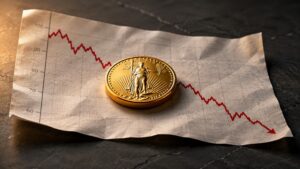
Gold hit an all-time high of $5,589 in January 2026. As of now on May 12, 2026, it is trading at below $4,700 — a decline of roughly 16%, according to nFusion Solutions. That correction reflects the Iran war’s energy shock repricing Fed rate expectations from 2 cuts to zero.
Silver, meanwhile, tells a related but distinct story. It opened today at $86.10, carried by yesterday’s 7%+ rally on the US-China 90-day tariff truce, and has since pulled back to around $84.56 — a retracement of that move, compounded by today’s hot CPI.
Despite the pullback, the structural floor for gold remains intact. The metal has held $4,600 repeatedly since April, supported by central bank demand, fiscal deficits at 6–7% of GDP, and a weaker dollar year-on-year. Today’s CPI doesn’t break the thesis. It confirms it.
The Price Is Telling You the Same Thing the Data Is
Inflation is running hotter than expected. The Fed is frozen. Furthermore, the Strait of Hormuz has no clean resolution in sight. Every story today points to the same conclusion: the conditions making gold uncomfortable right now are the same ones that make it worth holding for the long term.
The move from $5,589 to below $4,700 is the market repricing the speed, not the direction. So for investors with a 3–5 year horizon, that distinction is everything — and today’s data made it clearer, not murkier.
Stay On Top of Gold & Silver Prices
Get important market alerts sent straight to your inbox.
SOURCES
1. nFusion Solutions — Gold & Silver Spot Prices
2. U.S. Bureau of Labor Statistics — Consumer Price Index, April 2026
3. Federal Reserve Bank of Minneapolis — How Long Can We “Look Through” the Iran War Commodity Shock?
4. Roll Call — Warsh Moves Closer to Fed Role With Senate Cloture Vote
5. Federal Reserve Board — Board Member Biographies: Kevin Warsh
6. Federal Reserve — FOMC Statements and Meeting History
7. CME Group — FedWatch Tool
8. U.S. Energy Information Administration — Strait of Hormuz
9. CNN — Iran War Live Coverage
10. World Gold Council — Gold Demand Trends Q1 2026, Central Banks
11. Associated Press — U.S. and China Reach Temporary Deal to Reduce Tariffs for 90 Days
12. Congressional Budget Office — Budget and Economic Outlook
Disclaimer: This article is for informational purposes only and does not constitute financial or investment advice. Always consult a qualified financial adviser before making investment decisions.
You May Also Like:
- Why the Gold Silver Ratio Is Falling — and What It Means
- What’s Moving Gold Prices This Week: CPI, Seoul & Beijing
- Silver Jumps 6% Before Trump-Xi Summit. Here’s Why
- April Jobs Beat 115K. Gold Held. The Dollar Didn’t. Here’s Why
- Jobs Beat, Ceasefire, Deficit: What It Means for Gold
- Gold Price Outlook: Oil Futures Disagree With Stock Markets
- Why Silver Hit $82 Today: Iran, Oil, and the Fed
- Gold Hits $4,746 as Oil Crashes. Here’s Why That’s Bullish