Silver Rises Over 120% YTD




Published: 10-06-2026, 09:42 am | Updated: 10-06-2026, 10:46 am
Gold is up 0.85% today to $4,176.11 an ounce, with firmer Fed hold odds doing exactly what they are supposed to do. Silver is up a smaller 0.46%, to $61.43. That gap pushed the gold-silver ratio to 67.98, up 0.39% on the day. The more interesting number belongs to neither metal: the 10-year Treasury yield, which touched its highest level since 2002 this week [FXStreet].
Key Takeaways:
- Gold climbed 0.85% today to $4,176.11 and silver rose 0.46% to $61.43, even as the 10-year Treasury yield sat near 5.3%, its highest level since 2002 [FXStreet].
- The move follows September’s nonfarm payrolls report, which added just 29,000 jobs against a consensus near 84,000-90,000 [BLS]. CME’s FedWatch tool now prices roughly a 78% chance the Fed holds rates at its October 27-28 meeting [Yahoo Finance].
- Gold is recovering from its weakest levels in about two months, but a firm dollar and elevated yields are keeping the bounce capped rather than explosive.
Normally, a weak jobs report is gold’s best friend. Fewer jobs means less pressure on the Federal Reserve to keep rates high. Lower rates, in turn, make a metal that pays no yield more attractive next to cash and bonds. That is exactly what is happening with Fed expectations today. The problem is that the bond market has not gotten the same memo.
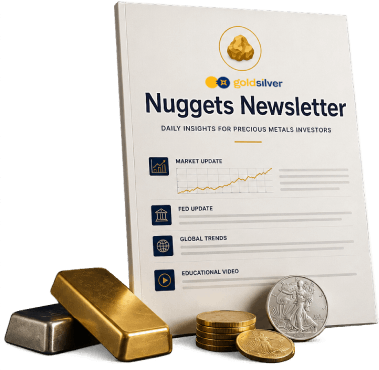
The Edge Every Investor Needs Smarter precious metals investing starts here. The Nuggets Newsletter brings you essential market insights, Fed updates, global trends, educational videos, and much more.
What’s Capping Gold’s Rebound From a Two-Month Low?
Gold slid toward $4,150 in recent sessions, its lowest levels since early August, a stretch this desk tracked as it happened. The driver then was the same one still capping today’s bounce. Treasury yields kept climbing even as the Fed’s own rate path softened. The 10-year yield near 5.3% is not a Fed decision. It reflects what bond buyers demand to lend the government money for a decade. Right now, they are demanding more, not less [FXStreet]. A stronger dollar compounds the drag. It sits near some of its strongest levels in over a year, which makes gold costlier for buyers overseas.
This is the gap between monetary policy and the bond market that every saver should understand. The Fed sets a short-term rate. The bond market sets the long one, based on its own view of debt, deficits, and inflation risk. When the two disagree this sharply, gold gets pulled in both directions at once. That tug-of-war is the mechanism behind today’s modest, grinding gain rather than a sharp spike.
Why Is Silver Lagging Gold’s Rebound Today?
Silver’s smaller gain, and the ratio’s move up to 67.98, is not a signal that silver is suddenly out of favor. Gold tends to move first on pure monetary and safe-haven logic: Fed odds, yields, the dollar. Silver answers to that same logic. But it also carries an industrial-demand profile that gold does not, so its day-to-day moves are noisier and less tied to any single headline. A one-day ratio tick like this is weather, not climate. It is worth watching the next few sessions before drawing a conclusion either way.
What Should Investors Watch Next?
The next real test is the Fed’s October 27-28 meeting, where a hold is now the heavily favored outcome [Yahoo Finance]. Between now and then, any data that reshapes the jobs picture will move Fed odds again, as this desk covered in detail when September’s report landed. Treasury yields, meanwhile, will keep setting their own, separate price for long-term risk. For a saver holding physical metal, the lesson is not to trade the daily tug-of-war. It is to notice something sharper. Even a textbook dovish setup, a weak jobs report and falling hike odds, could not push gold higher on its own this week. The bond market had its own say. That is a reminder that real returns on cash and bonds, not just Fed headlines, decide how much your savings are worth.
Stay On Top of Gold & Silver Prices
Get important market alerts sent straight to your inbox.
People Also Asked
It is unusual but not rare. It typically happens when the bond market’s own inflation or deficit worries outweigh a softer Fed outlook, which is the dynamic playing out this week [FXStreet].
That means the government itself is paying more to borrow for a decade. Bond investors want more compensation for long-term risk, and that same risk calculation gives a no-issuer asset like gold its appeal.
The Fed sets short-term policy rates. Long-term Treasury yields, however, are set by bond market buyers and sellers based on their own view of debt and inflation, and that view can move independently of, and even against, the Fed’s own direction.
SOURCES
1. FXStreet — Gold stalls below $4,150 as rising US yields offset Fed relief
2. Yahoo Finance — Gold price today, Tuesday, October 6, 2026: Gold edges higher as investors monitor domestic and global conditions
3. U.S. Bureau of Labor Statistics — Employment Situation, September 2026
4. CME Group — FedWatch Tool, October 2026 FOMC probabilities
Disclaimer: This article is for informational purposes only and does not constitute investment advice. Past performance is not indicative of future results. Always consult a qualified financial advisor before making investment decisions.
You May Also Like:
- Gold’s Share of Central Bank Reserves Nearly Doubled. A Top Banker Just Explained Why.
- Treasury Yields Are Tightening: What It Means for Gold
- Who’s Actually Right About Gold Right Now? Five Signals, Five Answers
- Gold and Silver Are Rising Today. So Is the Dollar. That’s Rare.
- When Should a Central Bank Sell Its Gold? One Just Did. Most Won’t.
- September Payrolls Just Missed by 70,000. Gold and Silver Didn’t Wait to React.
- The ISM Number Barely Moved. The One Underneath It Just Jumped.
- Morgan Stanley Just Named Gold’s Floor. Here’s the Number.
- Gold Steadies Near $4,180. A GDP Upgrade Just Undercut the Inflation Miss.