 Silver Rises Over 120% YTD




Gold Silver Prices: Short-Term Noise, Long-Term Signal
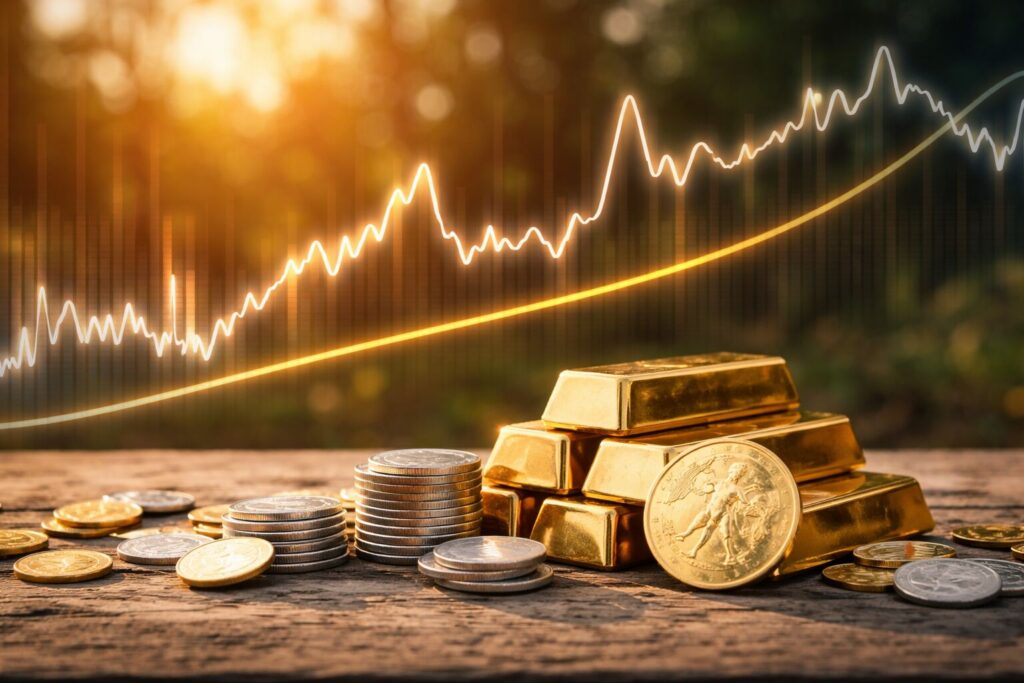
Gold and silver prices are full of short-term noise—daily swings driven by Fed commentary, currency moves, and speculative trading. But underneath the volatility lies a consistent long-term signal. Learn how to tell the difference, what structural forces actually drive precious metals prices over time, and how to build a strategy that stays focused on what matters most.
Is $400 Silver Possible? What the 1979 Pattern Suggests

Is $400 silver possible? A rare pattern not seen since 1979 has reappeared — clusters of consecutive weekly all-time highs. Historically, this structure preceded silver’s most explosive moves, including its near 700% surge into 1980. With momentum building again in 2025, the bigger question isn’t whether silver sounds extreme — it’s whether this bull market is closer to expansion than exhaustion.
How Margin Hikes Increase Gold and Silver Volatility
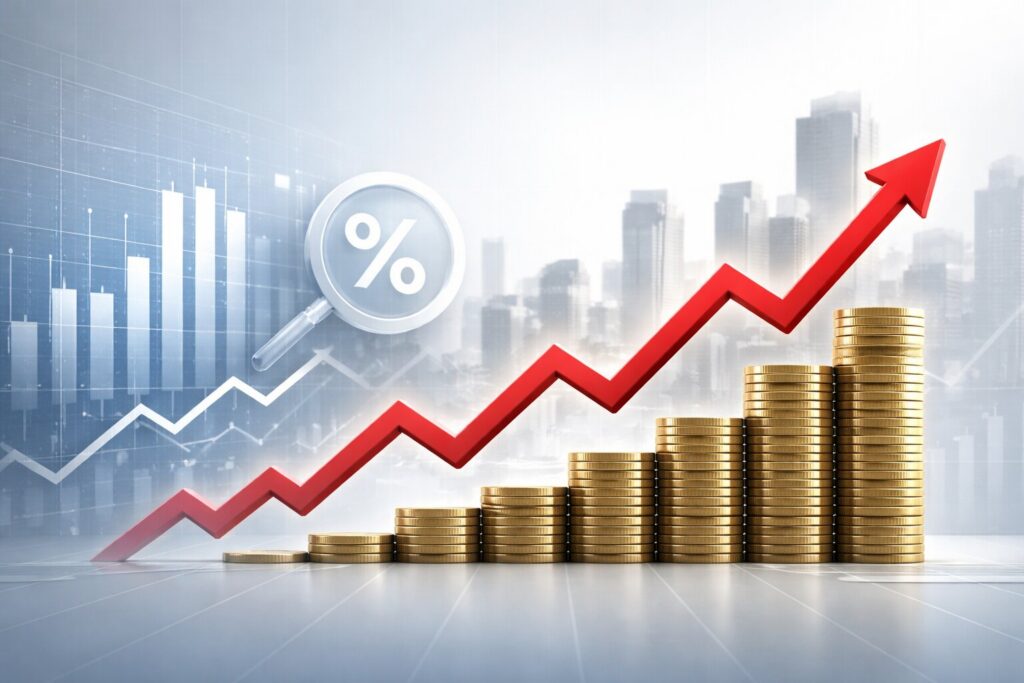
Margin hikes can dramatically increase gold and silver volatility — not because fundamentals change, but because leveraged traders are forced to unwind positions. When exchanges like the CME raise margin requirements, cascading liquidations can accelerate corrections and intensify price swings. Understanding how leverage works in futures markets — and how it differs from owning physical metal — is essential for navigating today’s precious metals market.
Gold vs Silver: The Liquidity Difference That Matters
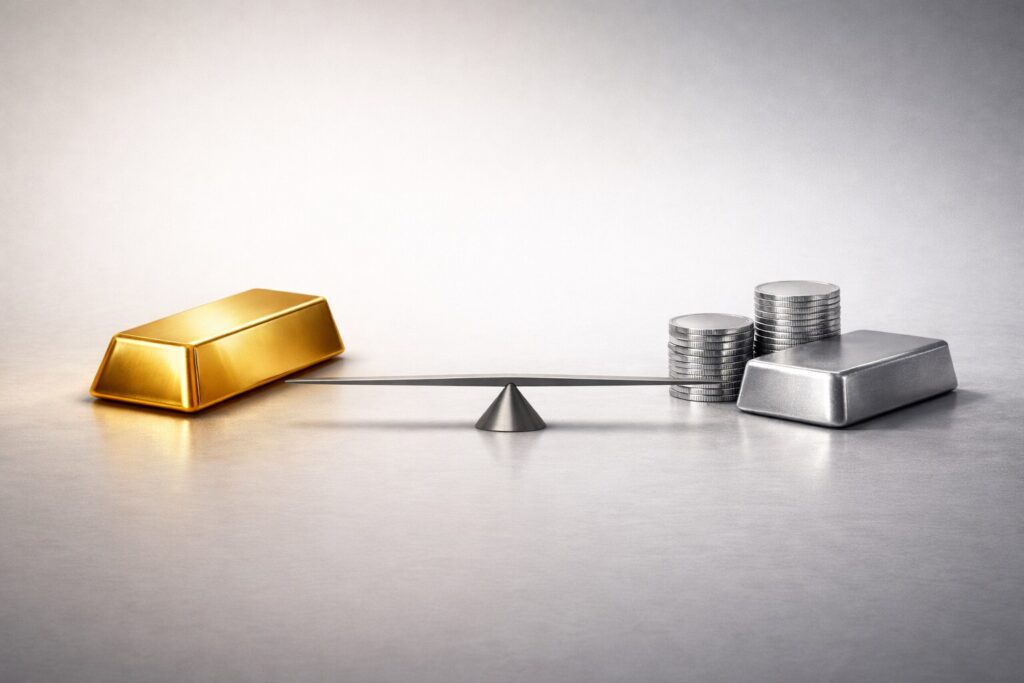
Liquidity isn’t just about whether you can sell—it’s about how fast, how cleanly, and at what cost. Gold and silver both trade globally, but they don’t behave the same way when markets are stressed or timing matters. Gold maintains tight spreads and deep buyer networks even under pressure, while silver’s liquidity becomes complicated as dollar values increase. Understanding these practical differences helps investors allocate intelligently and avoid costly surprises when they need to act.
Gold vs Silver Storage and Liquidity: What Investors Need to Know
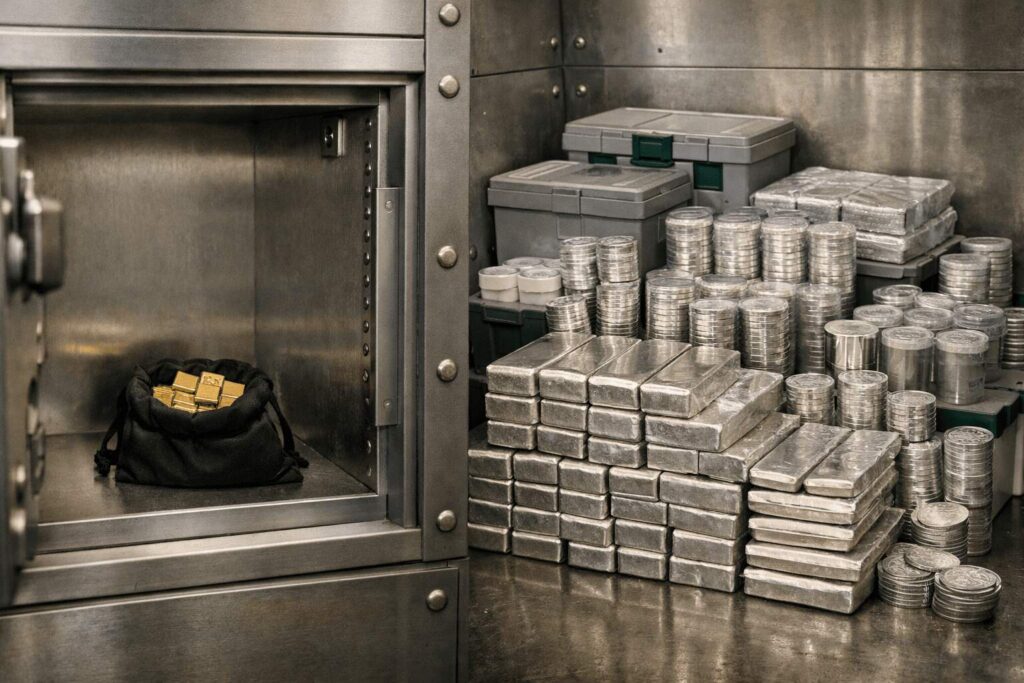
Most investors compare gold and silver by watching price charts—but that’s a mistake. The real differences don’t show up on a screen; they show up after you own them. Gold concentrates massive value into a small, portable form. Silver spreads that same value across weight, volume, and bulk. Understanding gold vs silver storage and liquidity matters far more than guessing where prices go next—because price is temporary, but ownership is permanent.
Silver Price Forecasts Revisited: Why Wall Street Got It Wrong
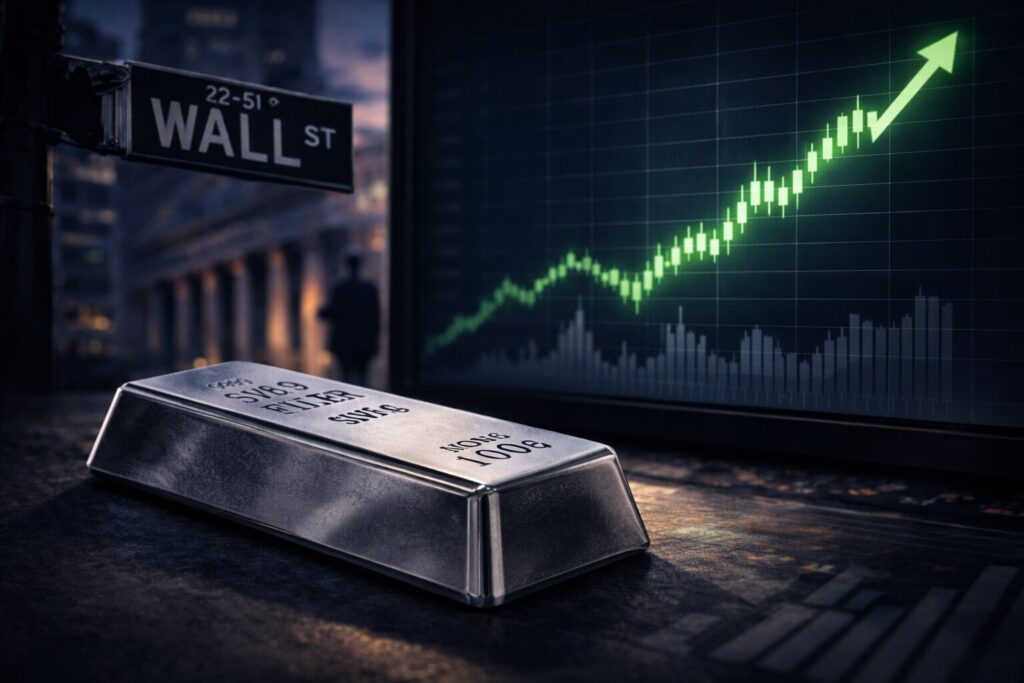
Silver price forecasts revisited reveal how quickly Wall Street projections fell behind reality. As silver surged past $100, fundamentals—not bank targets—told the real story.
Silver Is Now a “National Security Issue” – And Prices Could Explode

Silver has been officially labeled a national security issue by the U.S. government, a shift that could reshape supply chains, trigger price floors, and send silver prices sharply higher.
Best Investment Of 2026: Silver’s Setup Is Hard To Ignore
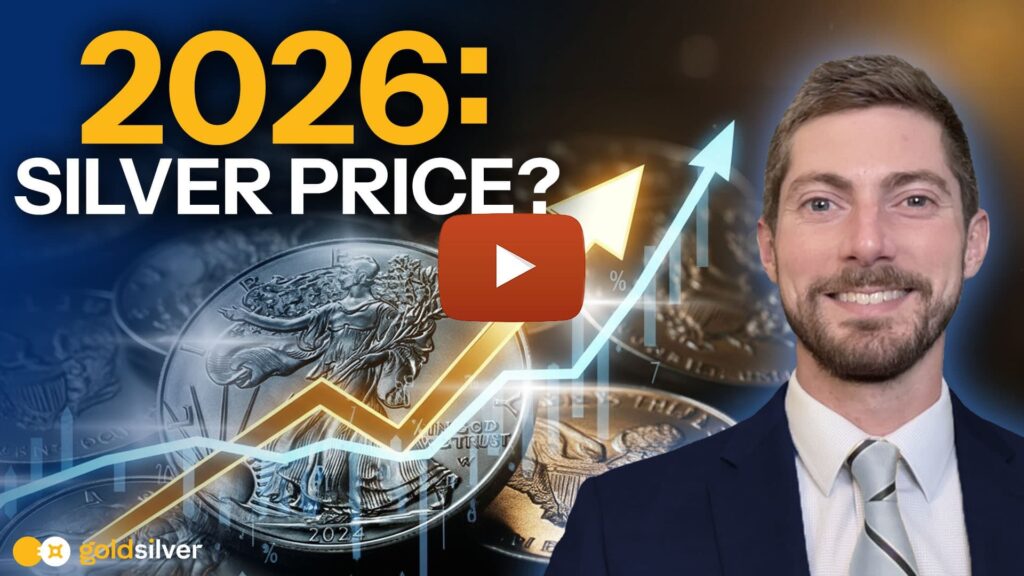
Silver enters 2026 with a rare combination of supply shortages, rising government demand, and supportive monetary conditions. Alan Hibbard explains why silver’s setup may be one of the most compelling investment opportunities of the year.
What the Falling Gold-to-Silver Ratio Means for Investors
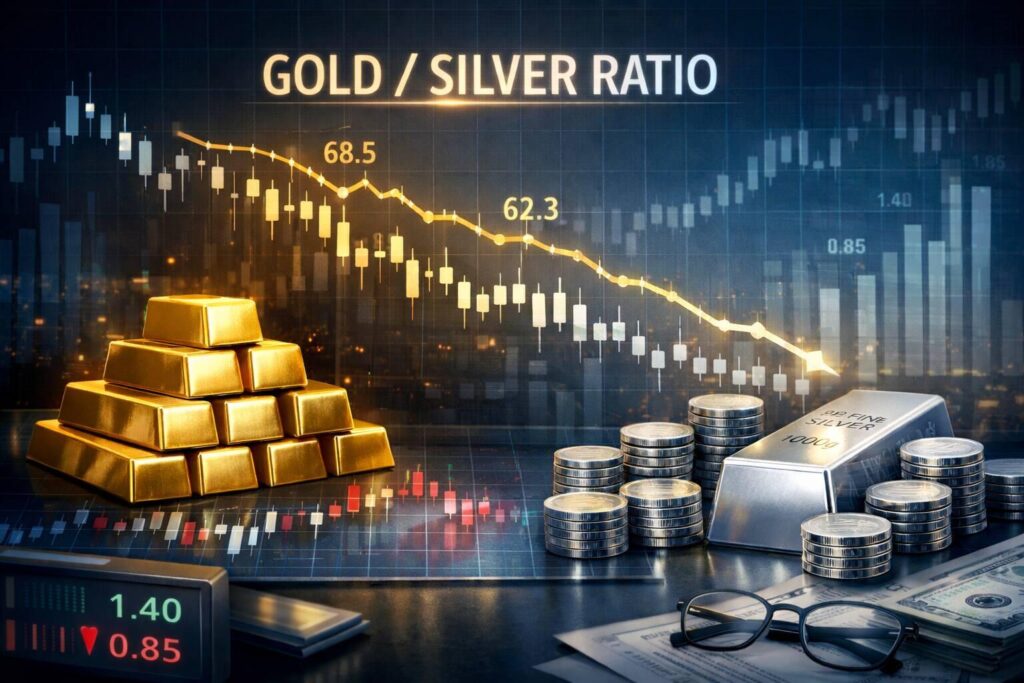
The gold-to-silver ratio is experiencing significant shifts that present strategic opportunities for precious metals investors. Understanding why this key metric is falling—from surging industrial demand to economic recovery signals—can help you optimize your portfolio allocation between gold and silver. Learn how to use this powerful valuation tool to time your investments and discover specific strategies tailored to your risk tolerance.
Gold at $10,000? Monetary Breadcrumbs Point to a Global Reset

Gold at $10,000 may sound extreme—but according to Mike Maloney, it’s not speculation. It’s math, history, and monetary policy converging as signs of a global reset quietly emerge.


