Silver Rises Over 120% YTD


Published: 10-28-2026, 04:09 pm
Last verified October 2026.
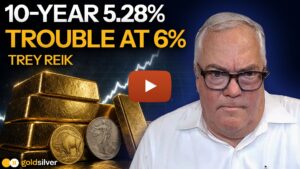
Gold broke below $4,000 last week for the first time since July. Trey Reik, a gold market economist and regular guest on the GoldSilver Show, says $4,000 should hold. He thinks the pullback has a short shelf life. Two days after this interview, one of his biggest calls was tested directly. The full case sits in the video below.
Key Takeaways:
- Gold touched an intraday low near $3,986 last week, its first dip under $4,000 since July.
- Fed rate-hike odds for October fell sharply, from 70% to under 10% within days, and the Fed then held rates on October 28.
- Gold fell 25% from its January-February highs. The GDX gold-miners index fell only 29%, a gap Reik reads as bullish.
- ETF holdings in gold-backed funds kept rising through the pullback, even as the spot price dropped.
- Gold has never tracked everyday CPI inflation, says Reik, and the reason why reframes what the metal is for.
Why Did Gold Fall Below $4,000 for the First Time Since July?
The metal slid under $4,000 last week after a sharp run-up in Treasury yields. The 10-year and 30-year Treasury yields broke out of their trading range on September 28. Strong S&P PMI data triggered the move. Futures traders then tested the $4,000 level, and gold briefly printed $3,986 before stabilizing.
Timing mattered as much as the number. A day after that yield spike, New York Fed President John Williams said he saw no urgency to raise rates. Fed Chair Kevin Warsh had already signaled the same patience. Odds of an October hike fell from 70% on September 28 to under 10% within weeks, according to Reik.
Markets widely expected a hold heading into the meeting. The Fed delivered exactly that. On October 28, the FOMC voted 10-2 to keep rates at 3.75%-4.00%, with two governors dissenting in favor of a hike [CNBC, October 28, 2026]. Gold held steady just under $4,050 afterward, a quiet reaction to a decision markets had already priced in [FXStreet, October 28, 2026].
The Knowledge That Changes Everything
Two essential guides — yours free. Understand why gold matters and why fiat currencies always fail.
What’s Really Driving the Pressure on Gold?
Reik argues the pullback reflects short-term positioning, not a shift in the bigger picture. He names three fundamentals he calls intact. Fading confidence in the dollar is one. The size of the U.S. deficit is another. Questions about Fed credibility round out the list.
A tense global backdrop added to the pressure anyway. France’s 10-year bond yield gap over Germany widened to roughly 177 basis points in October. That is the widest level in over a decade, last reached during the eurozone’s 2011 sovereign-debt turmoil [Babypips, October 2026]. Brazil’s tight presidential runoff on October 25 also rattled local stocks before a result emerged [Rio Times, October 25, 2026].
A separate shock hit credit markets directly. CoreWeave’s bonds, issued only months earlier, traded down to roughly 78 to 80 cents on the dollar in mid-October. Yields on those notes approached 15% [KuCoin, October 2026]. Worries over AI-infrastructure debt drove that selloff. Capital then rotated out of riskier assets and into Treasuries. Reik thinks gold should benefit as that shift plays out, a dynamic we explored in more depth here.
Is This Pullback Something to Worry About?
A 25% drop from a high sounds alarming on its own. Context changes the picture, though. Gold climbed 65% over the prior two years, according to Reik. A one-time dip is a smaller move set against that run.
Mining stocks add another layer. Gold is down about 25% from its January highs. The GDX index of large-cap miners is down roughly 29% over the same stretch. In past selloffs, miners have often fallen one-and-a-half to two times as much as gold itself. A gap this narrow suggests the stock side of the trade isn’t panicking. Reik reads that as a sign long-term owners are staying put.
Fund flows tell a similar story. ETF holdings have kept climbing, even as gold hit resistance over the past two months, per the gold-backed ETF trend chart shown in the interview. Someone with a longer time horizon has been adding at exactly the prices short-term traders have been dumping. For more on what those flows mean, see our piece on gold ETF ownership.
None of this guarantees the bottom is in. Reik is candid that more downside is possible. He lays out a specific scenario for how far gold could fall, and for how long, if $4,000 doesn’t hold. Those numbers are in the full interview.
Why Doesn’t Gold Protect You From Everyday Inflation?
A common assumption is that gold should rise whenever the Consumer Price Index rises. Reik disagrees. The distinction matters for anyone holding gold through a volatile stretch like this one.
Everyday CPI inflation shows up in grocery and gas prices. It tends to lift nearly every price at once. Gold moves with the rest of the economy in that scenario, not ahead of it. Reik argues that kind of inflation has little to do with gold’s long-term case. The relationship barely shows up across decades of data.
Monetary inflation works differently. It happens when the supply of money and credit expands faster than the economy’s output. Reik expects gold to outpace other prices in that environment, not just match them. He ties this directly to today’s backdrop. A Treasury Secretary is leaning toward yield-curve-control-style tools. Sovereign bond stress is spreading from France to Brazil. Those pressures speak to the monetary thesis far more than this week’s CPI, or Thursday’s PCE report, ever will. For more on how CPI prints have moved gold recently, see our coverage of the spring stagflation debate.
Reik also ties this pullback to a separate, faster-moving story. Forced selling tied to losses in AI-related stocks and credit is part of it. Gold is one of the most liquid markets in the world, moving roughly $150 billion a day. That liquidity makes it a convenient source of cash when other positions need covering. He has a clear view on whether that selling is nearly finished. The full interview explains why.
What Would It Take for the Pullback to Get Worse?
Reik draws a comparison to 2008, with an important caveat. Forced liquidation drove that year’s gold selloff. A U.S. ban on shorting financial stocks pushed traders to dump commodities instead. He calls that an external, technical shock, not a verdict on gold itself.
A modern parallel would be a sharp equity correction spilling into gold as a liquidity source. Reik expects short-term weakness in gold and mining stocks under that scenario too. History offers a counterpoint, though. Gold and gold equities have often rebounded fastest once a selloff troughs, sometimes doubling before broader stocks even recover modest gains. That pattern underpins his view that dips remain buying opportunities for patient investors.
His own time horizon is specific. Gold mining stocks, in his view, only make sense for investors willing to hold three to five years. Even the best long-term winners have historically dropped by half more than once along the way. For a deeper look at buying into weakness like this, read our guide to buying gold on a dip.
What would change his mind? Reik names a specific catalyst tied to the Fed’s next moves. He also flags a level in Treasury yields he is watching closely. Both details, plus his full read on how much bad news is already priced in, are best heard directly from him.
Stay On Top of Gold & Silver Prices
Get important market alerts sent straight to your inbox.
People Also Asked
Gold slid under $4,000 after a sharp rise in Treasury yields in late September. That move fueled bets on a Fed rate hike. Futures traders then tested the $4,000 level directly. Gold touched an intraday low near $3,986 before steadying, according to Trey Reik.
Trey Reik argues the bull market remains intact. He points to dollar sentiment, the U.S. deficit, and Fed credibility as unchanged drivers. A short-term pullback, in his view, doesn’t undo a run that had already produced strong multi-year gains.
Gold has a weak relationship with everyday CPI inflation, according to Reik. That kind of inflation tends to lift most prices together. Gold’s stronger historical link is to monetary inflation, where the money supply grows faster than the economy.
ETF holdings often reflect longer-term investors. Those investors can keep adding even as short-term traders sell into price weakness. Reik reads the recent rise in holdings as a sign patient buyers were active during the pullback.
Gold mining stocks have historically fallen one-and-a-half to two times as much as gold during selloffs. A smaller gap, like the 25% versus 29% move in this pullback, can signal that long-term equity holders aren’t panicking.
Reik suggests a three-to-five-year horizon for gold mining stocks. Even strong long-term performers have often fallen by half more than once along the way. A shorter time frame raises the odds of selling into a temporary dip.
Where Can You Watch the Full Interview?
Trey Reik covers far more in the full conversation with host Megan King Diaz than fits here. He names the exact level he is watching before he would change his view on gold. He also lays out a specific downside scenario if $4,000 breaks. Track the metal’s live price on our gold price chart while you watch.
Watch the full GoldSilver Show interview with Trey Reik on YouTube
SOURCES
1. CNBC – Fed Interest Rate Decision October 2026: Fed Holds Rates Steady
2. FXStreet – Gold Steady Below $4,050 After Uneventful FOMC
3. KuCoin – CoreWeave Stock Falls 13% as Bond Yields Hit 15%
4. StockWireX – Why the Euro Ignores the OAT-Bund Spread, and the 200bp Risk Line
5. Rio Times – Brazil Runoff Results: Lula, Flavio, 2026
Disclaimer: This article is for informational purposes only and does not constitute investment advice. Past performance is not indicative of future results. Always consult a qualified financial advisor before making investment decisions.
You May Also Like:
- Why Isn’t Gold at $6,000 Yet? Gerald Celente Explains
- Peter Grandich: What Happens to Gold When Stocks Fall?
- Peter Grandich Sold Gold, But He’s Buying On the Dip
- Ronnie Stoeferle’s $8,900 Gold Forecast Comes With a Warning
- US May be on Brink of Massive Gold Revaluation
- Why Gold Ignored the Fed’s Fastest Rate Hikes in 40 Years
- The $145 Trillion Market That Moves Gold More Than the Fed
- A 6% Yield Could Make or Break Gold’s Rally
- Owning Gold Was a Crime When It Went Up 5x