Silver Rises Over 120% YTD




Published: 05-21-2026, 10:11 am
Kevin Warsh was confirmed as the 17th chair of the Federal Reserve on May 13, 2026, in a 54–45 vote — the most partisan confirmation for a Fed chair in history. He officially took over from Jerome Powell on May 15. And he arrived with a bold agenda: shrink the balance sheet, normalize monetary policy, and restore the Fed’s credibility.
On paper, it sounds like exactly what the country needs. But the U.S. debt situation, a global energy crisis driven by the Iran war, and bond markets already in revolt may have taken those options off the table before he even sat down.
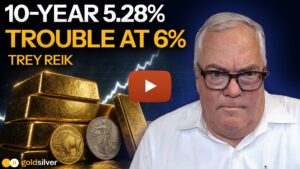
In our latest video, Alan breaks down why Warsh’s plan faces serious headwinds from day one. Not because of bad intentions — but because the math doesn’t cooperate.
What Is Kevin Warsh’s Plan for the Federal Reserve?
Warsh laid out his vision in a Hoover Institution interview in mid-2025. His logic goes like this: shrink the Fed’s balance sheet, pull currency out of circulation, reduce inflation, and open the door to lower interest rates.
Simple enough, right?
The problem is what happens on the other side of that equation.
When the Fed shrinks its balance sheet, it effectively releases Treasuries back into the open market. More supply means lower bond prices. Lower bond prices push yields higher. And higher yields mean the government pays more to service its debt every time those bonds roll over.
That additional cost creates even more debt. Which drives even more inflation. Which is the exact opposite of what Warsh says he wants to achieve.
This is what economists call fiscal dominance — when a country’s debt burden is so large that fiscal reality dictates monetary policy, not the other way around. Decades ago, the Fed could set monetary policy first and let the Treasury adjust. That luxury no longer exists.
Alan calls Warsh’s overall plan a non-starter. And the numbers support that view.
Your Gold Buying Guide Most investors overpay when they buy gold. Then overpay again when they sell. This guide shows you exactly what to own — and why.
Can the Fed Actually Shrink Its Balance Sheet? History Says No.
This isn’t the first time the Fed has attempted to reduce its balance sheet. The track record is not encouraging.
Before the 2008 financial crisis, the balance sheet sat below $1 trillion. Then came multiple rounds of quantitative easing. The balance sheet ballooned past $4 trillion. And when the Fed finally tried to bring it back down through quantitative tightening? It barely made a dent.
A small reduction stretched over years. Then the repo market crisis hit in late 2019. Then COVID-19. Each time, the balance sheet expanded again — far beyond previous highs. It peaked near $9 trillion in early 2022.
As of May 13, 2026, the Fed’s total assets stand at approximately $6.7 trillion. That’s still roughly seven times higher than pre-2008 levels. And even the recent reduction effort has stalled — the balance sheet grew by $19 billion in just the most recent week, according to the Fed’s own H.4.1 report.
The pattern is hard to ignore. The Fed talks about shrinking. But when economic stress arrives, it expands. Every single time.
Why Are Global Bond Yields Rising in 2026?
The bond market isn’t waiting around for Warsh to act. It’s already making its own judgment.
The UK’s 30-year government bond yield surged to 5.78% in early May 2026, its highest level since 1998. Bloomberg reported that the selloff swept across all maturities, with 10-year notes topping 5.10%. And it’s not just the UK.
Bond markets across three continents — the U.S., the UK, and Japan — are under pressure simultaneously. In the U.S., the 30-year Treasury yield topped 5.19% on May 19, the highest since before the 2008 financial crisis.
The driving force behind all of this is the 2026 Iran war and the disruption to the Strait of Hormuz. The International Energy Agency has called it the largest supply disruption in the history of the global oil market. Brent crude surged past $114 per barrel in early May. The Dallas Fed estimated that the Strait closure alone could raise oil prices to $98 per barrel and cut global GDP growth by 2.9 percentage points in the second quarter of 2026.
When you combine that energy shock with the compounding effect of sovereign debt and deficit problems across major economies, the result is a global inflationary snowball. No central bank chair — no matter how skilled — can easily stop it.
Will the Fed Raise Interest Rates in 2026?
Warsh wants lower rates. The market disagrees.
According to the CME FedWatch tool, as of early May 2026, there is roughly a 96% probability that the Fed will hold rates steady at the June 16–17 FOMC meeting — Warsh’s first as chair. The probability of a rate cut has dropped to near zero. Just months earlier, in February, the odds of a June rate cut sat close to 48%.
That shift is dramatic. But the real story is what comes after June.
Markets are now pricing in the possibility that the next move in rates is actually up, not down. The current federal funds rate sits at 3.50–3.75%. By late 2026 and into early 2027, Fed futures suggest rates could move higher — not lower.
So while Warsh entered office wanting lower inflation and lower rates, the market is positioning for the opposite. Higher inflation. Higher rates. And a Fed with far less room to maneuver than it had even a year ago.
Why Does the Fed Want to Change How It Measures Inflation?
This might be the most revealing part of the story.
At his April 21, 2026 confirmation hearing, Warsh told senators he wants to change how the Fed measures inflation. The Fed has used core PCE — which excludes food and energy prices — as its preferred gauge since 2000. Warsh favors switching to trimmed mean PCE, a measure published by the Dallas Fed that removes the most extreme price movements each month rather than excluding entire categories.
Here’s the practical difference. As of March 2026, the trimmed mean PCE reads 2.4% year-over-year. Core PCE sits at 3.2%. That’s a gap of nearly a full percentage point.
In other words, the new gauge would make inflation appear significantly closer to the Fed’s 2% target — without inflation actually falling. Critics at Seeking Alpha, the Mises Institute, and Employ America have all pointed out that the timing is convenient at best: trimmed mean PCE happens to be one of the most dovish inflation indicators available right now.
The Dallas Fed itself has cautioned that trimmed mean may not reflect true disinflation ahead, particularly because tariff-driven price spikes get excluded from the top of the distribution.
Alan puts it bluntly in the video — if you can’t solve the problem the hard way, just change how you measure it.
Why Are Gold and Silver a Hedge Against Inflation in 2026?
This is where it all comes together.
The Fed is boxed in by fiscal dominance. Bond markets are pricing in severe inflation across three continents. Rate cuts are off the table — and hikes may be coming instead. The proposed solution from the incoming chair is to adopt an inflation gauge that reads nearly a full point lower than the current one.
When central banks lose the ability to control inflation — or choose to redefine it — hard assets historically outperform. Gold and silver have served as inflation hedges for thousands of years. That thesis hasn’t changed.
You don’t need a complicated strategy. You don’t need to time the market perfectly. You just need to understand one dynamic: when governments can’t stop borrowing and central banks can’t stop accommodating, the currency loses purchasing power. Gold and silver hold it.
That’s the core argument. And the current macro environment — war-driven energy shocks, rising sovereign debt, stubborn inflation, and a Fed that may be out of options — makes it more relevant today than it has been in years.
Want the full breakdown? Alan walks through every chart, data point, and implication in detail. Watch the full video here.
Stay On Top of Gold & Silver Prices
Get important market alerts sent straight to your inbox.
People Also Ask
What does Kevin Warsh want to do as Fed chair?
Kevin Warsh wants to shrink the Federal Reserve’s balance sheet, normalize monetary policy, and restore the central bank’s credibility. He outlined this vision in a 2025 Hoover Institution interview, arguing that reducing the balance sheet would pull currency out of circulation, lower inflation, and eventually allow for lower interest rates. However, as Alan explains in this GoldSilver video, the U.S. debt burden and global bond market conditions may make that plan nearly impossible to execute.
Why would shrinking the Fed’s balance sheet push interest rates higher?
When the Fed reduces its balance sheet, it releases Treasury securities back into the open market. That increase in supply drives bond prices down, which pushes yields up. Higher yields mean the U.S. government pays more to service its existing debt — creating a cycle of more borrowing, more debt, and ultimately more inflation rather than less.
What is trimmed mean PCE and why does it matter?
Trimmed mean PCE is an alternative inflation measure published by the Dallas Fed. Instead of excluding entire categories like food and energy (as core PCE does), it removes the most extreme price movements each month in both directions. Warsh favors switching to this gauge because it currently reads 2.4% — nearly a full point below core PCE’s 3.2% — which would make inflation appear much closer to the Fed’s 2% target. Critics argue the timing is convenient and that it could mask persistent price pressures. Learn more in our full breakdown.
What is fiscal dominance and how does it affect the Fed?
Fiscal dominance is a condition where a country’s debt burden is so large that it effectively dictates monetary policy. In this environment, the Fed can’t freely set interest rates or shrink its balance sheet without triggering a chain reaction — higher yields, higher debt servicing costs, and more inflation. Alan argues in this video that the U.S. is firmly in fiscal dominance today, which is why Warsh’s agenda faces structural headwinds regardless of his intentions.
Why is gold a hedge against inflation in 2026?
Gold and silver historically outperform when central banks lose the ability to control inflation or when governments rely on continued borrowing to fund deficits. In 2026, the combination of the Iran war energy crisis, surging sovereign bond yields across the U.S., UK, and Japan, and a Fed that may be forced to raise rates rather than cut them creates an environment where currency purchasing power is under serious threat. GoldSilver breaks down why precious metals remain the simplest protection in the full video.
Disclaimer: This article is for informational purposes only and does not constitute investment advice. Past performance is not indicative of future results. Always consult a qualified financial advisor before making investment decisions.
You May Also Like:
- What Do Central Banks Know About Gold That You Don’t?
- Why Peace Is Bullish for Gold in 2026 (And War Isn’t)
- The Dollar Is Losing Ground. Here’s Why It Matters.
- Gold vs. Stocks: What Long-Term Ratios Are Telling Investors
- Silver broke a historic record. The bigger signal isn’t the price.
- Does Timing the Gold Market Work? What 56 Years of Data Shows
- Central Banks Are Buying Gold: Here’s What They See Coming
- $26,000 Gold?! The Truth Behind the Viral Chart
- What Does It Mean That Silver Is Now a U.S. Critical Mineral?